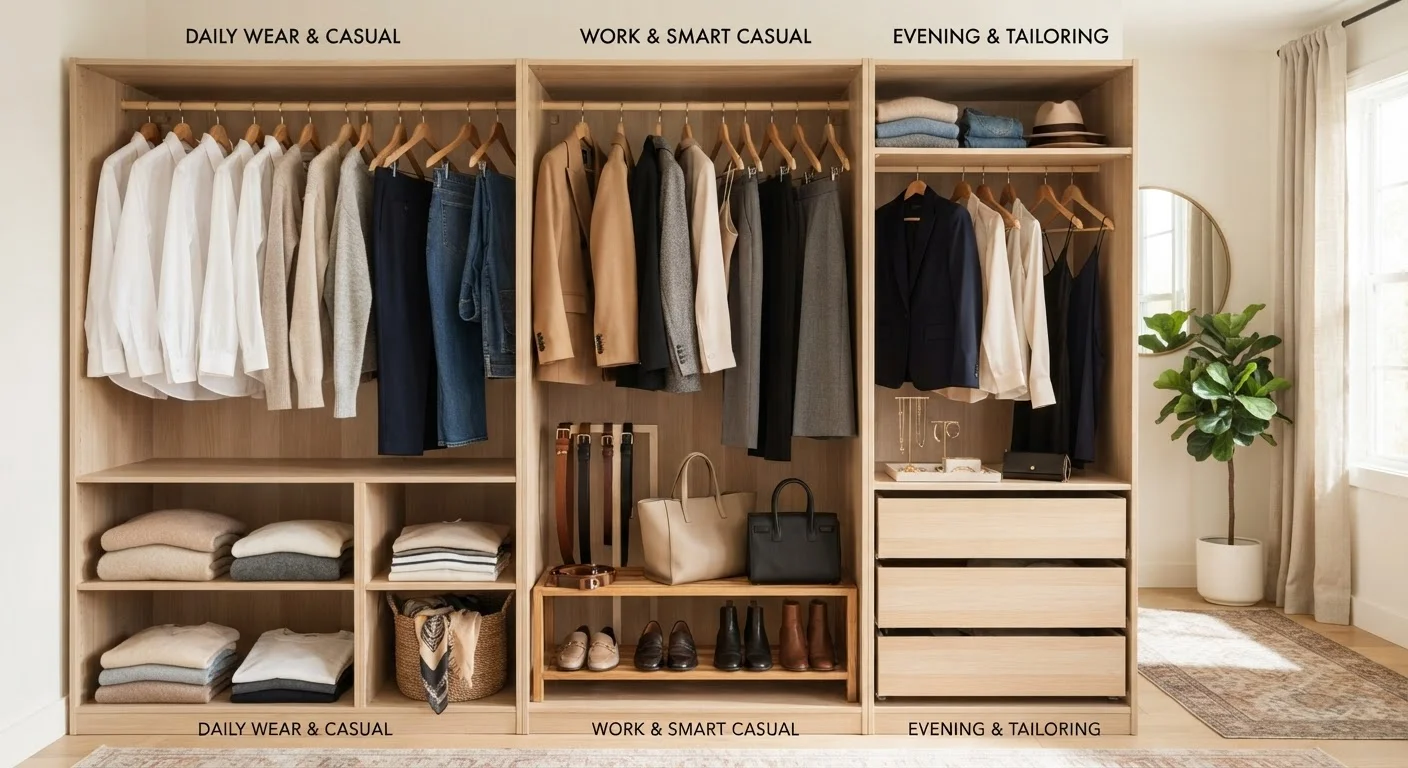


Why a Capsule Wardrobe Actually Works
The idea behind a capsule wardrobe isn't about owning as little as possible - it's about owning pieces that consistently earn their place. When every item you own can carry multiple outfits across more than one season, getting dressed stops being stressful and starts feeling almost automatic.
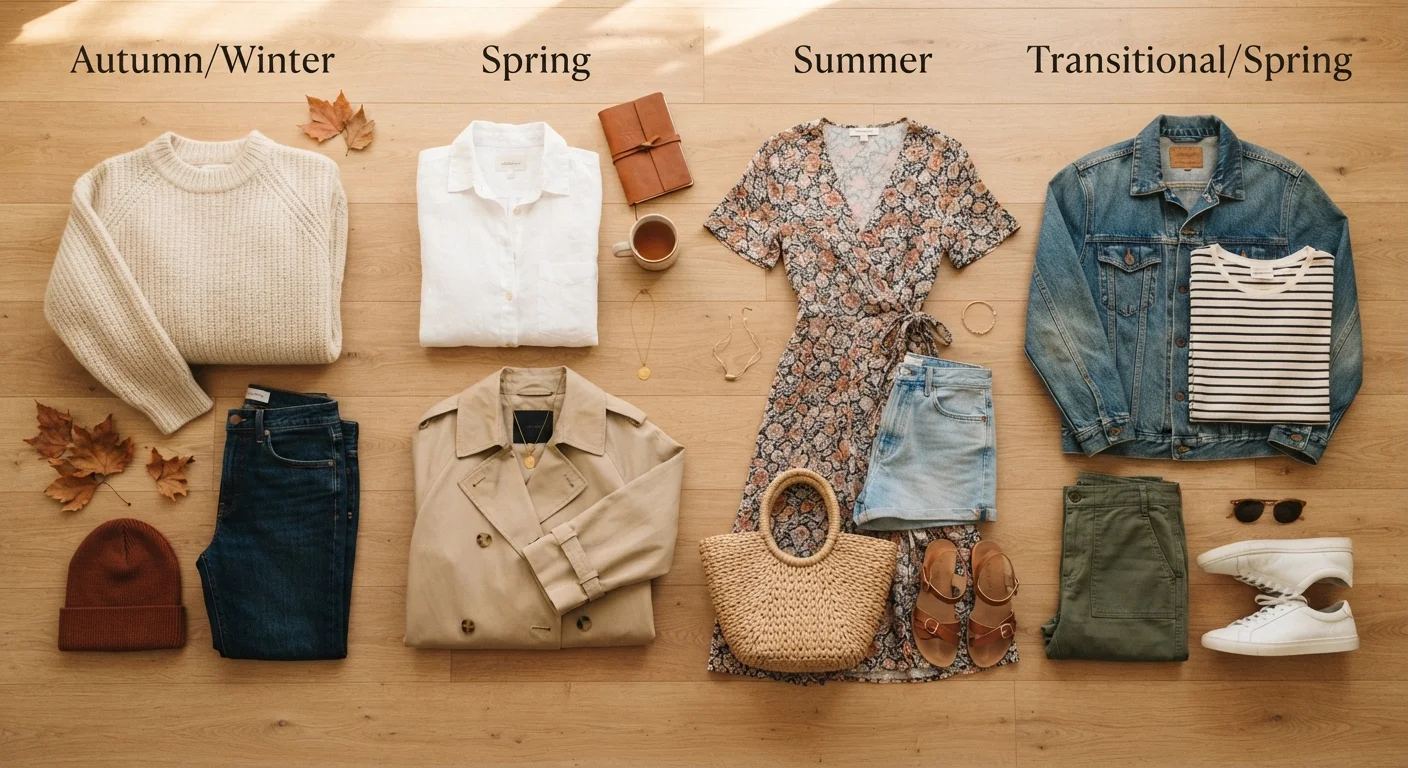
The key is thinking in terms of versatility and layering potential rather than occasion-specific outfits. A great linen shirt isn't just a summer piece - it's an under-layer in fall and a lightweight top in spring. That kind of seasonal flexibility is exactly what separates a true essential from a one-trick item cluttering your closet.
For deeper guidance on how foundational pieces translate across dress codes, our guide to building a wardrobe that transitions from casual to formal lays out the framework clearly. And if you want the broader principles behind dressing well through changing weather, this year-round style primer is worth bookmarking.
A Well-Fitted White or Cream Tee
It sounds almost too simple, but a quality crew-neck or v-neck tee in white or cream is genuinely irreplaceable. In summer it stands alone; in fall and winter it layers under flannels, crewneck sweaters, or a blazer without adding bulk. Look for a mid-weight cotton or cotton-modal blend - thin fabrics go sheer and heavy fabrics trap heat when you don't want them to.
Fit matters more than anything here. A tee that's slightly tapered at the waist but not clingy reads clean and intentional across nearly every casual-to-smart-casual setting.
A perfectly fitted white tee is the single most cross-seasonal, cross-occasion piece you can own.
Dark Straight-Leg or Slim Denim
A dark rinse denim in a straight or slim cut moves effortlessly from warm to cold months and dresses up or down without effort. Pale or distressed denim is harder to elevate; dark denim reads more polished and pairs with everything from sneakers to ankle boots to loafers.
When temperatures drop, dark denim works under long coats and layers naturally. In spring and summer, roll the hem slightly and the same pair looks entirely different. This is one item where a proper fit through the thigh and seat pays dividends every single time you wear it.
Dark denim is the most quietly hardworking bottom in any capsule wardrobe.
A Lightweight Layer - Linen Shirt or Cotton Overshirt
Between seasons, the ability to add or remove one mid-layer without disrupting your outfit is everything. A relaxed linen shirt or a structured cotton overshirt fills that role perfectly. Worn open over a tee, it adds dimension to a summer outfit. Buttoned up under a jacket in fall or spring, it functions as a shirt without overheating you.
Stick to neutral or muted tones - sand, olive, chambray blue, or soft grey - so it pairs naturally with the rest of your wardrobe. Transitional dressing often hinges on exactly this kind of in-between layer.
One lightweight overshirt bridges the gap between seasons better than any other single piece.
A Versatile Mid-Layer - Crewneck Sweater or Fine Knit
A crewneck sweater in a fine or mid-weight knit is the unsung hero of fall and winter dressing - and it does double duty in spring layering, too. Merino wool is particularly practical: it regulates temperature, resists odor, and doesn't look bulky under a coat. Cotton knits work well in milder climates.
Choose a solid color in camel, navy, charcoal, or burgundy. These shades layer over your white tee, tuck into trousers for a more put-together look, and pair with both your dark denim and any structured bottom you own. Avoid chunky cable knits as your only option - they resist layering under coats.
A fine-knit crewneck in a rich solid color anchors fall and winter outfits without adding bulk.
Tailored Trousers or Chinos in a Neutral
Every capsule wardrobe needs at least one structured bottom that isn't denim. Tailored trousers or slim chinos in stone, camel, olive, or charcoal elevate any top immediately and work across seasons with simple layering adjustments. In summer, pair with a linen shirt and loafers. In winter, layer under a long coat with boots.
The cut should sit comfortably at the natural waist or slightly below, with a tapered or straight leg that hits just above or at the ankle. This length works with both sneakers and dress shoes - a small detail that multiplies styling options considerably. For a broader look at how these pieces anchor a complete closet, wardrobe basics every American closet should cover covers the full picture.
One pair of tailored trousers in a neutral tone can replace three occasion-specific bottoms.
A Structured Outer Layer - Wool Coat or Versatile Jacket
Your outermost layer is what people see first, so it carries significant visual weight. A mid-length wool coat in camel, charcoal, or navy functions as a style anchor through fall and winter and bridges into early spring. If your climate is mild, a structured chore coat or a medium-weight bomber in a neutral fills a similar role.
The goal is one outer layer that works over everything you own - from your white tee and jeans to your crewneck and trousers - without fighting the outfit underneath. Avoid very trend-driven shapes; a clean, classic silhouette continues to look considered year after year.
A classic wool coat transforms any outfit underneath into something that looks intentionally put together.
Making These Pieces Work Together
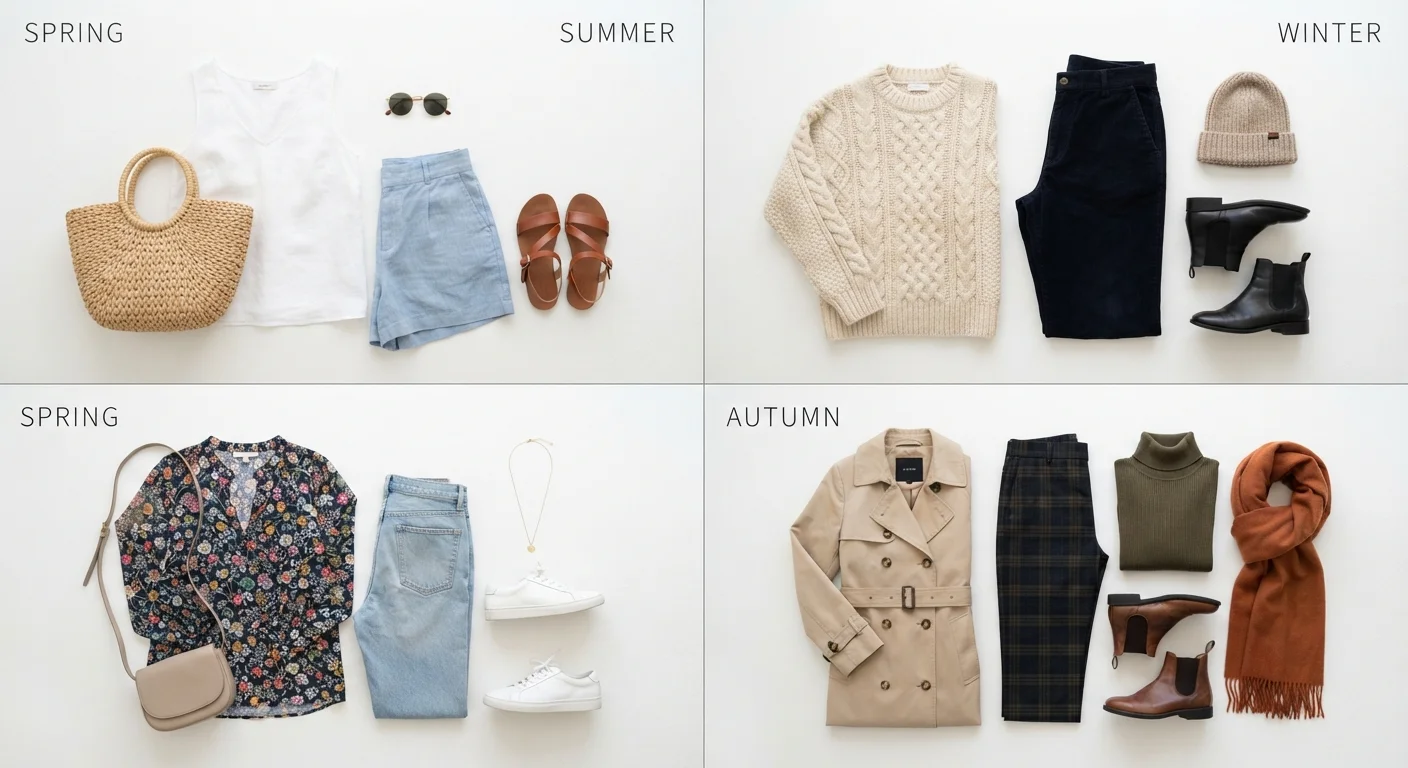
Owning the right essentials is only half the equation - knowing how to combine them is where the real payoff lives. Focus on building outfits around one anchor piece, then layer or accessorize outward from there. Seasonal outfit anchors are a practical way to think about this: each season has a reliable starting point, and your capsule pieces slot naturally into each one.
Start with neutrals, then add one accent
When building or editing a capsule wardrobe, anchor your core pieces in true neutrals - white, black, navy, camel, grey, and olive all mix naturally. Once those are in place, introduce one or two accent colors through accessories or a single statement piece. This approach keeps your options maximum without requiring a full wardrobe overhaul each season.
Once your essentials are in place, how you care for them determines how long they stay essential. Proper maintenance habits - right washing temperatures, thoughtful storage, and occasional spot treatment - make the difference between a white tee that lasts two years and one that lasts five. For more outfit inspiration built around everyday American life, browse everyday outfit ideas to see these pieces in action.