
What Each Approach Actually Involves
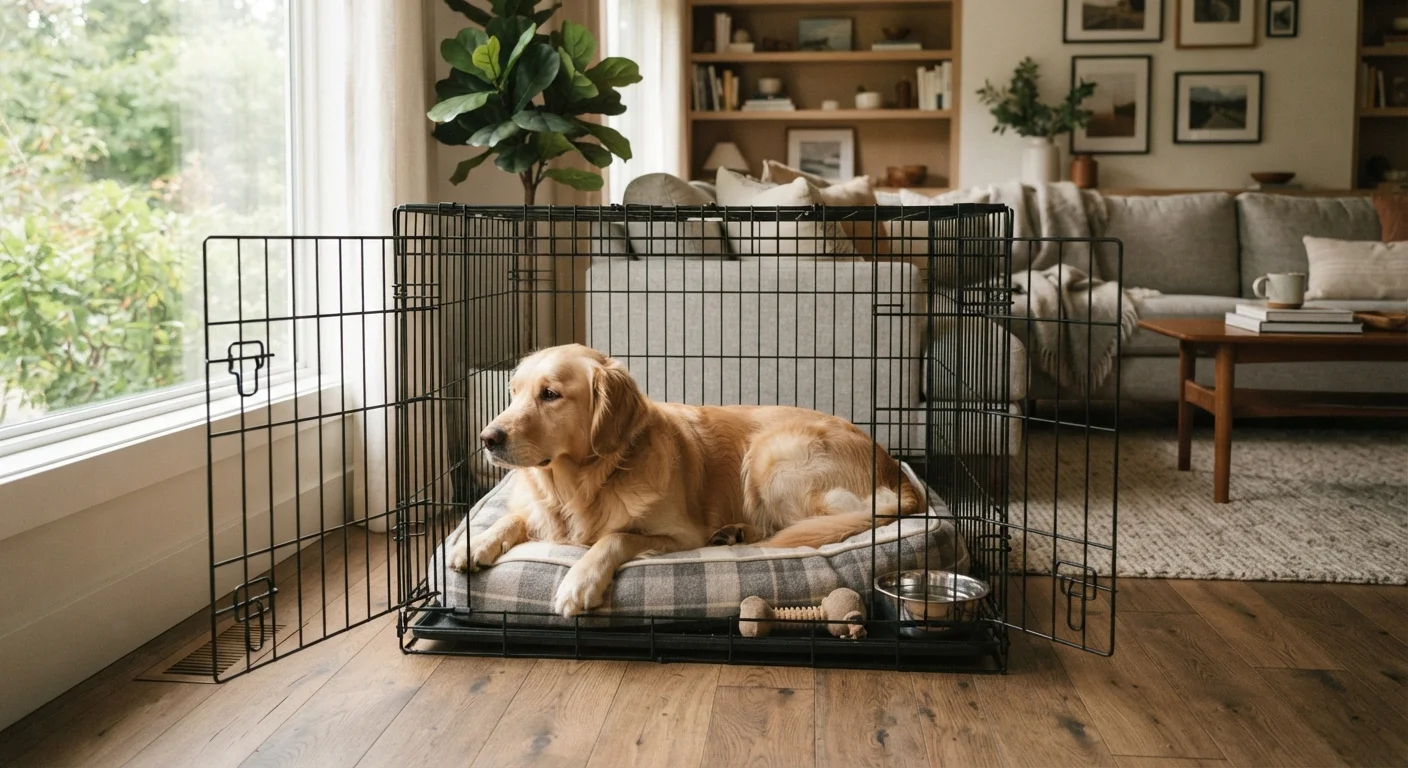
Crate training uses a dedicated enclosure - wire, plastic, or fabric - sized so the dog can stand, turn, and lie down comfortably. The goal is to condition the dog to view the crate as a secure, den-like space, not a penalty box. Done correctly, most dogs learn to enter willingly and rest quietly inside. The process requires consistent, reward-based introduction and should never involve forcing a dog inside or leaving it crated for excessive periods.
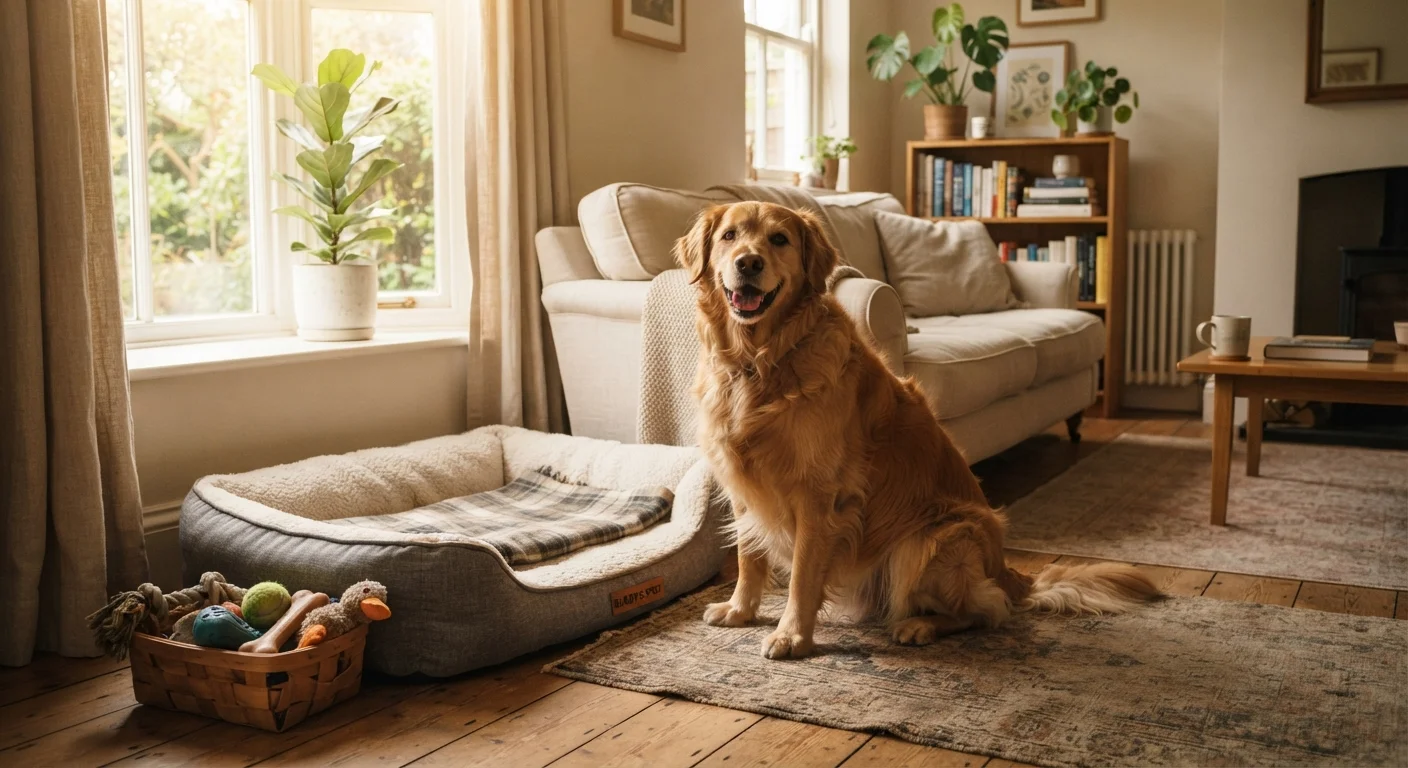
Free-roaming means the dog has access to some or all of the home without confinement. This can range from one dog-proofed room to the entire house. It relies on the dog already understanding household rules - no chewing furniture, no eliminating indoors - and being able to manage its own stress when alone.
If you're still in the early stages of welcoming a dog, our guide to bringing home a dog for the first time covers how to set up your space before day one.
Head-to-Head: Key Differences
The practical differences between these two setups show up in everyday scenarios - from how quickly a puppy learns where to eliminate, to how your dog behaves after a long workday. The table below summarizes the major trade-offs.
| Criterion | Crate Training | Free-Roaming |
|---|---|---|
| Best life stage | Puppies, newly adopted dogs | Trained adult dogs |
| Housetraining support | Strong - limits accidents | Relies on prior training |
| Safety from hazards | High - restricts access | Depends on dog-proofing |
| Physical comfort | Limited for extended periods | Greater freedom to move |
| Separation anxiety risk | Can help manage mild cases | May worsen if dog is destructive |
| Owner effort to set up | Requires gradual conditioning | Requires thorough dog-proofing |
| Long-term use | Typically phased out over time | Sustainable once dog is settled |
When Crating Makes the Most Sense
Veterinary behaviorists and certified trainers broadly agree that crates are most valuable during the housetraining phase. A dog is unlikely to soil its sleeping area, so a properly sized crate helps puppies build bladder control and signals when it's time to go outside. This shortens the housetraining window significantly compared to giving a puppy the run of the home.
Crating also limits access to hazards - electrical cords, toxic plants, or items a bored dog might chew. For dogs prone to destructive behavior when anxious or under-stimulated, a crate reduces the chance of injury and property damage.
Crate Size Matters More Than You Think
A crate that is too large can undermine housetraining - dogs may eliminate in one corner and sleep in another. A crate that is too small causes physical discomfort and stress. The general guideline is that the dog should be able to stand without ducking, turn around fully, and lie stretched out. For puppies that will grow significantly, many crates include a divider panel so you can adjust the space as they develop.
One important boundary: dogs should not be crated for more than four to five hours at a stretch during the day, and puppies need even more frequent breaks. Crating is a management tool, not a substitute for adequate exercise, enrichment, and social interaction.
When Free-Roaming Is the Better Fit
Free-roaming becomes appropriate once a dog has demonstrated reliable behavior over a sustained period - typically several months of accident-free living and no destructive incidents. Many owners make this transition gradually: starting with one room, then expanding access as trust builds.
For senior dogs or those with mobility issues, having the freedom to move, stretch, and access water without waiting is genuinely important for their comfort. Similarly, a dog that finds the crate distressing despite patient, positive conditioning may do better in a dog-proofed room or behind a baby gate.
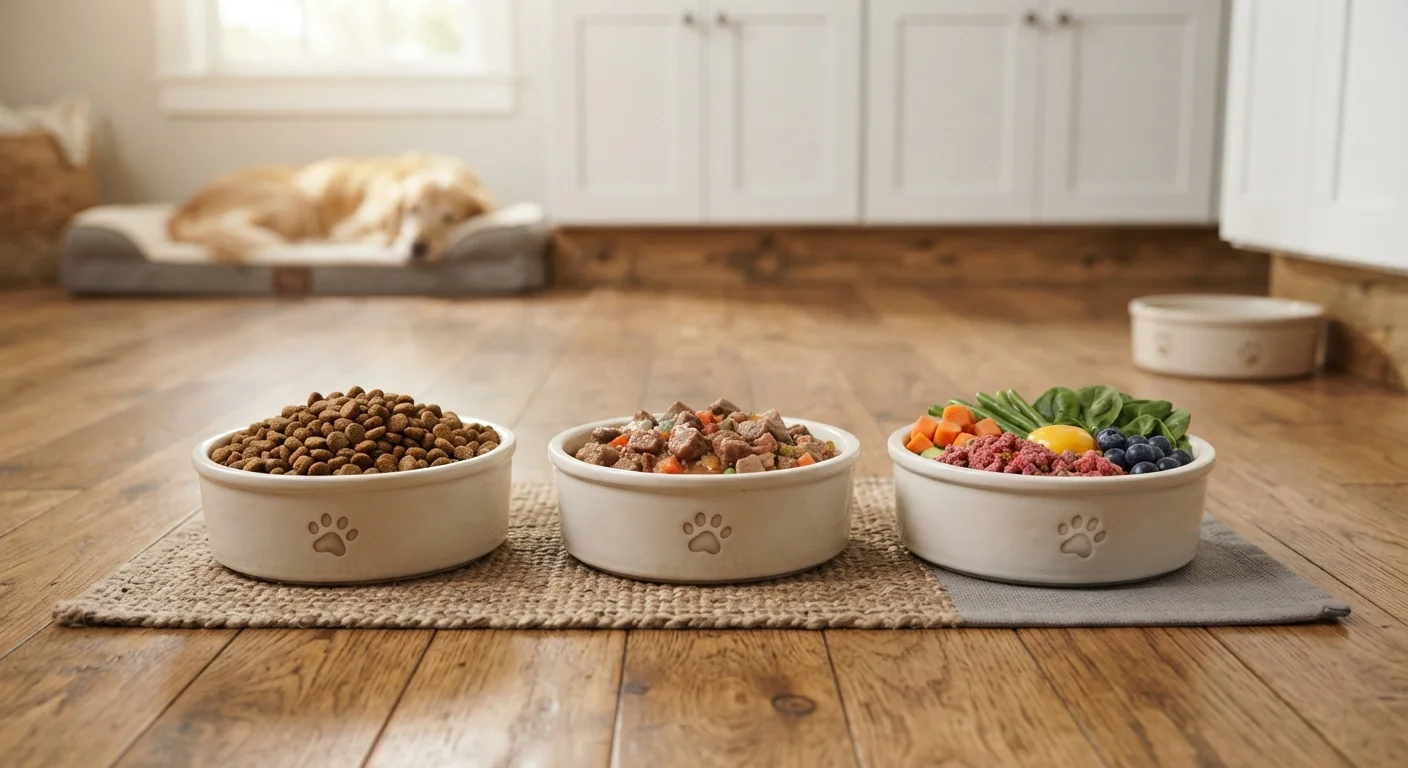
Whatever your dog's diet and daily routine look like, a consistent schedule supports both approaches. Our breakdown of dog nutrition options can help you think through feeding timing alongside your confinement setup.
4-5 hrs
Maximum recommended daytime crating for adult dogs
Veterinary and training organizations generally advise against crating adult dogs for longer stretches without a break for exercise and elimination.
~16 hrs
Average daily sleep for adult dogs
Dogs sleep considerably more than humans, which means a properly sized crate often feels restful rather than restrictive when introduced correctly.
The Hybrid Path Most Dogs Follow
In practice, most owners use both approaches at different life stages. A puppy starts in a crate at night and during unsupervised daytime hours, then earns progressively more freedom as it matures. By adulthood, many dogs sleep wherever they like and roam freely, with the crate available as an optional retreat.
This staged approach reflects how dogs actually learn - gradually, through repetition and clear consequences. The crate isn't a permanent fixture; for most dogs, it's scaffolding that gets removed once the structure underneath is solid.
The right setup isn't the one that fits a general rule - it's the one that matches your dog's current temperament, training level, and your household's realistic schedule. Revisit the arrangement whenever your dog's behavior or your circumstances change.