
The Common Misunderstanding About Budgets
Ask most people what a budget is and you'll hear some version of: "It's when you have to stop spending money on things you like." That framing is both understandable and wrong - and it's the main reason so many people avoid budgeting entirely.
A budget isn't a restriction imposed on you. It's a plan you create. The difference matters enormously. Restrictions feel punishing. Plans feel empowering. When you write a budget, you're not giving up control of your money - you're exercising it.
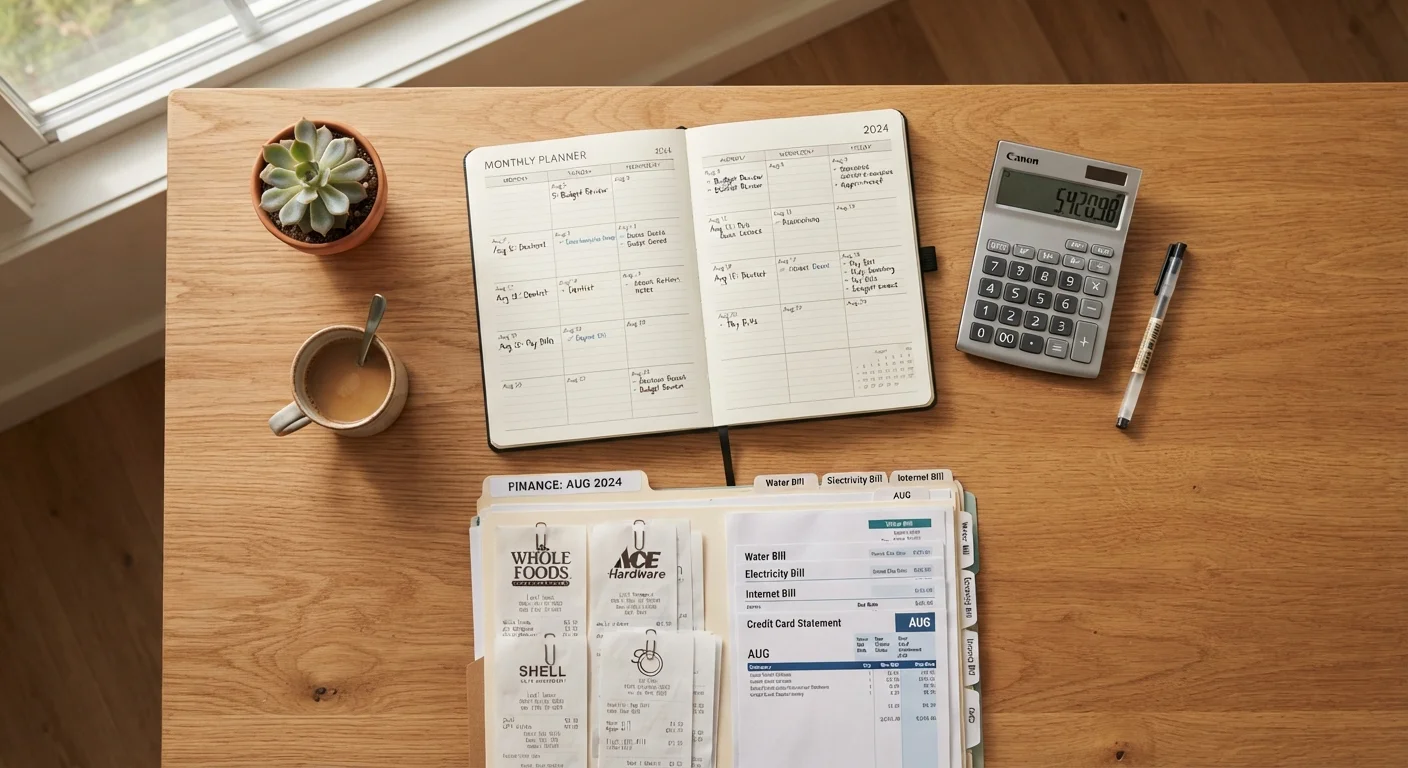
Another widespread myth is that budgets are only for people who are struggling financially. In reality, budgets are useful at every income level. They're how households avoid running out of money before the month ends, how families save for vacations or emergencies, and how individuals stop wondering where their paycheck disappeared to. If you've ever been curious about those patterns, building a spending snapshot is a natural starting point.
Budgeting Is Not the Same as Being Broke
One of the most persistent misconceptions is that only people in financial difficulty need a budget. In practice, a budget is simply a decision-making tool - equally useful whether someone earns $30,000 or $300,000 a year. The habit of assigning money intentionally is what separates people who reach financial goals from those who don't, regardless of income level.
What a Monthly Budget Actually Contains
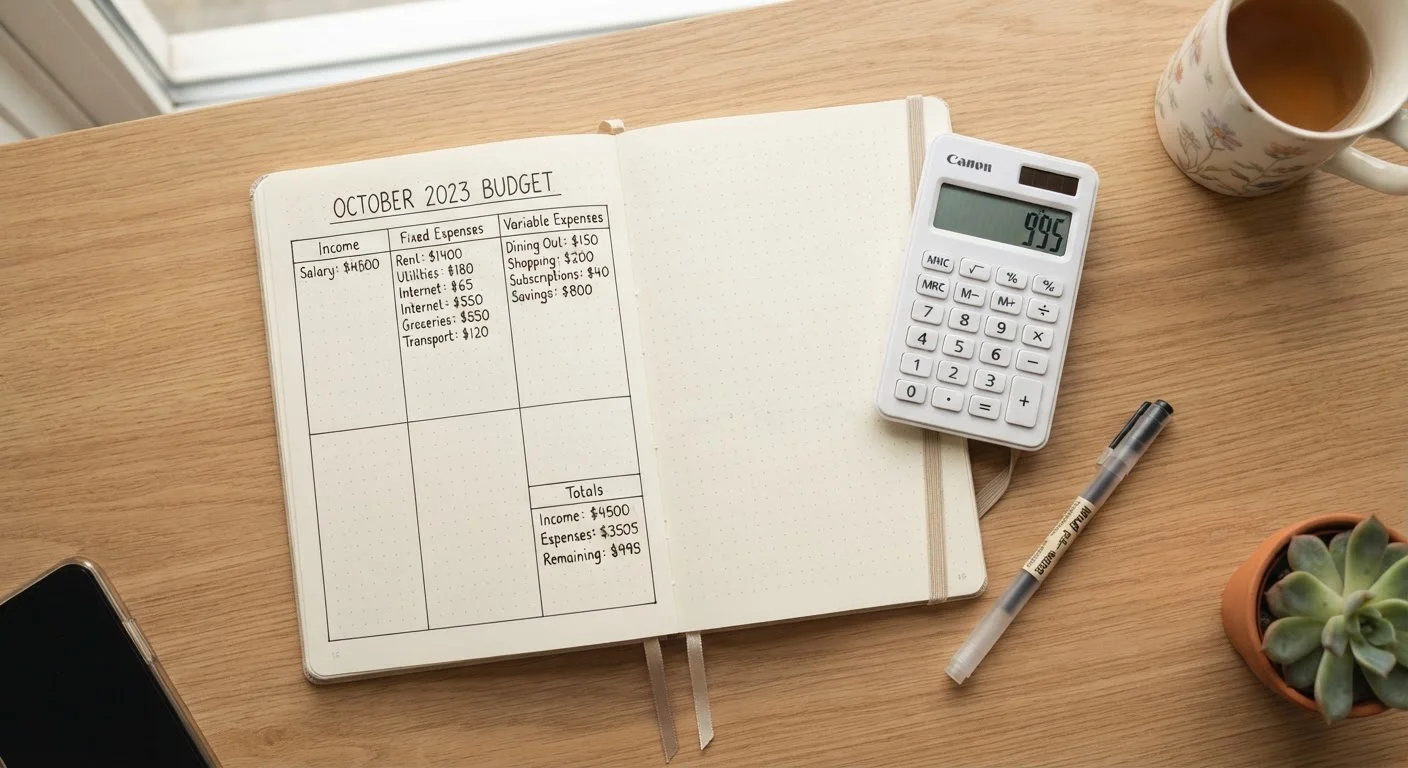
At its core, a monthly budget has two sides: money coming in and money going out. That's it. Everything else is just organizing those two things clearly.
Income is everything you expect to receive in the month - wages, freelance pay, side income, or any other regular source. Use your take-home (after-tax) amount, not your gross salary.
Expenses fall into a few natural groups:
- Fixed expenses - amounts that stay the same each month, like rent, a car payment, or an insurance premium.
- Variable expenses - amounts that shift, like groceries, gas, or utility bills.
- Discretionary spending - choices you make, like dining out, subscriptions, or entertainment.
- Savings and debt payments - money deliberately set aside or paid toward what you owe.
A complete budget assigns every dollar of income to one of these categories before the month starts. When income equals outgoing expenses plus savings, you have what's often called a zero-based budget - not because you spend everything, but because every dollar has a job.
~33%
Americans who maintain a detailed household budget
According to Gallup polling, roughly one in three U.S. adults reports keeping a detailed monthly budget, suggesting most households navigate spending without a formal plan.
$1,000
Emergency savings benchmark cited by many financial educators
Many personal finance educators recommend a starter emergency fund of $1,000 as a first savings milestone - an amount a clear budget can help households target deliberately.
Why Budgets Feel Hard (When They Aren't)
Most budget frustration comes from three predictable sources: setting unrealistic limits, forgetting irregular expenses, and treating the first draft as final.
When someone new to budgeting cuts their grocery category in half or eliminates coffee entirely, they're setting themselves up to quit. A more useful approach is to start with what you actually spend, then make deliberate, small adjustments over time.
Irregular expenses - annual subscriptions, car registration, holiday gifts - catch people off guard because they don't show up every month. The fix is simple: estimate the annual cost, divide by twelve, and set that amount aside monthly as its own category.
Finally, many people treat a budget as something that, once broken, is ruined. It isn't. A budget is a living document. If you overspend in one category, you adjust - either by pulling from another category or by revising next month's plan. Consistency over time matters far more than perfection in any single month. You can read more about common stumbling points in our article on budgeting beliefs that hold people back.
Start With What You Actually Spend
When building your first budget, resist the urge to set ambitious targets from day one. Pull two or three months of bank or credit card statements and use your real spending as the starting point. Realistic numbers are far more useful than aspirational ones - you can always tighten a category once the habit is established.
How to Put Your First Budget Together
Starting is simpler than most people expect. Here's a plain-language sequence to follow:
- Write down your monthly take-home income. Include all reliable sources.
- List your fixed expenses first. Rent, loan payments, and insurance are non-negotiable and go in before anything else.
- Estimate variable expenses based on recent spending - bank statements or card history from the last two or three months give you a realistic baseline rather than a guess.
- Add a savings line - even a small, consistent amount counts. Savings is an expense category like any other.
- Assign the remaining money to discretionary categories until income and outgoing amounts are equal.
If expenses exceed income in step five, that's valuable information - not a failure. It tells you exactly where adjustments need to happen. For a more structured approach, our monthly budget setup checklist walks through every item you'll need before you start. And once your first month is underway, your first month on a budget offers a step-by-step guide to staying on track.
This article is for general informational purposes only and does not constitute personalized financial advice. For guidance specific to your situation, consider speaking with a qualified financial professional.