
Why Outfit Formulas Actually Work
There's a reason some of the most put-together people seem to wear the same kinds of outfits on repeat - they've found combinations that work and they stop second-guessing themselves. An outfit formula is simply a repeatable structure: a defined set of clothing categories that, when filled in with pieces you already own, reliably produces a complete, cohesive look.
Formulas don't limit your creativity. They free up your mental energy for everything else your morning demands. Think of them as a starting template, not a uniform. Once you have a few favorites locked in, getting dressed becomes a quick fill-in-the-blank exercise rather than a full creative session before your first cup of coffee.
If your closet feels scattered or overwhelming, check out our Wardrobe Basics hub for a primer on the foundational pieces that make every formula easier to build.
| Formula structure | Bottom + Top + Layer + Shoe |
| Minimum wardrobe for formulas | 3 bottoms, 5 neutral tops, 2 layers, 2 shoes |
| Best formula for office days | Chinos + button-down + loafers |
| Easiest formula to start with | Dark jeans + solid tee + clean sneakers |
| Time savings per morning | Reported as 10-20 minutes by habit researchers (General behavioral research on decision fatigue) |
Five Go-To Outfit Formulas to Try
Each of these formulas works across a range of everyday situations - from running errands to heading into the office. Swap colors and textures to keep things fresh without rethinking the structure.
1. Classic Casual: Dark Jeans + Solid Tee + Clean Sneakers
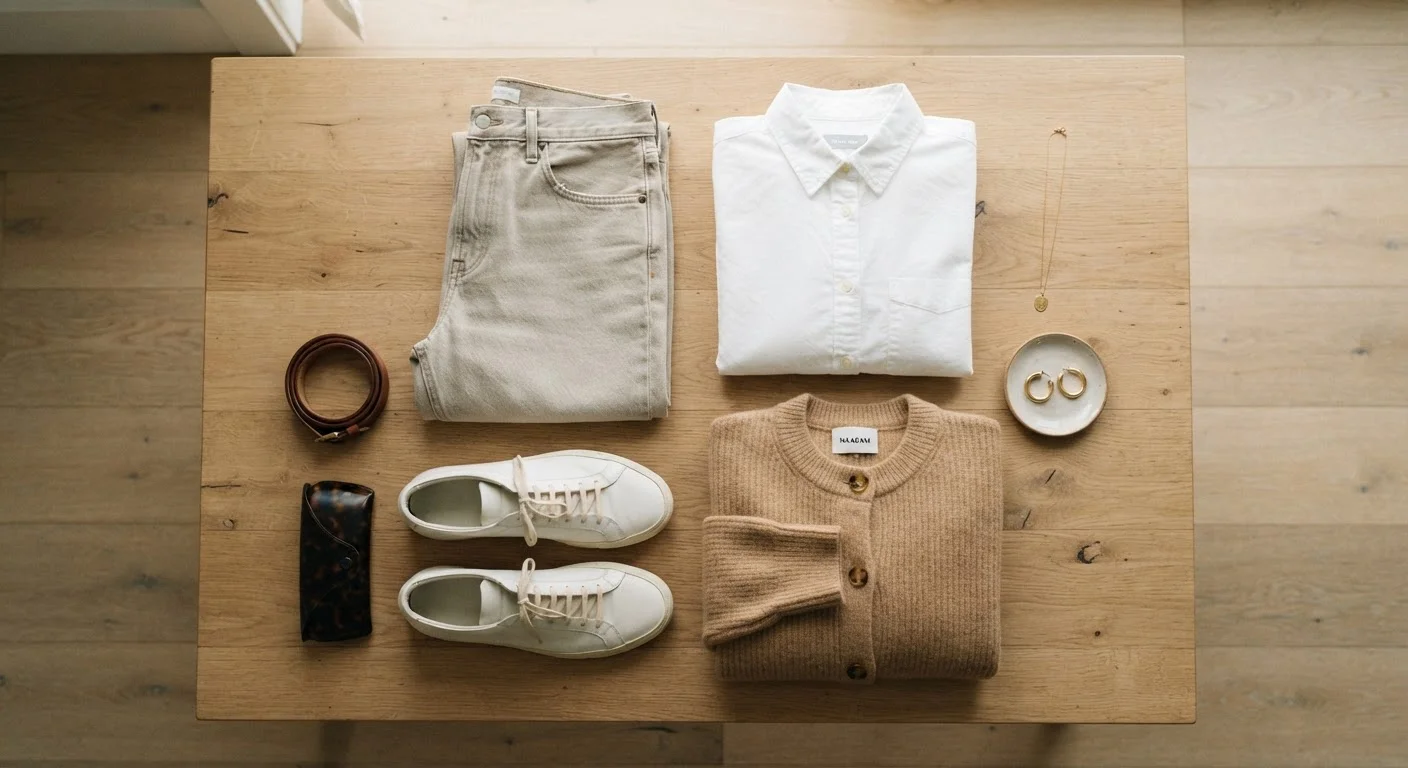
This is the workhorse formula. Dark-rinse jeans read slightly more polished than faded ones, and a solid-colored tee in white, navy, or gray keeps the look unfussy. Add a canvas tote and you're set for almost any daytime activity.
2. Smart Casual: Chinos + Button-Down Shirt (Tucked Halfway) + Loafers or Ankle Boots
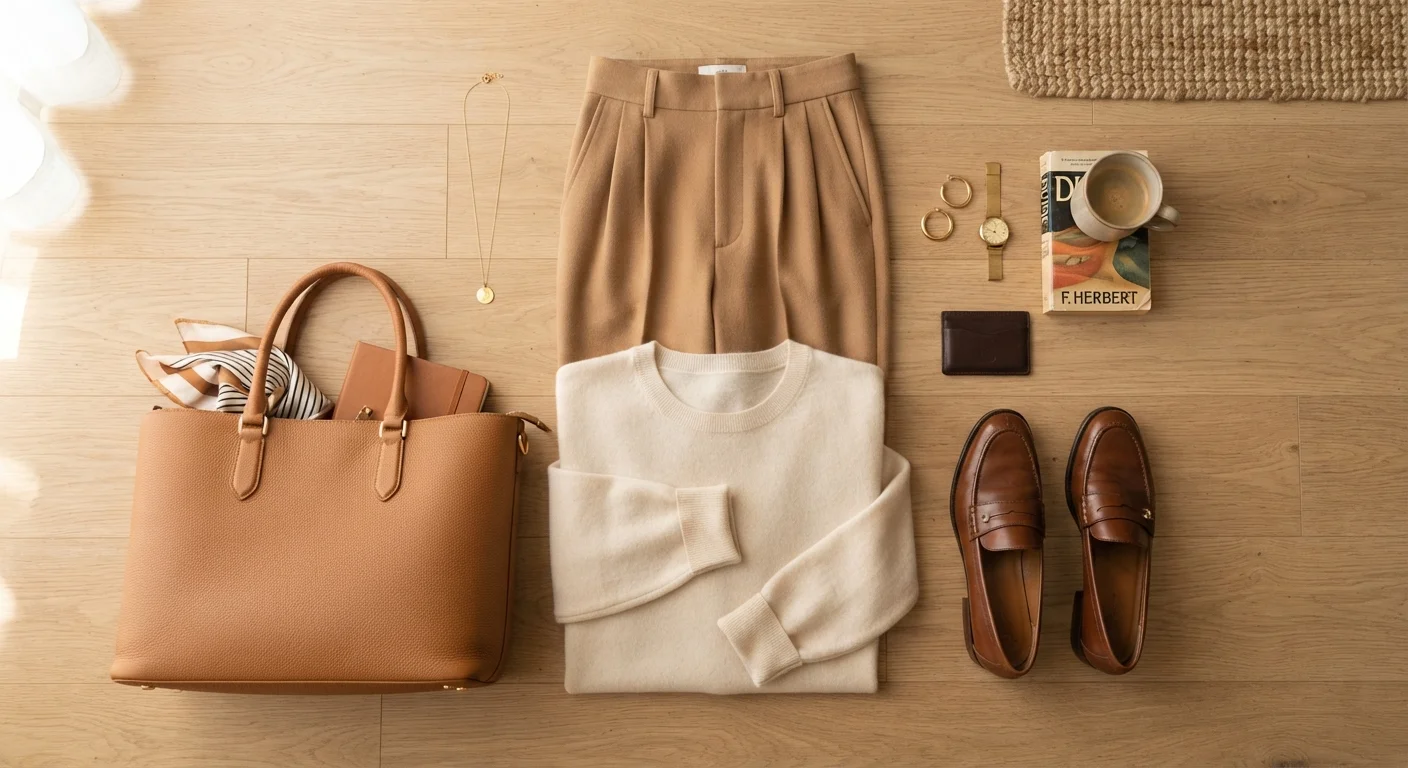
A half-tuck adds a relaxed, intentional quality to what could otherwise feel stiff. This formula easily transitions from a casual office to dinner plans - exactly the kind of versatility discussed in outfits that work from office to errands.
3. Elevated Basics: Monochromatic Layers in Neutral Tones
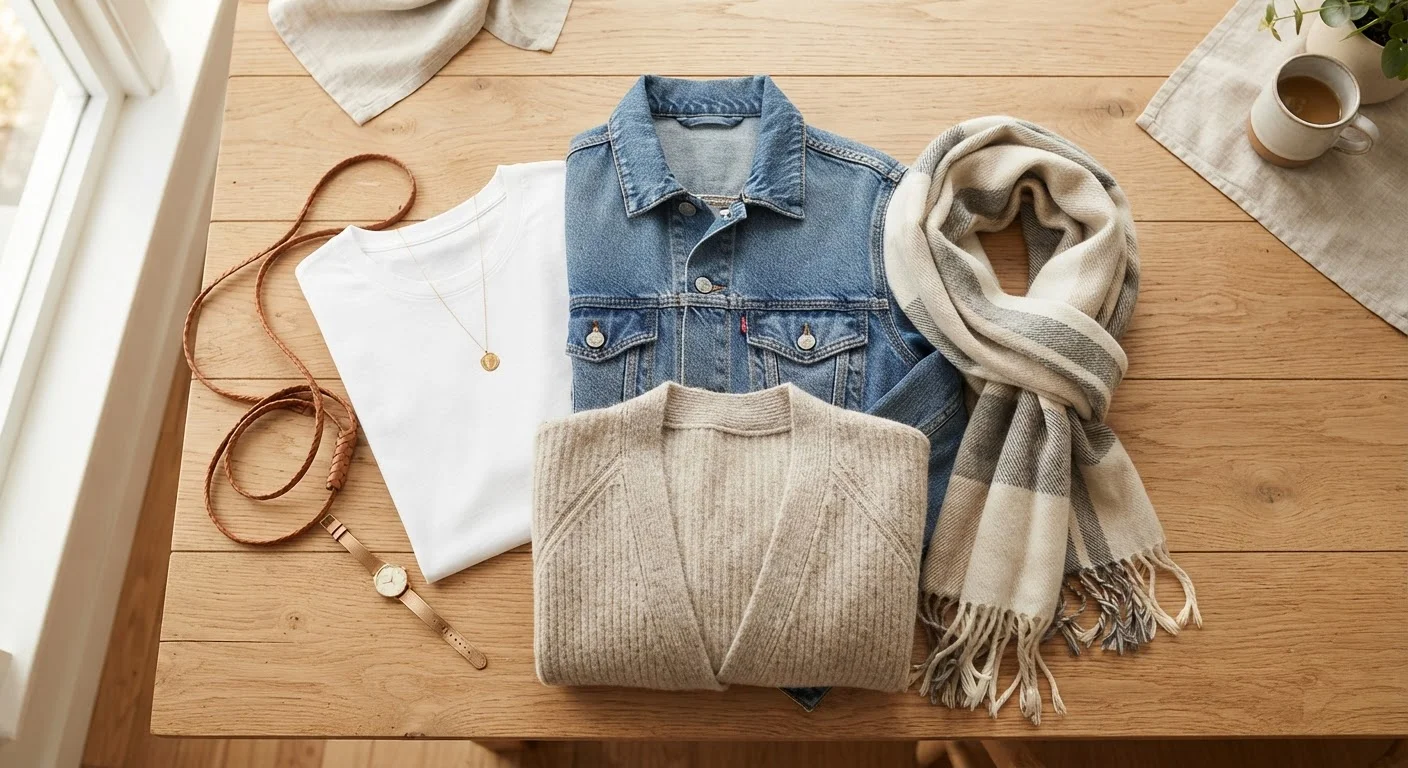
Wearing one color family head-to-toe - think cream, beige, or charcoal - looks intentional without any effort. Stack a fitted long-sleeve under a relaxed crewneck sweater and pair with straight-leg trousers for an outfit that reads effortlessly polished. Layering basics explains exactly how to stack pieces without adding visual clutter.
4. Weekend Easy: Joggers or Soft Trousers + Fitted Tee + Zip-Up or Bomber Jacket
Comfort-forward doesn't have to mean sloppy. Choosing joggers in a structured fabric - like a ponte knit or a tapered athletic cut - keeps this formula looking intentional. The zip-up or bomber does the heavy lifting, elevating even the simplest bottom-and-tee pairing.
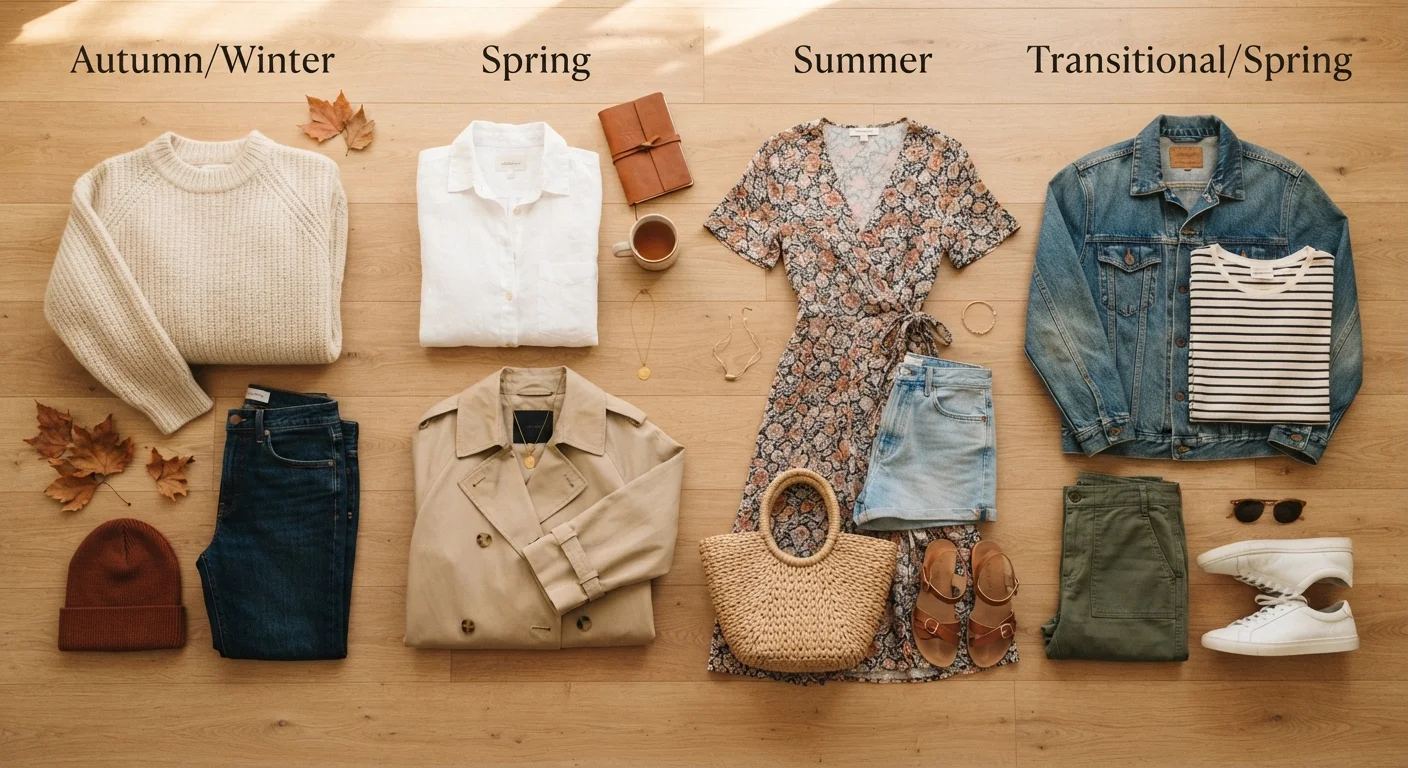
5. Seasonal Anchor: Statement Layer + Neutral Base
Pick your season's anchor piece - a chunky knit sweater in fall, a linen shirt in summer - and build a neutral base beneath it. For ideas on what anchors work best by season, see seasonal outfit anchors.
Outfit Formula
A repeatable clothing structure (e.g., bottom + top + layer + shoe) that produces a cohesive look when filled with interchangeable pieces. It removes daily decision-making by giving you a reliable starting template.
Neutral Base
A foundational layer in an achromatic or muted tone - white, gray, beige, navy, or black - that pairs easily with almost any other color or pattern in an outfit.
Anchor Piece
The standout item a seasonal or statement outfit is built around - such as a bold sweater in fall or a linen blazer in summer. Everything else in the look supports it.
Half-Tuck
A styling technique where only the front portion of a shirt is loosely tucked into the waistband, creating a casual, intentional look that avoids the stiffness of a full tuck.
Monochromatic Dressing
Wearing a single color or tonal family throughout an entire outfit. It creates a visually elongated, polished appearance with minimal effort or coordination.
Making Formulas Work in Your Closet
The best outfit formula is one built around pieces you actually own and reach for. A few practical steps to get started:
- Identify your three most-worn bottoms. Those are your formula anchors. Build up from them.
- Keep a small rotation of neutral tops. Solids in white, gray, navy, and black pair with almost everything and keep formulas consistent.
- Assign a formula to a use case. Designate one for work days, one for weekends, one for low-effort errands. Decision fatigue disappears fast.
- Note what's missing. If a formula always falls apart because you lack a good layering piece, that's useful shopping direction - not a reason to overhaul your closet.
For a deeper look at how a small, intentional wardrobe can cover every kind of day, Building a Wardrobe That Works Every Day is a great next read. And if you want those formulas to flex across dress codes, Dressed for Any Occasion walks through exactly how to do that.
Formulas Work Best with Versatile Pieces
Outfit formulas only deliver on their promise when your closet contains genuinely versatile items. A formula built around a very trend-specific or occasion-specific piece will feel limiting fast. Aim for pieces with clean lines, neutral or classic colors, and flexible fabric weights. Versatility is what lets the same formula serve you across multiple seasons and settings.