

Why Reading the Policy Matters Before You Buy
Travel insurance sounds straightforward until you need to use it. The gap between what travelers assume is covered and what a policy actually covers is where costly surprises happen. A policy that looks comprehensive on a comparison summary page may contain exclusions, dollar caps, or procedural requirements that dramatically limit its real-world value.
Before you commit to any plan, it pays to read the actual policy document - not just the marketing summary. If you're new to insurance terminology, our plain-language guide to travel insurance terms is a great place to start. And if you're planning an international trip, understanding what each coverage type actually means before you read a policy will make this checklist far more useful.
Use the checklist below as a structured audit of any policy you're seriously considering. Work through each group methodically - it takes less than an hour and gives you real confidence in what you're buying.
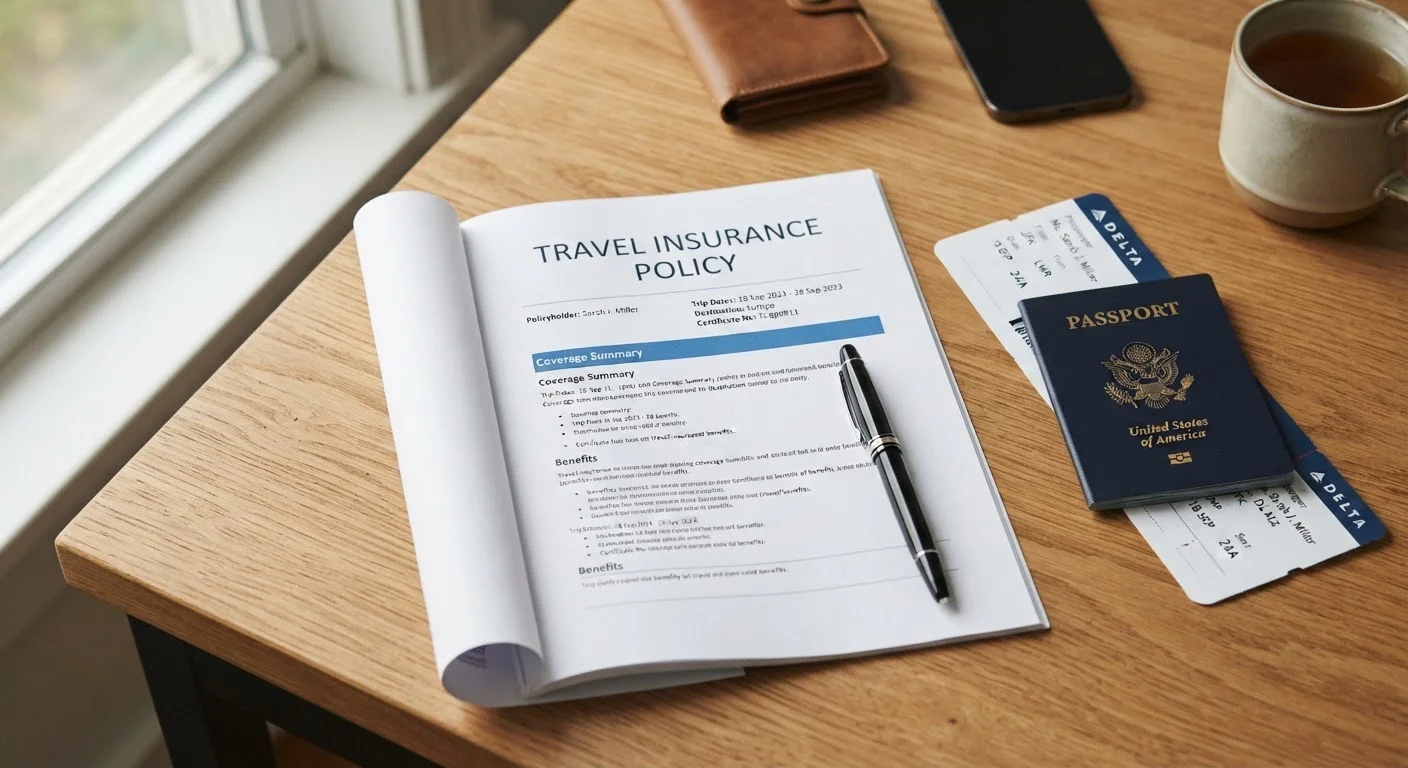
Full Policy Document (Certificate of Insurance)
The complete legal policy text - request this before purchase, as it contains exclusions and conditions not visible in marketing summaries.
Your Trip Itinerary & Cost Summary
A list of all non-refundable trip costs to verify coverage limits match your actual financial exposure.
Your Personal Health Summary
A brief note on any pre-existing conditions so you can evaluate whether the policy's definition and waiver terms apply to you.
Official Government Travel Advisory Page
Used to check your destination's current advisory level, which may trigger policy exclusions.
The Pre-Purchase Policy Checklist
Work through these grouped items against the full policy document (often called the Certificate of Insurance or Policy of Insurance). Take notes as you go - you may want to compare two or three plans side by side.
Coverage Types & Limits
Exclusions & Conditions
Claims Procedures & Deadlines
Policy Timing & Structure
Pre-Existing Condition Waivers Have Strict Deadlines
Most travel insurance policies offer a pre-existing condition waiver - but only if you purchase the policy within a specific window after your initial trip deposit, often 14 to 21 days. Miss that window and any condition that existed before purchase may be excluded from coverage entirely. Check this deadline carefully and purchase accordingly. This is general guidance; confirm the exact terms with your specific insurer or a licensed agent.
If you're deciding between a single-trip plan and an annual multi-trip policy, our comparison of single-trip vs. annual travel insurance can help you choose the right structure first, so you're evaluating the right type of plan from the start.
After You've Worked Through the Checklist
Once you've reviewed a policy against every item above, you should have a clear picture of what's protected, what isn't, and whether any gaps are acceptable for your specific trip. No policy covers everything - the goal is to find one whose exclusions and limits you understand and can live with.
Comparison Summaries Are Not the Full Policy
The chart or summary you see on a comparison page is a simplified marketing overview, not the binding contract. Exclusions, sub-limits, and claim procedures only appear in the full policy document. Always request and read the complete Certificate of Insurance before purchasing - not after. If any language is unclear, ask the insurer or a licensed agent to explain it in plain terms before you commit.
If you're traveling internationally, pair this review with a look at our health prep checklist for international travel - some health-related exclusions in insurance policies interact directly with vaccination and medical documentation requirements at your destination. For a broader look at international trip planning, visit our International Travel hub.
This article is for general informational and educational purposes only. It does not constitute personalized insurance, financial, or legal advice. Coverage terms, exclusions, eligibility, and regulations vary by provider and by state. Always read the complete policy document and consult a licensed insurance agent or adviser before making a coverage decision.