

Why a Setup Checklist Matters
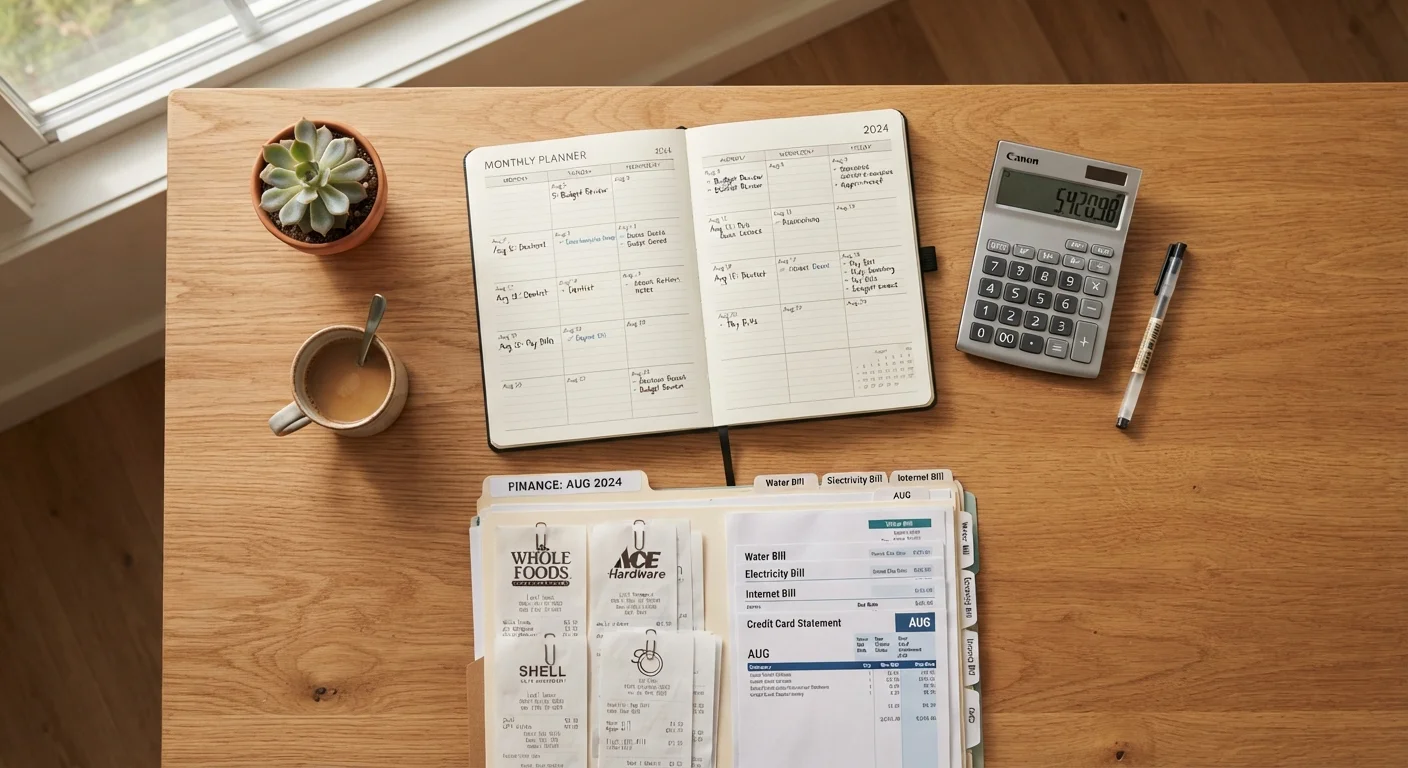
Most budgets stall not because people lack discipline, but because they skip the groundwork. Jumping straight into spending categories without first collecting the right numbers is like building a house without measuring the lot. This checklist walks you through every step - gathering documents, calculating income, categorizing expenses, and choosing how to track it all - so that when you sit down to fill in your budget, nothing is missing.
Before you begin, it helps to understand your current spending patterns. Our guide on mapping where your money goes is a strong companion to this checklist. Once you've completed these setup steps, your first month on a budget walks you through putting the plan into action.
Recent Pay Stubs
Used to determine accurate take-home (net) pay for the month.
Bank and Credit Card Statements
Used to identify actual spending patterns across variable expense categories.
Recurring Bill Statements
Used to list and total all fixed monthly obligations accurately.
Spreadsheet or Budgeting App
Used to organize income, expenses, and savings into a working monthly budget.
Calculator
Used for converting biweekly pay to monthly figures and averaging variable expenses.
The Complete Monthly Budget Setup Checklist
Work through each group in order. Check off items as you complete them - this isn't just a reading exercise, it's an active process. Some steps will take two minutes; others may require digging through bank statements or logging into a benefits portal. Set aside 30 to 60 minutes of uninterrupted time.
Gather Your Documents
Calculate Your True Monthly Income
Identify and List Fixed Expenses
Estimate Variable and Irregular Expenses
Set Savings and Financial Goals
Choose Your Tracking Method
Don't Budget From Your Gross Pay
One of the most common setup mistakes is using your salary or gross income - the number before taxes and deductions - as the foundation for your budget. Taxes, health insurance premiums, and retirement contributions are typically withheld before your paycheck is deposited. Always base your budget on net (take-home) pay to avoid planning for money you won't actually receive.
Once you've established your budget structure, two related checklists can keep it running smoothly month to month: the monthly bill audit checklist and our guide to setting up a reliable bill-payment system.
What to Do After You've Checked Every Box
Completing this checklist means you have a functioning monthly budget - a plan that reflects your real income, real expenses, and real financial goals. That's further than most people get.
Your next move is to actually use it. Track spending weekly, not just at month's end, and adjust category amounts if reality doesn't match your plan in the first few months. If your budget keeps falling apart mid-month, common structural mistakes are usually the culprit - see why budgets fail mid-month and what to do differently for a practical fix.
Two priorities worth building into your budget from day one: an emergency fund and a savings habit. Our guides on building an emergency fund at any income level and choosing the right type of savings account can help you make those decisions with confidence.
Every Dollar Needs an Assignment
A budget only works when your income minus your planned expenses equals zero - meaning every dollar has been intentionally allocated to a category, including savings. This concept, sometimes called zero-based budgeting, doesn't mean you spend everything; it means unassigned dollars are directed to savings or a specific goal rather than disappearing into vague spending. Leaving dollars unaccounted for is one of the most reliable ways a budget quietly fails.
This article provides general financial information for educational purposes only. It is not personalized financial, tax, or legal advice. For guidance specific to your situation, consult a qualified financial professional.