
Why the In-Between Is the Hardest Part
Most style advice targets one setting at a time: here's what to wear to work, here's a weekend look. But real life doesn't operate in clean categories. Plenty of days start with back-to-back meetings and end with a swing through the hardware store or picking up a prescription. Getting dressed for that kind of day - where you're expected to look professional and need to stay comfortable - takes a slightly different approach.
The goal isn't to be overdressed for errands or underdressed at the office. It's to find the overlap: pieces that function well enough in both settings that you never feel like you're wearing the wrong thing. As our guide to balancing comfort and looking intentional explores, those two goals aren't actually opposites - they just require a bit of intentional planning up front.
Keep a Versatility Test in Mind
Before adding any piece to your rotation, ask: 'Could I wear this to a meeting and then to the pharmacy without feeling out of place?' If the answer is yes, it's a strong candidate for your transition wardrobe. Think ponte trousers, fitted crewneck sweaters, and clean leather or leather-look sneakers.
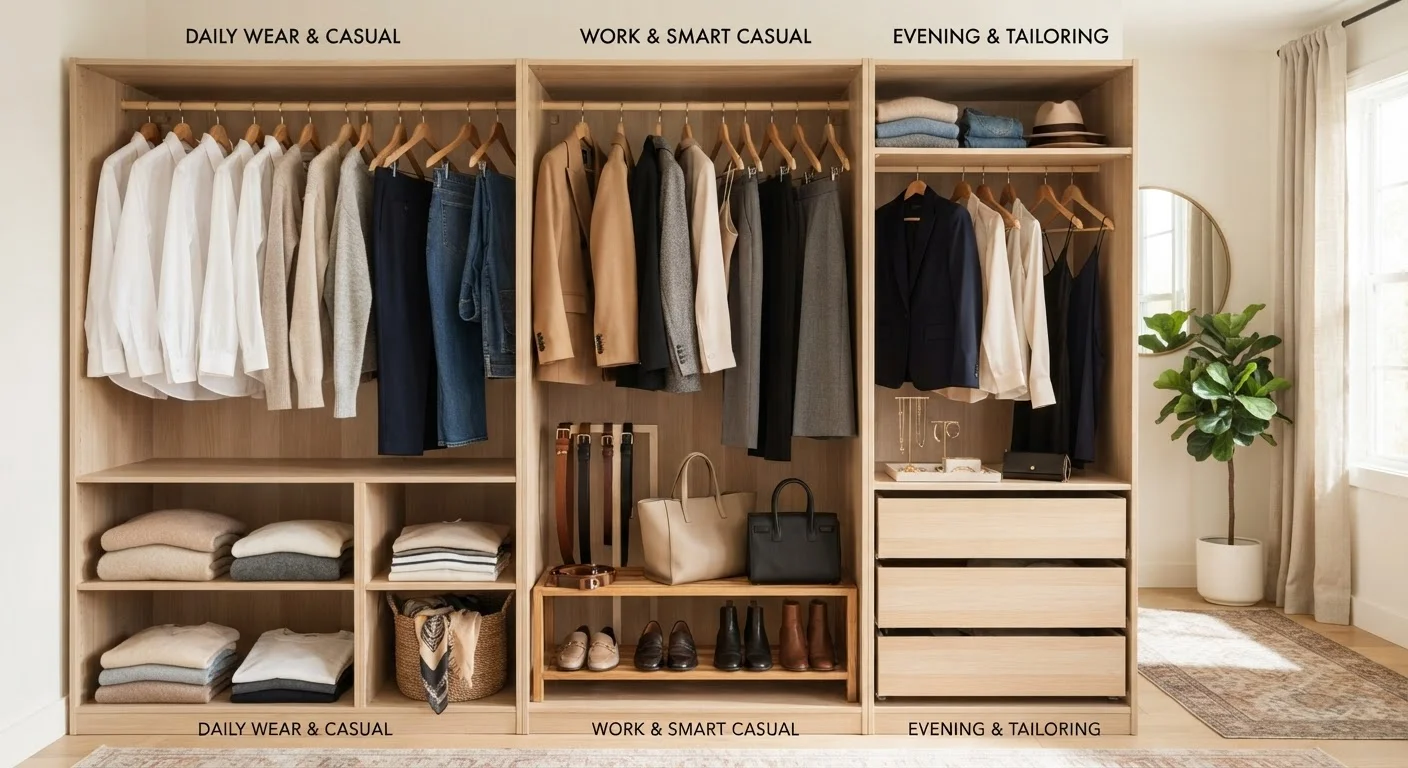
This is also where thinking about your wardrobe as a whole pays off. If you're building toward a closet that genuinely covers multiple contexts, our guide to building a wardrobe that transitions from casual to formal is a useful companion read.
What You'll Need Before You Start
You don't need to go shopping before putting this into practice - most of what makes a great transition outfit is probably already in your closet. What matters is identifying the pieces that already work across settings and understanding how to combine them strategically.
What you will need
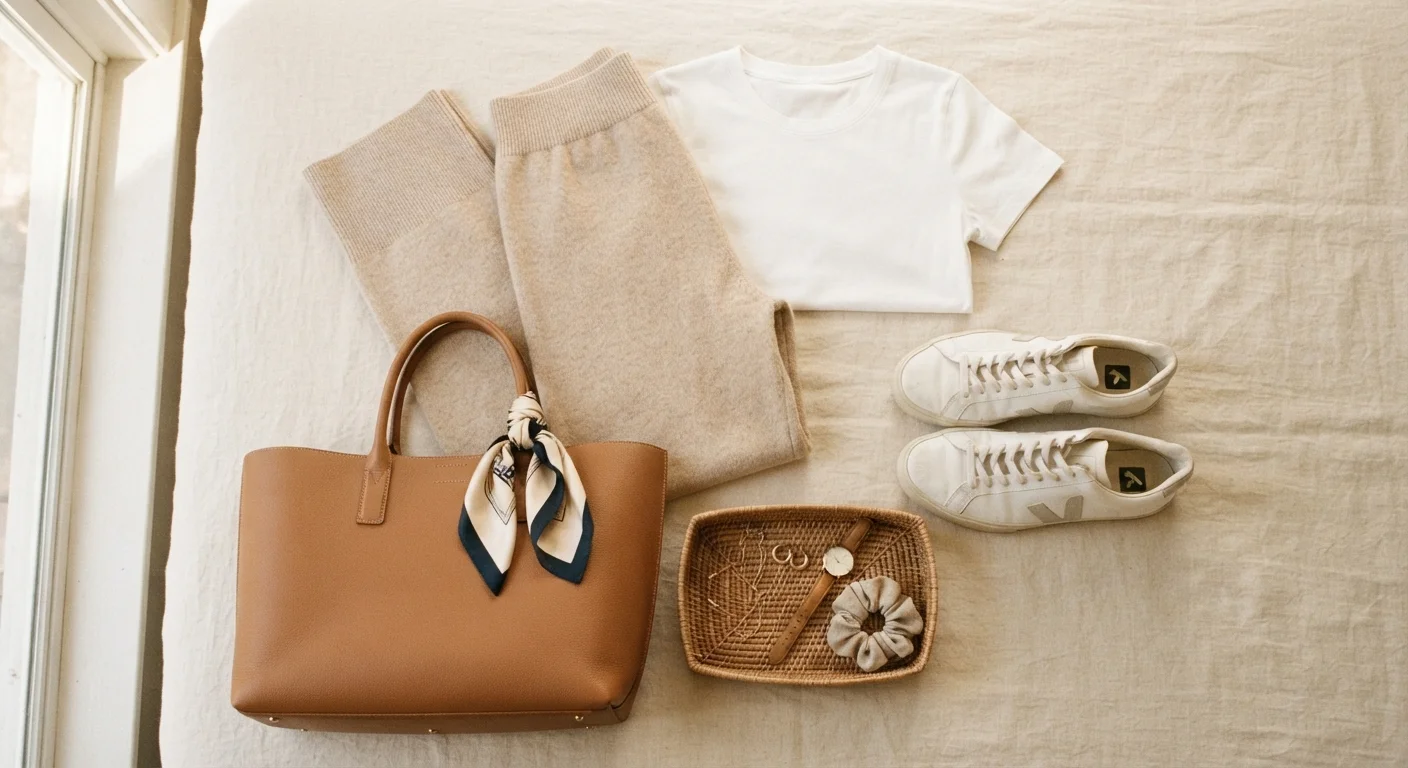
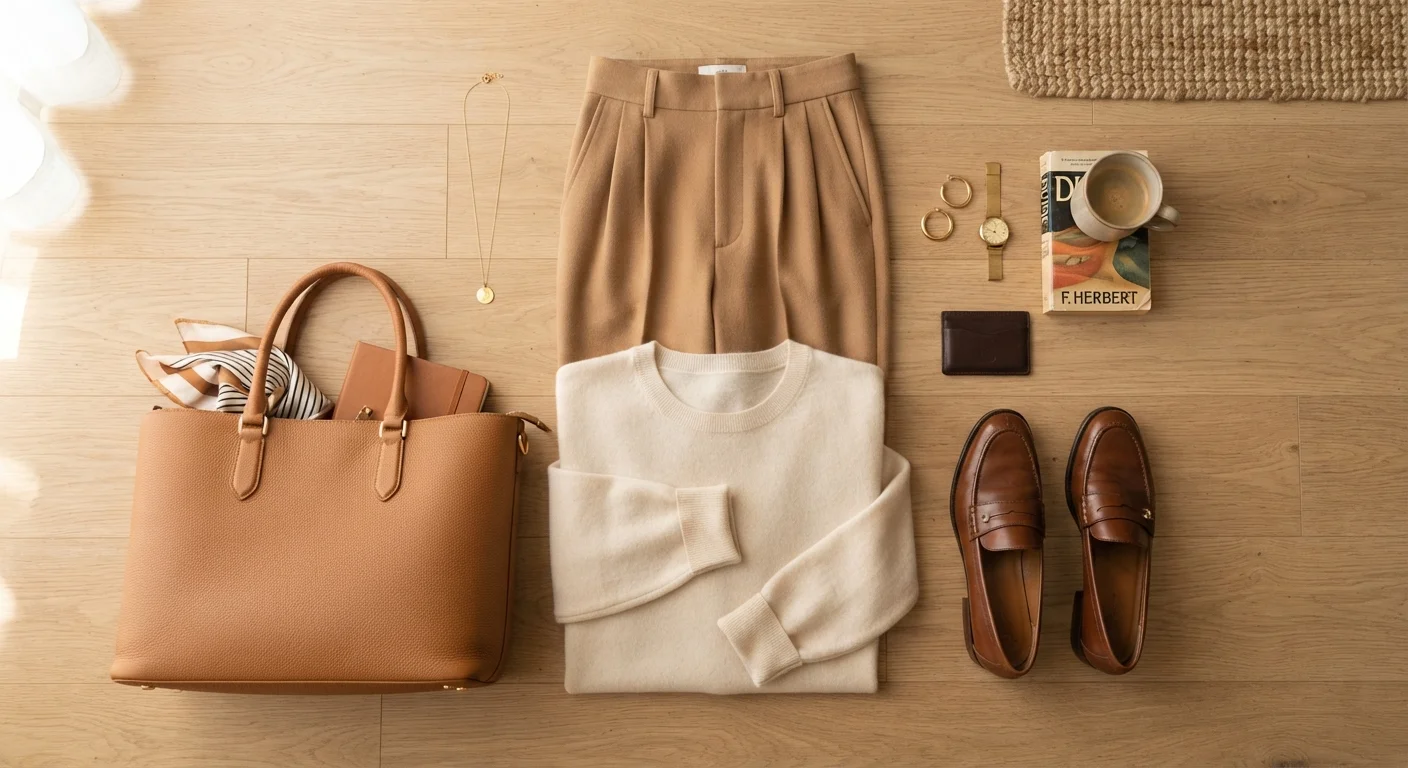
Structured tote bag
Carries work essentials and personal items while looking polished in professional and casual settings alike.
Ponte or stretch trousers
Provide the appearance of tailored pants with the comfort of casual wear - ideal for long, mixed days.
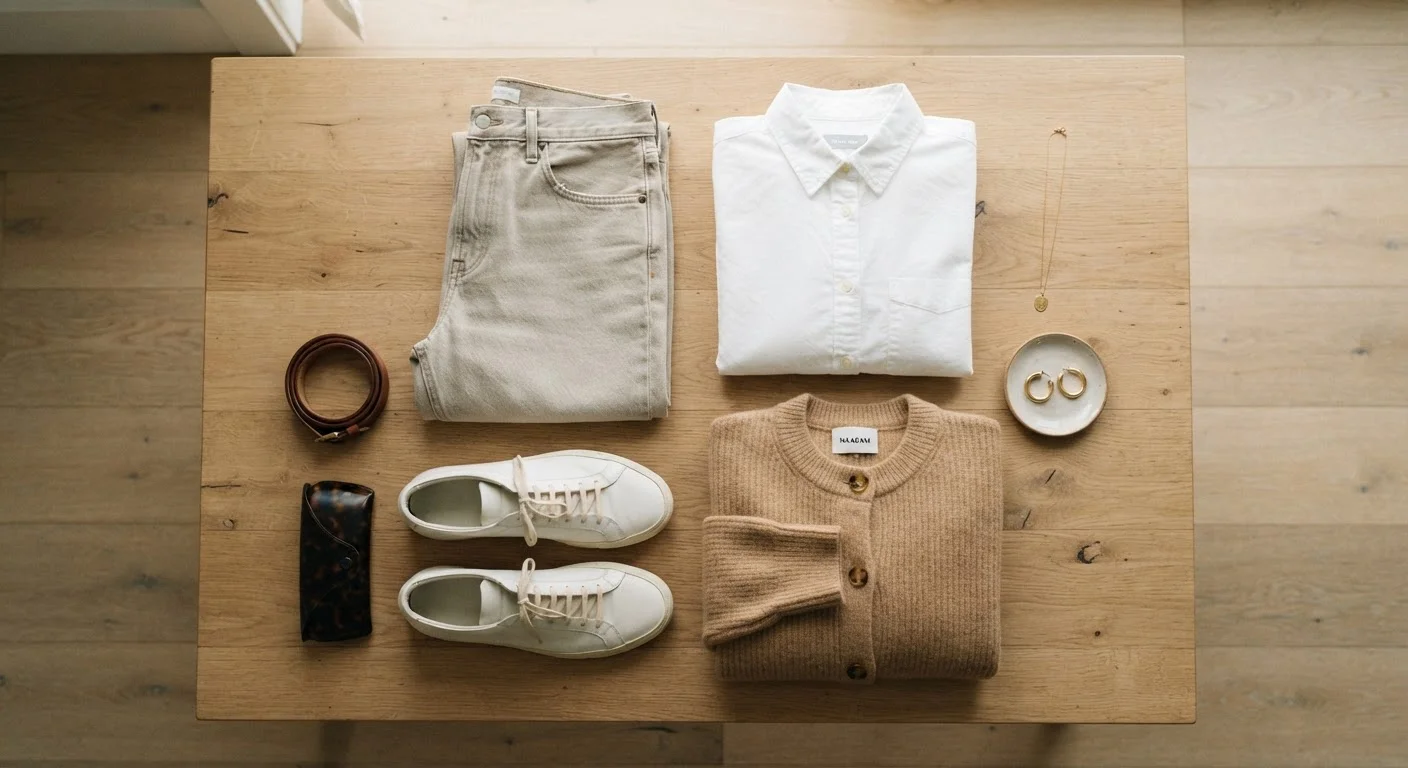
Lightweight layer (blazer, cardigan, or overshirt)
Adds professionalism at work and can be tied at the waist or removed entirely for a more relaxed look after hours.
Clean, low-profile sneakers or loafers
Footwear that reads neat enough for an office environment but comfortable enough for hours of walking.
Simple scarf or neckerchief
An easy styling detail that elevates a basic outfit and can be removed to dress things down quickly.
Once you have your components in mind, the steps below walk through building a reliable all-day outfit from the ground up. And if mornings are your real challenge, outfit formulas for low-energy mornings can give you a starting framework to fall back on.
Building the Outfit Step by Step
Start with a Reliable Base Bottom
Choose a bottom that reads structured without being stiff. Ponte trousers, dark straight-leg jeans with no distressing, or a midi skirt in a solid color all work well. These anchor the outfit and set the tone for both settings you'll move through during the day.
Pick a Top That Holds Its Shape
A fitted crewneck, a tucked-in poplin shirt, or a smooth knit top in a solid or subtle print gives your outfit a polished core. Avoid anything too flowy or too cropped for a full day - you want to feel comfortable whether you're seated at a desk or reaching for something on a shelf.
Add a Layer You Can Work With
A blazer, a longline cardigan, or an overshirt serves dual purposes: it adds a degree of formality at the office and gives you coverage during air-conditioned commutes or chilly errand stops. Choose one in a neutral that coordinates with your base pieces so it functions as a flexible third element rather than an afterthought.
Choose Footwear That Goes the Distance
This is where most transition outfits succeed or stumble. Heels that looked great at 9 a.m. can feel defeating by the time you're walking a parking lot at 6 p.m. Clean leather or leather-look loafers, block-heeled ankle boots, or sleek low-profile sneakers offer the visual finish of intentional dressing while keeping your feet cooperative all day long.
Bring One Bag That Handles Both Worlds
A structured tote or a medium-sized crossbody in a solid, neutral color is your workhorse here. It should fit your work essentials - laptop, notebook, or whatever you carry - while still looking appropriate when you're dropping off dry cleaning or grabbing groceries. Avoid anything too precious or too casual for this role.
Do a Quick Evening Reset If Needed
If your day goes long or your after-work stops are more social, a one-minute swap can refresh the look. Swap the blazer for the cardigan, add a simple earring, or change to a slightly more relaxed shoe if you have the chance. The point isn't to carry a full wardrobe - it's to know which one small adjustment shifts the energy of the outfit when you want it to.
Fit Matters More Than Price
A well-fitting mid-range piece almost always looks more polished than an ill-fitting expensive one. Before investing in new transition pieces, check that what you already own fits properly at the shoulders, waist, and hem. Tailoring even one or two existing items can dramatically upgrade how put-together an outfit reads across settings.
The sequence matters here. Starting with the right base bottom makes every choice after it easier, because you're building on something that already works in both settings. From there, each layer and accessory either reinforces or complicates the outfit - keep it simple and functional.
Pitfalls to Watch Out For
Avoid Over-Accessorizing on Busy Days
When you're moving between settings all day, too many accessories can become a literal burden - extra bags, delicate jewelry that snags, or layers you end up carrying. Keep accessories purposeful: one bag that fits everything you need, and one or two pieces of jewelry that stay comfortable for hours.
Another common misstep is treating this as an excuse to default to full casualwear. Casual doesn't have to mean sloppy, but it does require structure - a fitted silhouette, clean fabrics, and deliberate choices. The same piece that looks intentional in one combination can look like an afterthought in another.
Finally, don't underestimate how much weather and season factor in. If your errands involve outdoor stops, factor in a layer appropriate to the temperature. Our transitional dressing guide for between-season weather covers how to handle those temperature swings without overhauling your outfit entirely.