

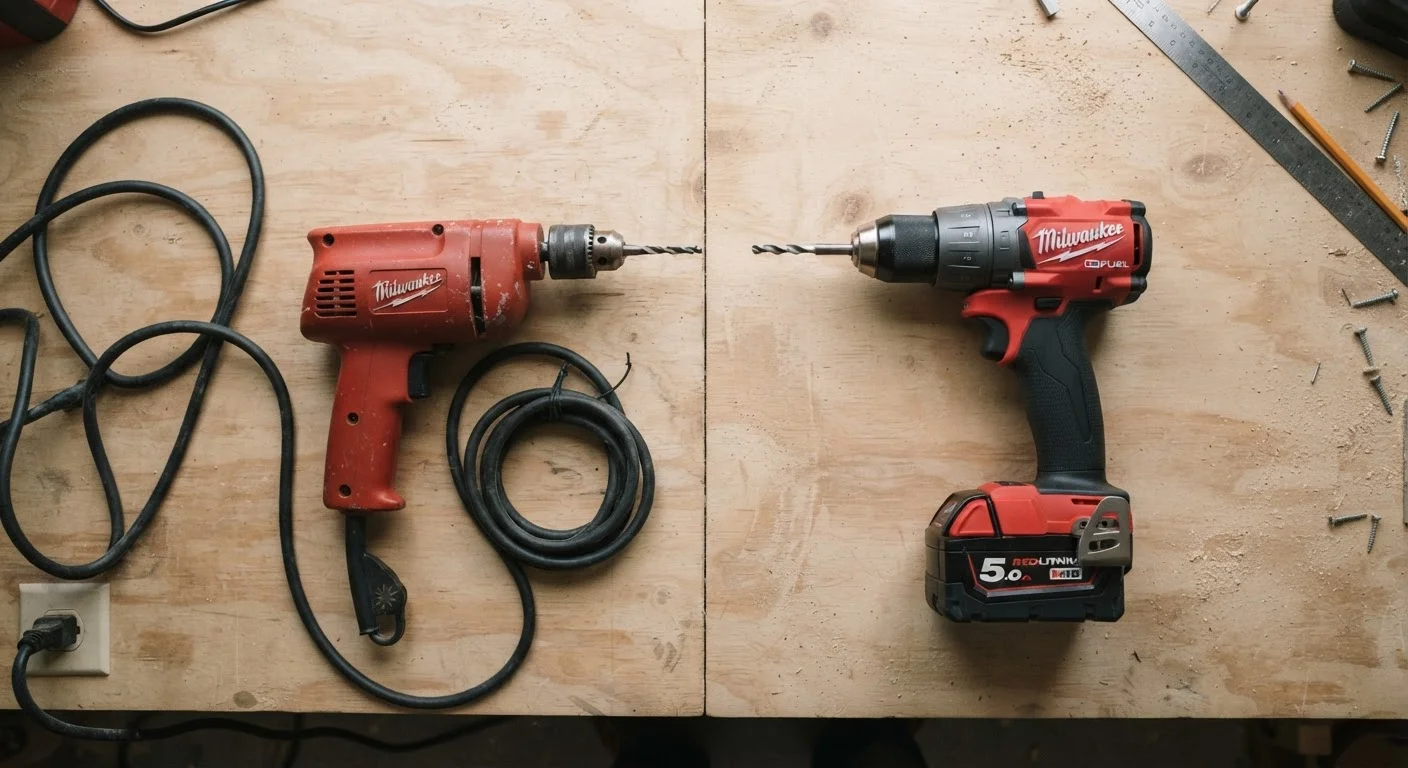
The Core Tradeoff: Power Versus Portability
At its most basic, the corded vs. cordless decision is a negotiation between consistent power delivery and freedom of movement. Corded tools pull electricity directly from the outlet, which means their output doesn't fluctuate as a battery drains. Cordless tools run on rechargeable lithium-ion battery packs - powerful enough for most tasks, but subject to the physics of battery chemistry.
What matters most is understanding how that difference plays out in practice. A corded vacuum, for instance, will maintain the same suction from the first room to the last. A cordless model may begin strong but lose meaningful performance as charge drops - particularly if the battery is older. The same dynamic applies to drills, circular saws, hedge trimmers, and similar tools.
As our guide on manufacturer specs vs. real-world performance explains, rated battery life is measured under controlled, often light-load conditions. Under actual working loads - thick carpet, dense wood, heavy vegetation - runtimes can fall well short of what's printed on the box.
| Criterion | Corded | Cordless |
|---|---|---|
| Power consistency | Constant, uninterrupted | Decreases as battery drains |
| Upfront cost | Generally lower | Higher (includes battery/charger) |
| Long-term cost | Lower - no battery replacement | Higher - battery packs degrade |
| Mobility | Limited by cord and outlet location | Full freedom of movement |
| Runtime | Unlimited while plugged in | Limited by charge capacity |
| Weight | Usually lighter (no battery pack) | Heavier due to battery pack |
| Maintenance | Minimal - cord care only | Battery storage and cycle management |
| Best use case | Heavy, sustained, fixed-location work | Mobile, short-duration tasks |
The Hidden Costs of Going Cordless
The purchase price gap between corded and cordless versions of the same tool category is real, and it's mostly explained by the battery and charger. But the upfront price difference is only part of the story.
Lithium-ion batteries degrade with every charge cycle. Depending on usage patterns and storage habits, a battery pack's capacity may drop noticeably within two to four years of regular use. Replacement packs - particularly from major tool brands - commonly run between $40 and $100 or more per battery. In some cases, that approaches or exceeds the original tool's cost. If a manufacturer discontinues a battery platform, finding a replacement can become difficult or impossible.
2-4 years
Typical lithium-ion battery useful lifespan
Battery manufacturers and consumer product guides generally cite 2-4 years or 500-1,000 charge cycles as the range before significant capacity loss occurs under normal use.
$40-$100+
Typical replacement battery pack cost
Replacement packs for branded cordless tool lines commonly fall in this range, with premium or high-capacity packs sometimes exceeding the price of an entry-level tool.
Cordless tools within the same brand family often share battery platforms, which can offset replacement costs if you're buying multiple tools. If you already own several tools on a compatible platform, adding another cordless tool becomes meaningfully cheaper. But if you're starting from scratch, factor the full battery ecosystem cost into your comparison - not just the tool's sticker price.
Warranties and service plans can play a role here too. Before purchasing, it's worth understanding what battery coverage, if any, is included. Our overview of warranties, extended plans, and going without coverage walks through how to weigh those options for tools and appliances.
When Each Format Actually Makes Sense
Neither format is universally superior - the right choice depends on how you actually use the tool.
Corded makes more sense when:
- You use the tool frequently or for long, continuous sessions.
- The task demands maximum, consistent power (large drills, shop vacuums, belt sanders).
- You're working in a fixed location with reliable outlet access.
- You want to minimize long-term maintenance and replacement costs.
Cordless makes more sense when:
- Mobility is essential - outdoor work, multi-story homes, jobsites without reliable power.
- Tasks are short and intermittent, so battery life is rarely a binding constraint.
- You already own compatible batteries from the same platform.
- Cord management is a genuine safety concern in your workspace.
For everyday consumers doing light-to-moderate work - occasional drilling, regular vacuuming, seasonal yard tasks - either format can serve well. The decision comes down to how much the convenience premium is worth relative to the ongoing battery cost. Explore more foundational buying guidance at our Shopping Basics hub.
Battery Platform Compatibility Matters
Many major tool manufacturers offer interchangeable battery systems across their product lines - meaning one battery can power a drill, vacuum, and outdoor tool from the same brand. If you're considering cordless, checking whether tools share a platform can significantly reduce the cost of building out a toolkit. Mixing brands typically means separate, incompatible battery ecosystems, which adds cost over time.