

Why These Myths Take Hold
Budgeting has a reputation problem. For many people, the word calls up images of spreadsheets full of restrictions, joyless meals at home, and constant guilt over every small purchase. These impressions aren't accidental - they're built on a collection of widely shared beliefs that simply don't hold up under scrutiny.
The cost of believing them is real. People who think budgeting is only for people in financial trouble skip it entirely - even as their savings stagnate. People who think budgets must be followed perfectly give up after one overspent week. And people who earn irregular income often assume the whole concept doesn't apply to them. None of these conclusions are correct, but they're easy to arrive at without better information.
This article addresses the most persistent budgeting myths head-on. If any of them have kept you from starting - or sticking with - a spending plan, what follows is the reality check that can change that.
Myth
Budgeting is only necessary if you're in debt or struggling financially.
Fact
A budget is a planning tool that benefits people at every income level and financial situation.
This belief causes many financially stable people to skip budgeting entirely - and then wonder why their savings never seem to grow. A budget isn't a distress signal. It's a map. Whether you earn $35,000 or $135,000 a year, a budget helps you direct money toward what matters most, catch spending leaks, and build toward goals like an emergency fund, a home purchase, or retirement. As our guide on what a monthly budget actually is explains, budgeting is about intention - not income level.
Myth
Budgeting means you can't spend money on things you enjoy.
Fact
Effective budgets include a designated category for discretionary and fun spending.
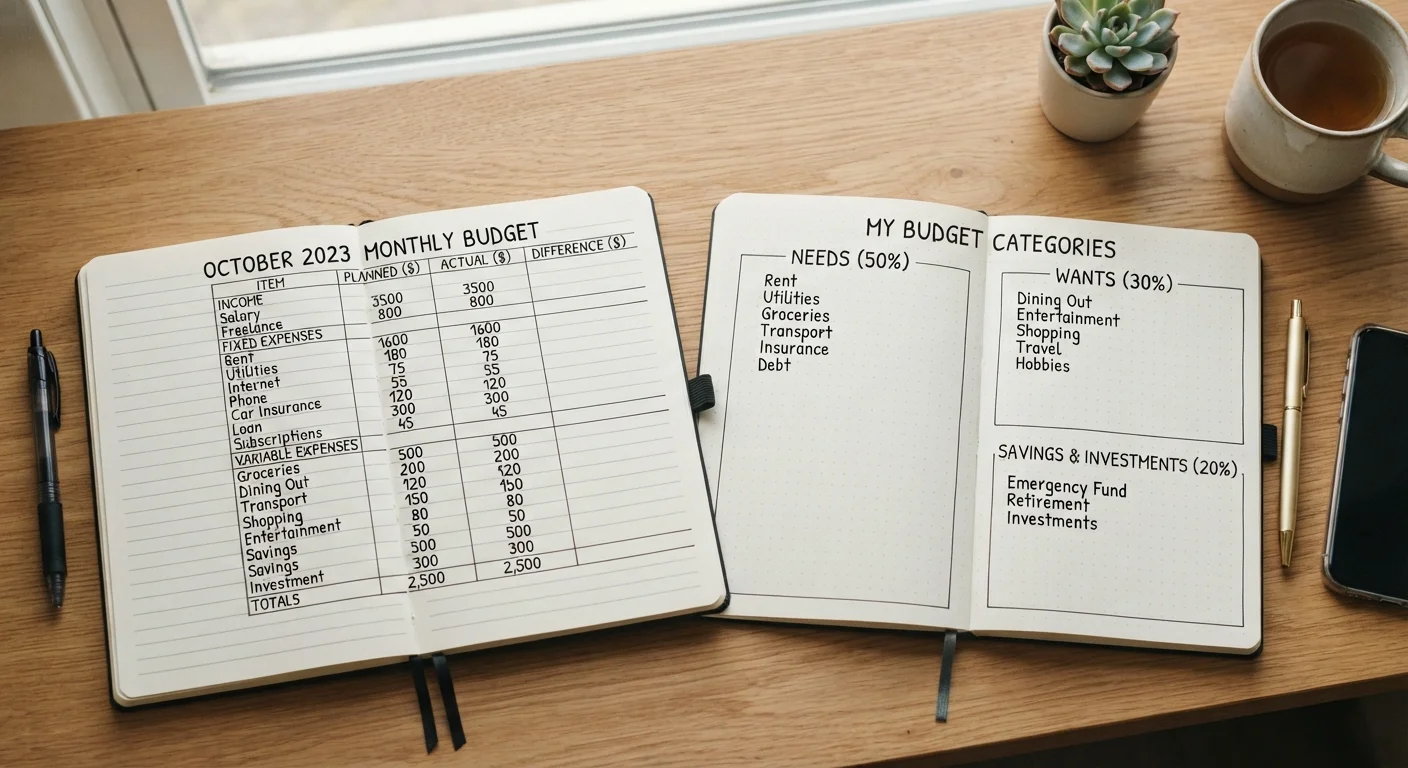
Cutting out all enjoyment is actually one of the fastest ways to abandon a budget. When a plan feels punishing, people give up. Well-constructed budgeting frameworks - like the widely referenced 50/30/20 rule - explicitly allocate a portion of income to "wants," which can include dining out, entertainment, hobbies, and travel. The goal isn't to eliminate pleasure; it's to spend on it deliberately rather than accidentally. Learn how different frameworks handle this in our comparison of zero-based budgeting vs. the 50/30/20 rule.
Myth
If your income is irregular, budgeting is basically impossible.
Fact
Irregular income requires a different budgeting method, but budgeting is still very workable.
Freelancers, gig workers, and anyone with variable pay often assume budgeting only works for salaried employees. In practice, people with inconsistent income often benefit more from budgeting because they need to actively manage cash flow gaps. One common approach is to budget based on your lowest typical monthly income, treating any surplus as a buffer or savings boost. Another is to maintain a "holding" account where all income lands first, then transfer a set monthly amount to cover expenses. Neither approach requires a fixed paycheck - just a system.
Myth
A budget has to be followed perfectly or it has failed.
Fact
Budgets are meant to be adjusted - imperfect adherence is normal and expected.
All-or-nothing thinking is one of the most common reasons people quit budgeting after one rough week. In reality, budgets are living documents. Unexpected expenses happen - a car repair, a medical co-pay, a higher utility bill. What matters is returning to the plan, not abandoning it. Many people find it helpful to build in a small "miscellaneous" or "buffer" category specifically to absorb surprises. Why budgets fall apart mid-month is a common challenge - and one with practical, fixable causes.
Myth
You only need to make a budget once.
Fact
Budgets should be reviewed and updated regularly to stay relevant.
A budget made in January may be completely misaligned with your life by June if your income changes, you move, or a major expense appears. Monthly reviews - even brief ones - help you catch drift before it compounds. Life changes like a new job, a baby, or paying off a loan are natural triggers for a full budget refresh. Treating a budget as a one-time task is like setting a GPS route and then ignoring all the turn-by-turn updates.
Putting Accurate Beliefs Into Practice
Correcting a myth is only useful if it leads somewhere. Here are a few grounded starting points:
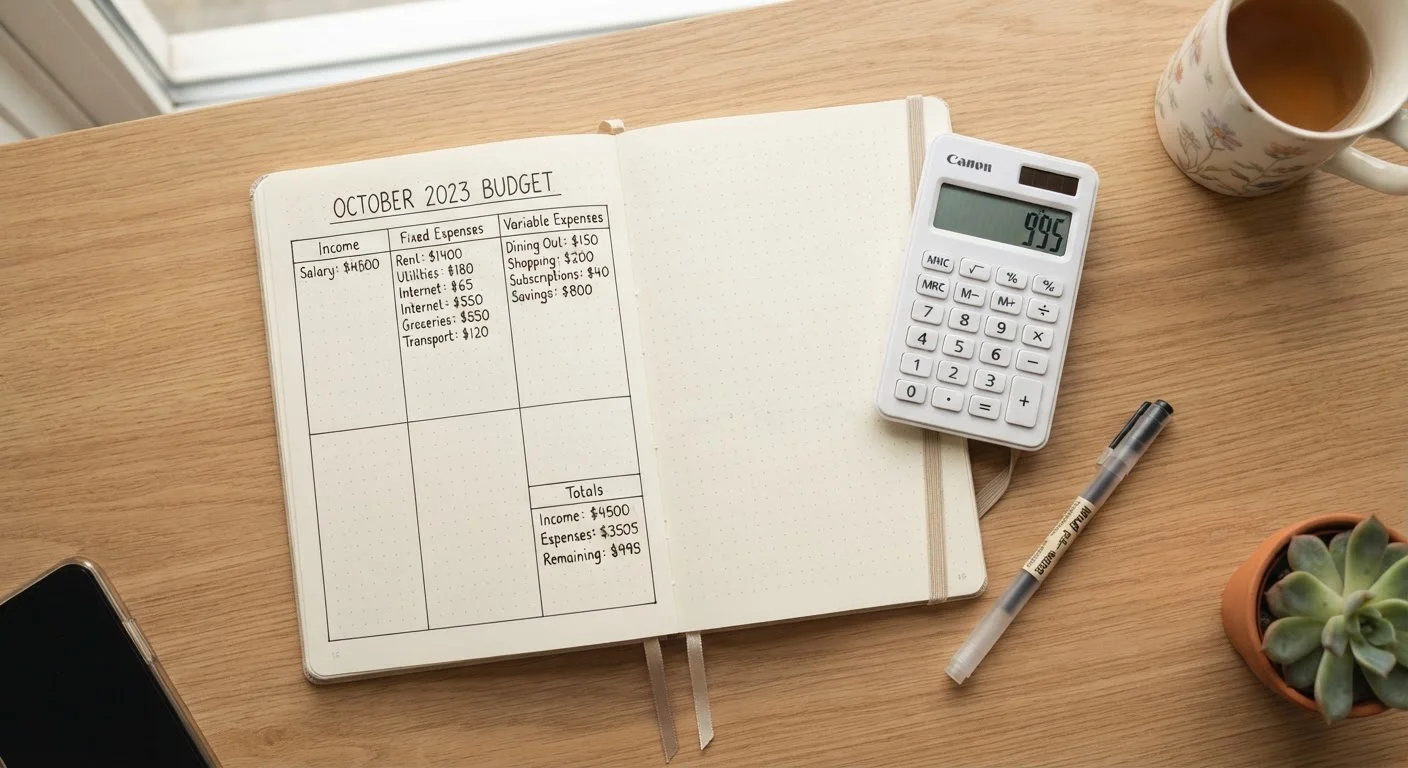
- Start simple. A budget doesn't require specialized software. A notebook, a notes app, or a basic spreadsheet is enough to get started. Track your income and your fixed expenses first, then look at where the rest goes.
- Build in flexibility. Include a buffer category - even a modest one - to absorb surprises without derailing the whole plan. This single habit prevents most mid-month budget collapses.
- Review monthly. Set a recurring 15-minute check-in to compare actual spending against your plan. Adjust categories that consistently run over rather than forcing yourself to keep failing against an unrealistic target.
- Don't neglect fun. A sustainable budget includes discretionary spending by design. Decide in advance how much you're comfortable spending on non-essentials, and spend it without guilt.
For broader context on how budgeting intersects with debt management, the Debt & Bills hub covers the full picture. And if you've noticed that common beliefs about credit also cost you money, our article on credit score myths is worth reading alongside this one.
~33%
Americans who maintain a household budget
Gallup polling has consistently found that roughly one-third of U.S. adults say they prepare a detailed household budget, suggesting most people manage money without a formal plan.
3-6 months
Recommended emergency fund coverage
Financial guidance from institutions such as the FDIC and consumer education programs broadly recommends holding three to six months of essential expenses in an accessible savings account.
This article is for general informational and educational purposes only. It does not constitute personalized financial advice. For guidance specific to your financial situation, consider consulting a qualified financial professional.