
Why One Wardrobe Can Do It All
The idea that you need separate closets - one for work, one for weekends, one for special occasions - is more myth than necessity. With the right foundational pieces, a single cohesive wardrobe can move fluidly across nearly every dress code you'll encounter in real American life. The key is understanding how versatility actually works: it's less about having more clothes and more about choosing pieces that speak the same style language and can be reinterpreted through layering, fit, and accessories.
Think about it this way: a crisp white button-down shirt, worn untucked with relaxed jeans and clean sneakers, reads as polished-casual on a Saturday. Tucked into tailored trousers with a blazer and loafers, that same shirt works in most professional settings. The shirt didn't change - the context did. That's the power of a well-built foundational wardrobe. For day-to-day inspiration on making this work in practice, everyday outfit ideas offers a wealth of real-life combinations to draw from.
Full-length mirror
Lets you evaluate how pieces interact from head to toe before committing to an outfit.
Clothing steamer or iron
Keeps foundational pieces looking crisp, which is critical when dressing up casual basics.
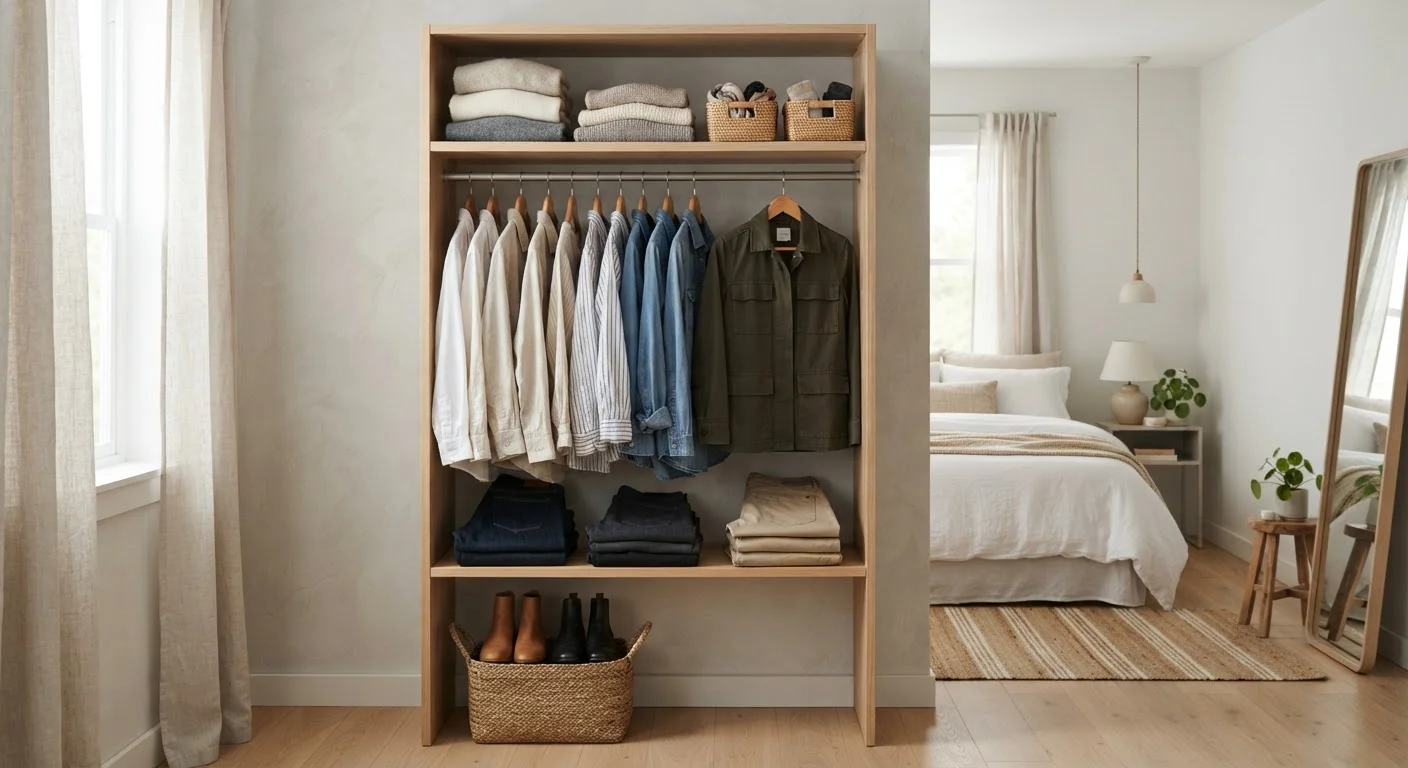
Garment rack or open hanging space
Helps you see all versatile pieces at a glance for easier outfit planning.
Tailor contact
Ensures key foundational pieces fit precisely, dramatically improving their polished appearance.
Building the Foundation: What to Add and What to Skip
A transitional wardrobe isn't about owning everything - it's about owning the right things. Before you build, it helps to understand which pieces genuinely earn their closet space. Fabric matters here: natural fibers like cotton, wool, and linen tend to photograph and wear better across formality levels than heavily synthetic blends. A well-structured fabric holds its shape, which is part of what makes a piece look intentional rather than thrown-together.
Fit Is Non-Negotiable
Even the most versatile piece fails if it doesn't fit well. Ill-fitting clothes read as casual regardless of the occasion, while a well-fitted basic can look polished even at a formal event. Budget for simple tailoring adjustments - hemming trousers or taking in a blazer - before adding new pieces to your wardrobe.
Comfort and a polished appearance aren't opposites - and the best foundational pieces prove that daily. Stretchy ponte trousers, for example, can look sharp while feeling as easy as casual pants. Soft jersey blazers offer structure without stiffness. Seek pieces where comfort and polish coexist rather than treating them as a trade-off. And when you're filling gaps, a focused look at year-round capsule essentials can help you prioritize additions season by season.
The 3-Way Test Before Every Purchase
Before buying any new piece, ask: Can it dress up? Can it dress down? Does it work with at least three things already in my closet? If a potential addition clears all three, it earns its space. If it only works for one specific scenario, reconsider - unless that scenario is something you navigate very frequently.
Avoid Buying for a Fantasy Lifestyle
It's tempting to shop for who you want to be rather than how you actually live. Before adding a piece, honestly assess how many times per month it will realistically see wear. Pieces that don't match your real daily life - however stylish - end up as closet clutter that crowds out the items you actually need.
The step-by-step process below walks you through auditing what you have, choosing smart additions, and learning the layering tricks that make a single outfit work across occasions. For additional guidance on reading seasonal shifts, seasonal style tips keeps things practical and approachable all year long.
Audit your current wardrobe by occasion
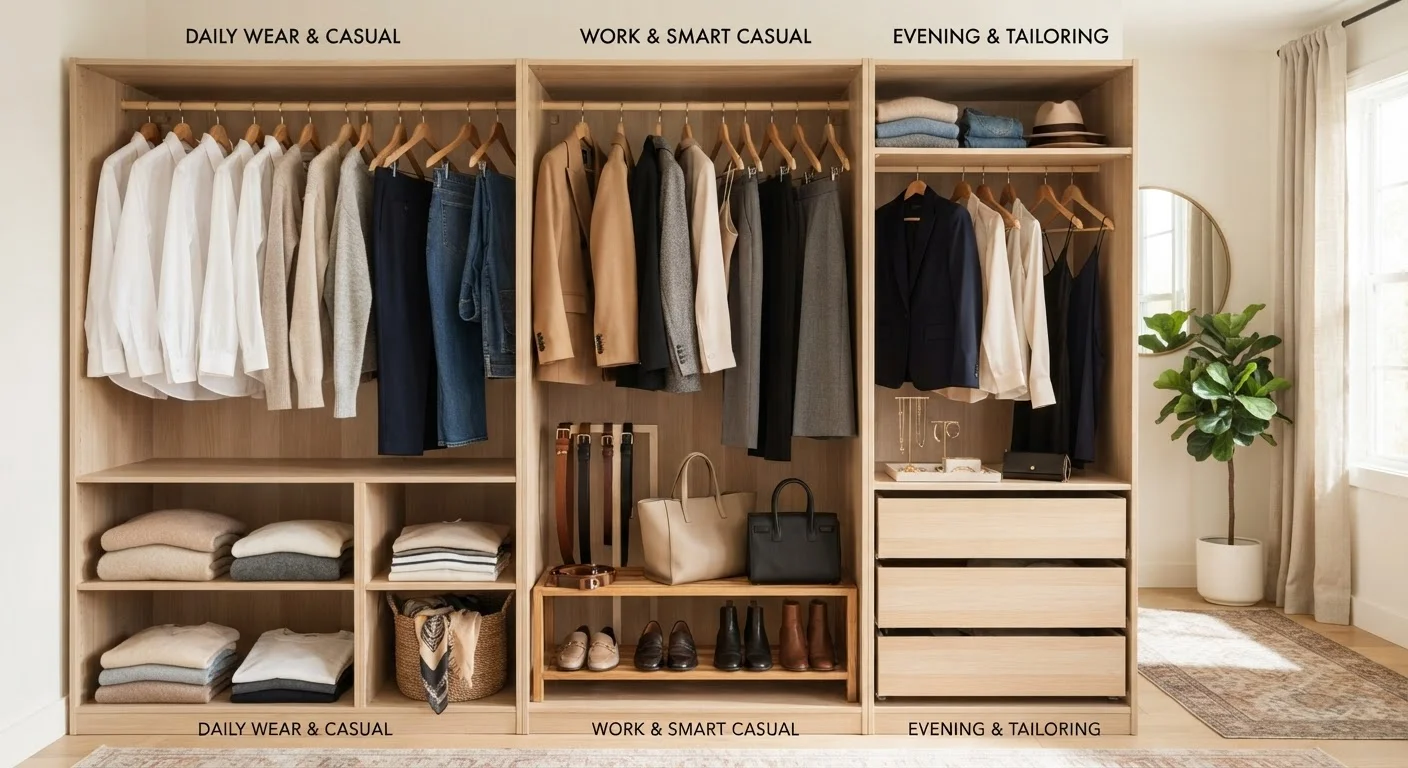
Before buying anything new, clear some time to go through every item you own. Separate pieces into three piles: casual (weekend errands, relaxed hangouts), work or smart-casual (office, client meetings, nice dinners), and formal (weddings, celebrations, black-tie adjacent events). Notice where you have obvious gaps and where you're doubling up unnecessarily. The goal is a clear picture of what your closet is actually doing - and what it isn't.
Identify your personal dress-code range
Not everyone needs the same wardrobe spread. A teacher, a remote worker, and someone in a corporate office all live in different dress-code realities. Map out a typical week: How many days require polished attire? How many are fully casual? This honest assessment tells you where to concentrate your foundational pieces. See how a small versatile set can carry you through any kind of week for practical framing.
Select a neutral color foundation
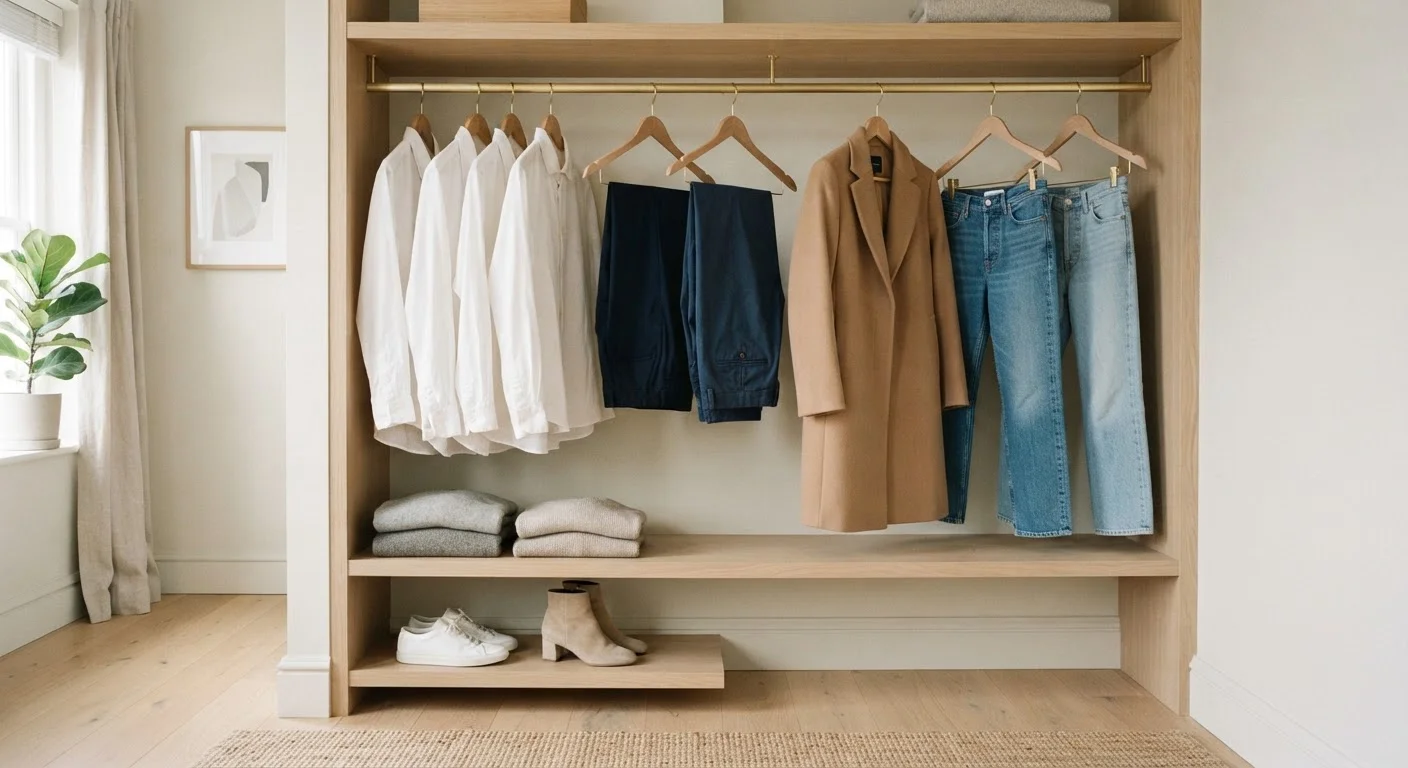
Building around a neutral palette - think navy, charcoal, white, cream, tan, and black - dramatically increases the number of combinations your pieces can form. When two-thirds of your wardrobe shares a common color language, adding a single new item multiplies your outfit options rather than standing alone. Accent colors and prints work great as supporting players, but your foundational pieces should reliably talk to each other. A capsule wardrobe approach is built exactly on this logic.
Invest in true transitional anchor pieces
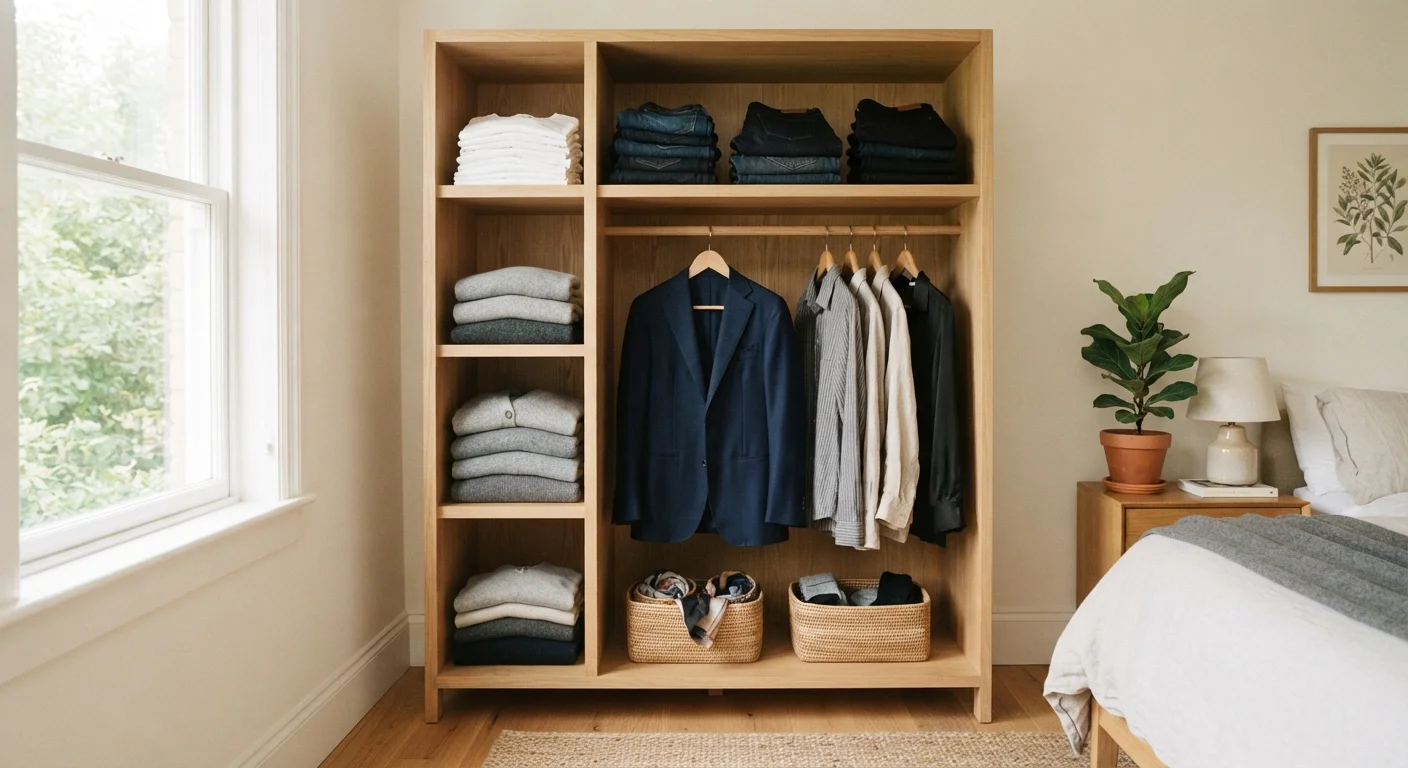
Certain garments sit naturally at the intersection of dress codes. A well-fitted blazer can elevate dark jeans for a smart-casual dinner or pair with tailored trousers for a boardroom. A quality knit in a neutral tone layers over both a casual tee and a dress shirt. Dark, slim-fit trousers read formal with dress shoes and relaxed with clean sneakers. These anchor pieces - roughly five to eight items - form the backbone of a flexible wardrobe. For a full rundown of what belongs in that core set, this foundational piece guide is a great starting point.
Master formality shifts through layering and accessories
The fastest way to move an outfit along the formality spectrum isn't changing your entire look - it's strategic layering and accessory swaps. Adding a structured blazer over a simple fitted top shifts a casual outfit toward smart-casual instantly. Swapping canvas sneakers for leather loafers or block-heel boots changes the register of the same trouser-and-blouse combination entirely. Layering is one of the most underused outfit-multiplying tools - and it doesn't require buying new clothes. A watch, a structured handbag, or a simple silk scarf can do similar work through the power of detail.
Test and refine with real outfits before committing
Once your core pieces are in place, actually try outfit combinations - don't just imagine them. Dress fully, stand in front of a mirror, and honestly assess whether each pairing works. This hands-on testing reveals gaps you wouldn't notice on paper and confirms which pieces are already pulling double or triple duty. A pulled-together casual look has real structure behind it - and building that instinct comes from practice. Adjust your closet based on what the mirror (and real life) tells you, not just what felt exciting at the store.