
Why EV Vocabulary Matters Before You Shop
Shopping for an electric vehicle introduces a wave of unfamiliar terms - kWh, DCFC, frunk, one-pedal driving - that dealers and spec sheets treat as common knowledge. They aren't, and that gap can lead buyers to make uninformed comparisons or overlook important differences between vehicles.
This glossary covers the terms you're most likely to encounter at a dealership, on a manufacturer's website, or at a public charging station. Think of it as a quick-reference companion to deeper resources like our primer on how EVs work.
| Most common home charging level | Level 2 (240V) (U.S. Department of Energy) |
| EPA range testing standard | Multi-cycle city/highway combined (U.S. Environmental Protection Agency) |
| Typical DC fast charger output range | 50 kW - 350 kW (U.S. DOE Alternative Fuels Data Center) |
| EV drivetrain types covered by this glossary | BEV, PHEV |
| Federal tax credit: non-refundable | Yes - reduces tax owed, not a direct payment (IRS guidance) |
Battery and Energy Terms
Battery specifications are at the heart of every EV comparison. These definitions will help you decode what you're actually reading.
kWh (Kilowatt-hour)
The standard unit used to measure battery capacity in electric vehicles. A larger kWh figure generally means more stored energy and greater potential range. It also appears on your electricity bill, making it useful for estimating charging costs.
State of Charge (SOC)
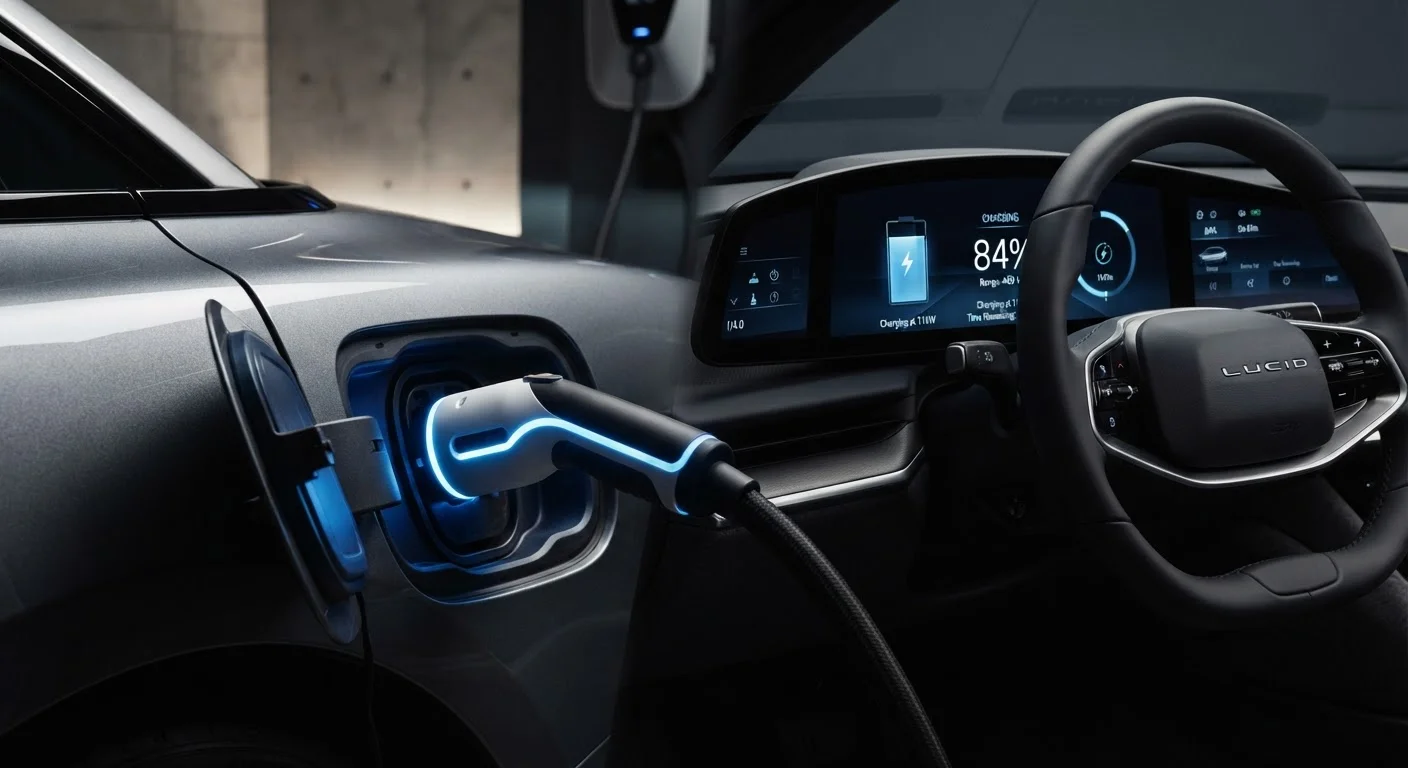
The percentage of battery capacity currently available - essentially the EV equivalent of a fuel gauge. Most EV owners are advised to keep SOC between roughly 20% and 80% for everyday use to support long-term battery health, though recommendations vary by manufacturer.
Usable Battery Capacity
The portion of total battery capacity the vehicle actually makes available for driving. Manufacturers typically reserve a buffer above and below the stated range to protect battery longevity, so usable capacity is often slightly less than the gross figure listed in specs.
Energy Efficiency (Mi/kWh)
A measure of how far a vehicle travels per kilowatt-hour of energy consumed. Higher efficiency means lower operating costs and more miles per charge. It functions similarly to miles-per-gallon in combustion vehicles.
BEV (Battery Electric Vehicle)
A fully electric vehicle powered entirely by a battery pack and electric motor, with no internal combustion engine. All driving energy comes from electricity stored in the battery.
PHEV (Plug-in Hybrid Electric Vehicle)
A vehicle with both an electric motor and a gasoline engine. PHEVs can be charged via an external plug and driven on electricity for a limited range before the gasoline engine takes over.
Onboard Charger
The hardware inside the vehicle that converts AC electricity from a Level 1 or Level 2 charging source into DC power the battery can store. Its maximum power rating (measured in kW) determines how fast the vehicle can accept AC charging.
Thermal Management System
The system that regulates battery temperature during charging and driving. Effective thermal management is critical for maintaining range in cold weather and preserving battery life over time.
Once you understand how battery capacity and efficiency interact, range estimates become far easier to evaluate critically. For a fuller look at what charging those batteries actually involves, see our charging explainer.
Charging Levels and Infrastructure Terms
Charging terminology trips up even tech-savvy shoppers. Here's a plain breakdown of the terms you'll see posted at charging stations and listed in vehicle specs.
- Level 1 Charging: Uses a standard 120-volt household outlet. Adds roughly 3-5 miles of range per hour - practical for overnight top-offs on short daily commutes.
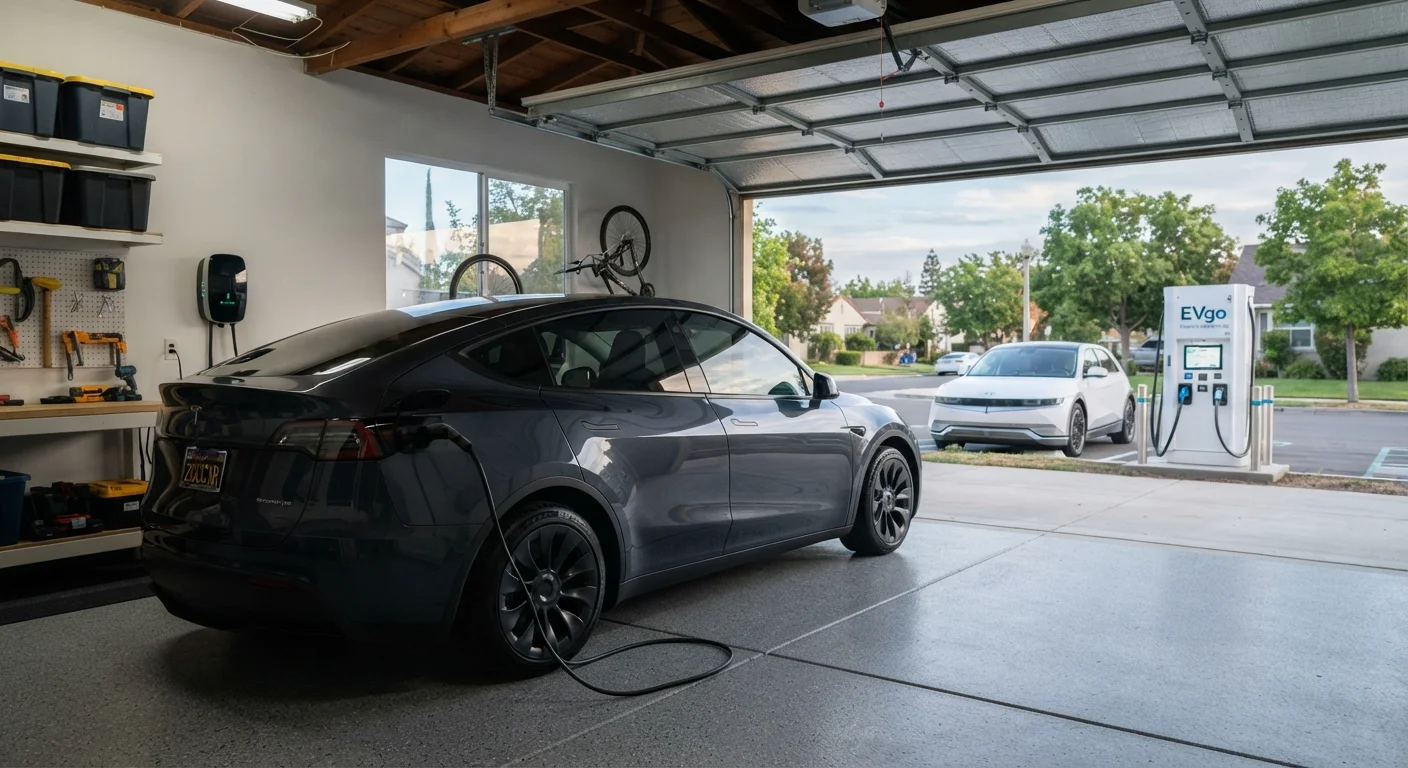
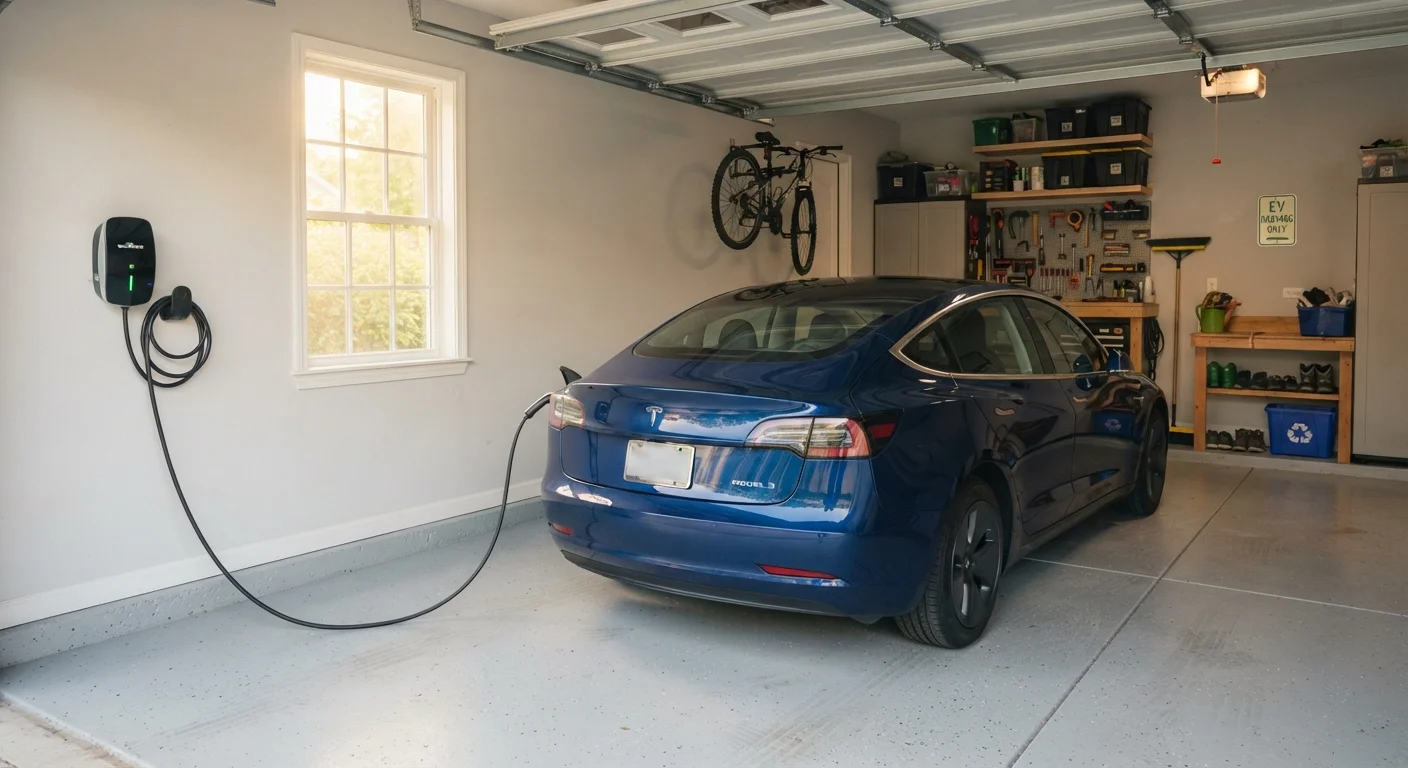
- Level 2 Charging: Uses a 240-volt circuit, similar to a clothes dryer. Adds roughly 10-30 miles of range per hour depending on the vehicle and charger capacity. The most common home charging setup.
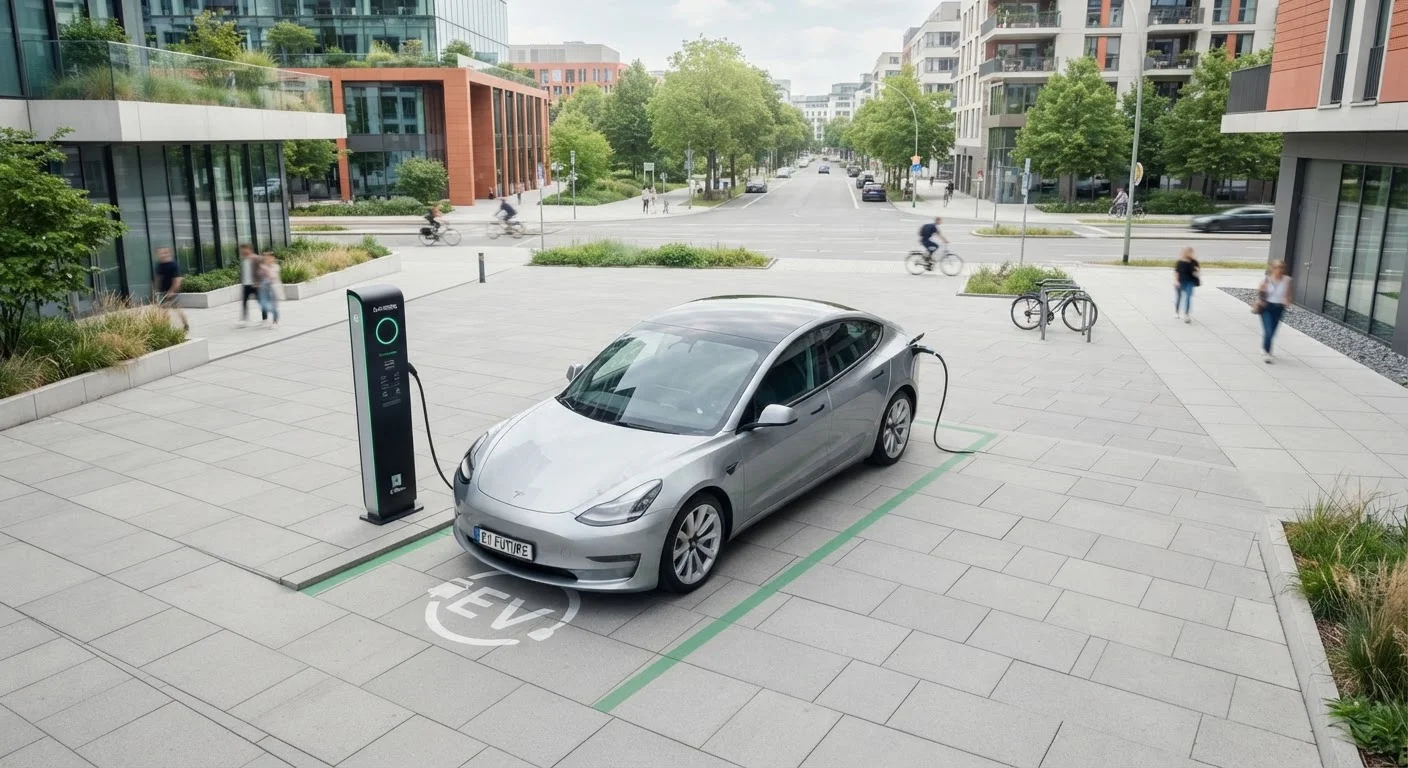
- DC Fast Charging (DCFC): Delivers direct current at high power - often 50 kW to 350 kW - bypassing the vehicle's onboard charger. Can add significant range in 20-45 minutes. Found at public charging stations along highways.
- EVSE (Electric Vehicle Supply Equipment): The technical term for a charging station or home charging unit. Consumers often call these simply "chargers," though the actual conversion hardware lives inside the vehicle.
- Charging Network: A branded network of public charging stations with shared payment and account systems. Coverage and compatibility vary - always check network availability along your common routes.
Charging Compatibility Is Not Universal
Not all EVs accept the same connector types, and not all charging networks are equally accessible across the U.S. Before purchasing, verify which connector standard your vehicle uses and whether that standard is well-represented along your common routes and at your home charging setup. The EV charging landscape continues to evolve, so checking current network coverage maps is advisable.
Planning your charging setup before purchase is one of the most practical steps you can take. A readiness checklist can help you work through home charging access, garage wiring, and driving patterns systematically.
Range, Efficiency, and Driving Terms
Several terms describe how far an EV will go and how it behaves while driving. Understanding these prevents surprises after purchase.
- EPA-Estimated Range: The range figure published by the U.S. Environmental Protection Agency after standardized testing. Real-world range varies based on temperature, speed, climate control use, and driving style.
- Range Anxiety: The concern that a vehicle's battery will run out before reaching a destination or charger. It's a psychological factor as much as a practical one - most daily driving falls well within typical EV range.
- Regenerative Braking: A system that captures kinetic energy when decelerating and converts it back into electricity to partially recharge the battery. It also slows the vehicle, reducing wear on traditional brake pads.
- One-Pedal Driving: A driving mode enabled by strong regenerative braking where lifting off the accelerator slows the car enough that the brake pedal is rarely needed. Not every EV offers the same level of one-pedal capability.
- Frunk: Front trunk - storage space in the front of the vehicle where a traditional combustion engine would sit. Size varies significantly by model.
Thinking through real-world costs beyond range is equally important. The full picture of EV ownership costs covers electricity bills, maintenance differences, and depreciation in plain terms.
Incentive and Purchase Terms
EV incentive programs use their own vocabulary. Misunderstanding these terms can lead buyers to overestimate savings or miscalculate eligibility.
- Federal Tax Credit: A reduction in federal income tax owed - not a rebate or check. Eligibility depends on income, vehicle price, and assembly requirements under current U.S. law. Consult a tax professional for your specific situation.
- MSRP Cap: Federal incentive programs cap eligible vehicle prices. Vehicles priced above the cap do not qualify, regardless of other criteria.
- GVWR (Gross Vehicle Weight Rating): The maximum operating weight of a vehicle as specified by the manufacturer. Relevant to EV incentive classifications - SUVs and trucks are often categorized differently than sedans.
- Point-of-Sale Credit: A mechanism allowing eligible buyers to apply an incentive at the time of purchase rather than waiting to claim it on a tax return. Availability and rules vary.
Incentive rules are complex and change over time. Our overview of federal and state EV incentive programs explains how these programs generally work - though it is not tax or financial advice. Always verify current eligibility with a licensed tax professional before making decisions based on incentive availability.
This article is for general informational and educational purposes only. It does not constitute financial, tax, or legal advice. Incentive eligibility depends on individual circumstances and current regulations - consult a qualified professional for guidance specific to your situation.