
The Three Levels of EV Charging
Before anything else, it helps to understand that EV charging is organized into three tiers - commonly called Level 1, Level 2, and DC Fast Charging. Each delivers power at a different rate and suits different situations. For a deeper look at how electric motors and batteries work together, see our primer on how EVs work.
EVSE
Electric Vehicle Supply Equipment - the technical term for a home or public charging unit. It manages the flow of electricity safely from the power source to your vehicle.
kilowatt-hour (kWh)
The unit used to measure how much energy an EV battery can store and how much electricity a charger delivers. A larger kWh battery generally means more driving range.
DC Fast Charging
A high-powered charging method (also called Level 3) that delivers direct current straight to the battery, enabling a significant range top-up in 20-45 minutes.
CCS connector
Combined Charging System - the most common fast-charging plug standard for non-Tesla electric vehicles sold in the United States.
State of Charge (SOC)
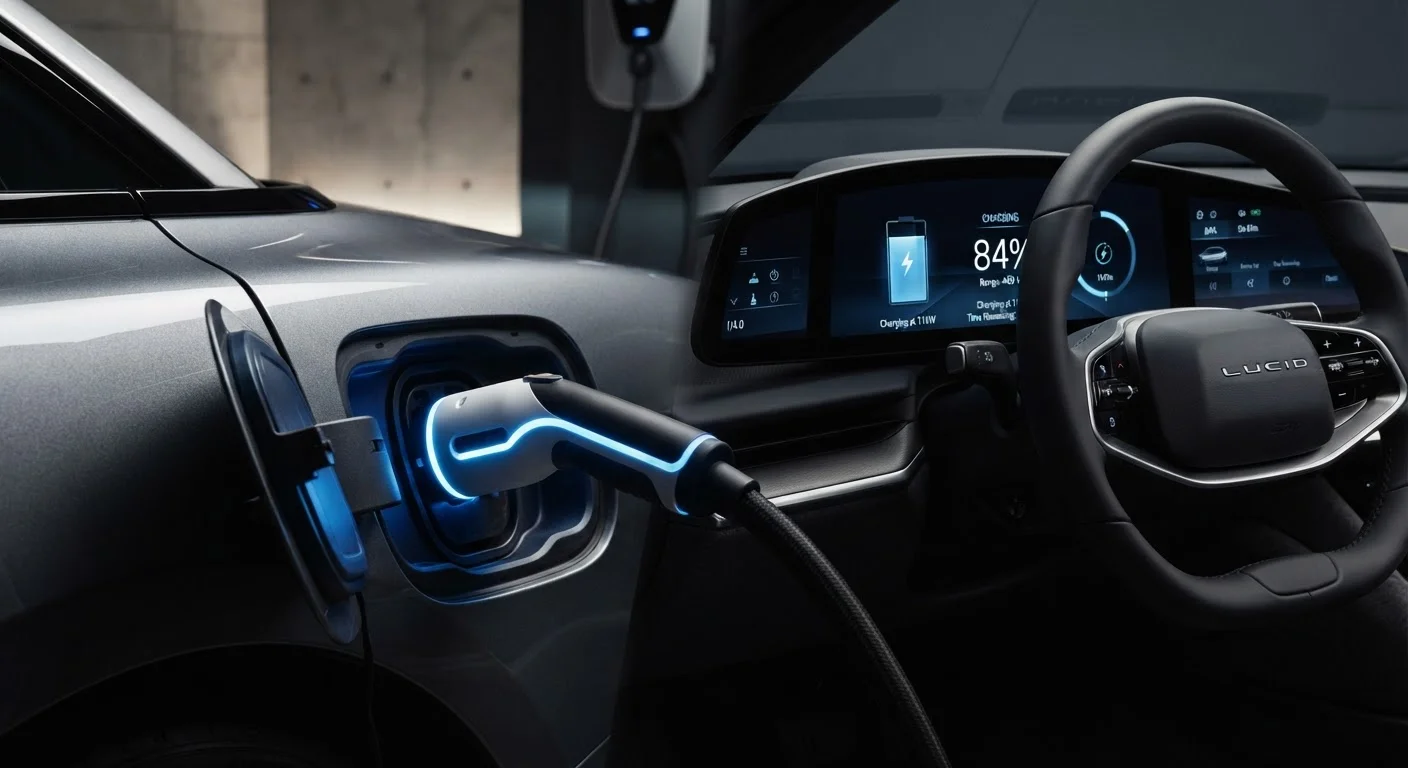
The percentage of battery capacity currently available - essentially the EV equivalent of a fuel gauge. Displayed on your dashboard or in the vehicle's app.
Time-of-Use Rate
An electricity pricing structure where the cost per kilowatt-hour varies by time of day, typically lower during overnight off-peak hours - a potential savings opportunity for EV owners who charge at home.
Level 1: Slow but Zero Setup
Level 1 charging uses the standard 120-volt household outlet already present in most American homes. Your EV includes a cord for this. It delivers roughly 3-5 miles of range per hour - enough to recover a typical daily commute overnight, but not practical if you need to restore a depleted battery quickly.
Level 2: The Daily-Driver Standard
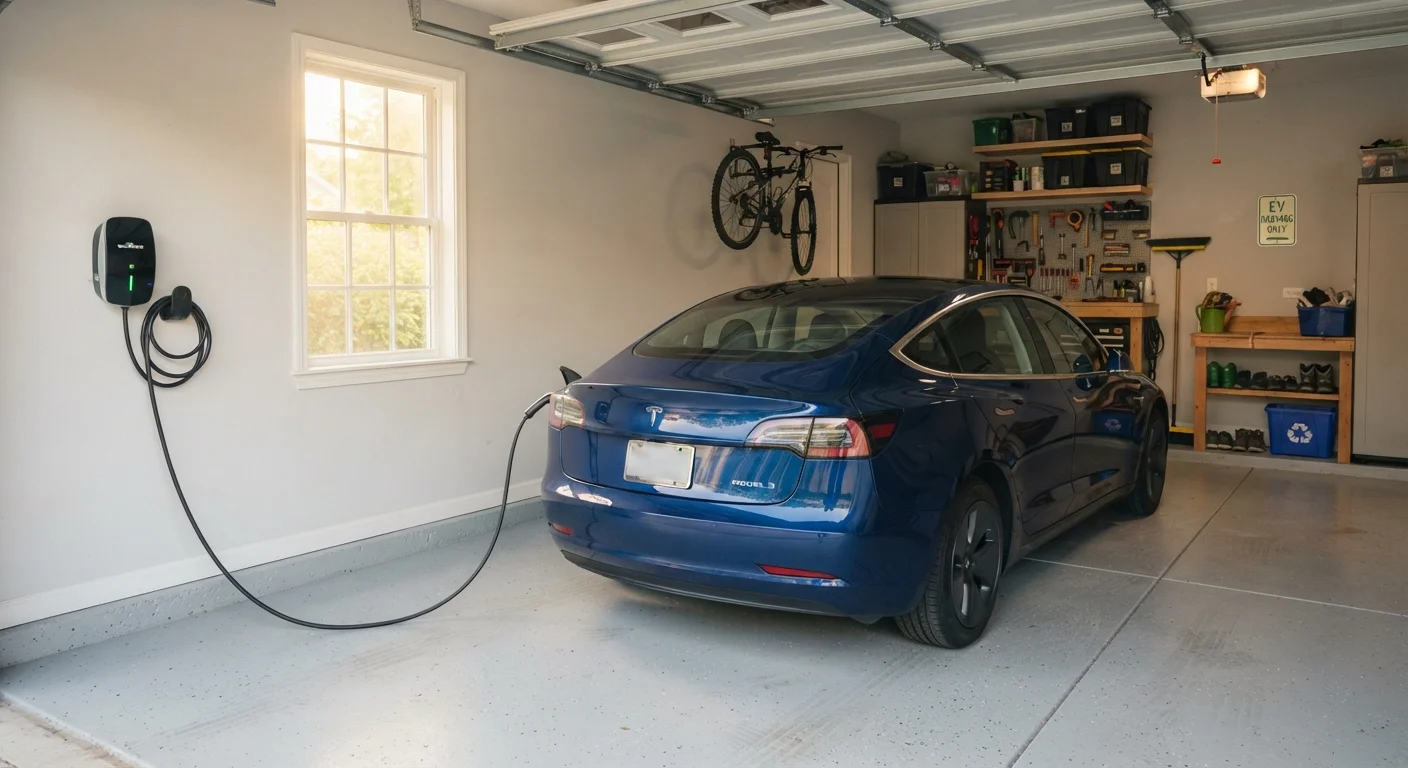
Level 2 operates on 240 volts - the same circuit type used by clothes dryers. A dedicated EVSE (Electric Vehicle Supply Equipment) unit installed in your home or garage can add 15-30 miles of range per hour, meaning most vehicles reach a full charge in 4-12 hours. This is the setup the vast majority of EV owners rely on daily.
DC Fast Charging: Speed When You Need It
Also called Level 3 charging, DC fast chargers bypass the vehicle's onboard charger and push power directly to the battery. They can add 100-200 miles of range in roughly 20-45 minutes. These are primarily found at highway corridors, retail locations, and dedicated charging stations - not in homes.
Setting Up Home Charging
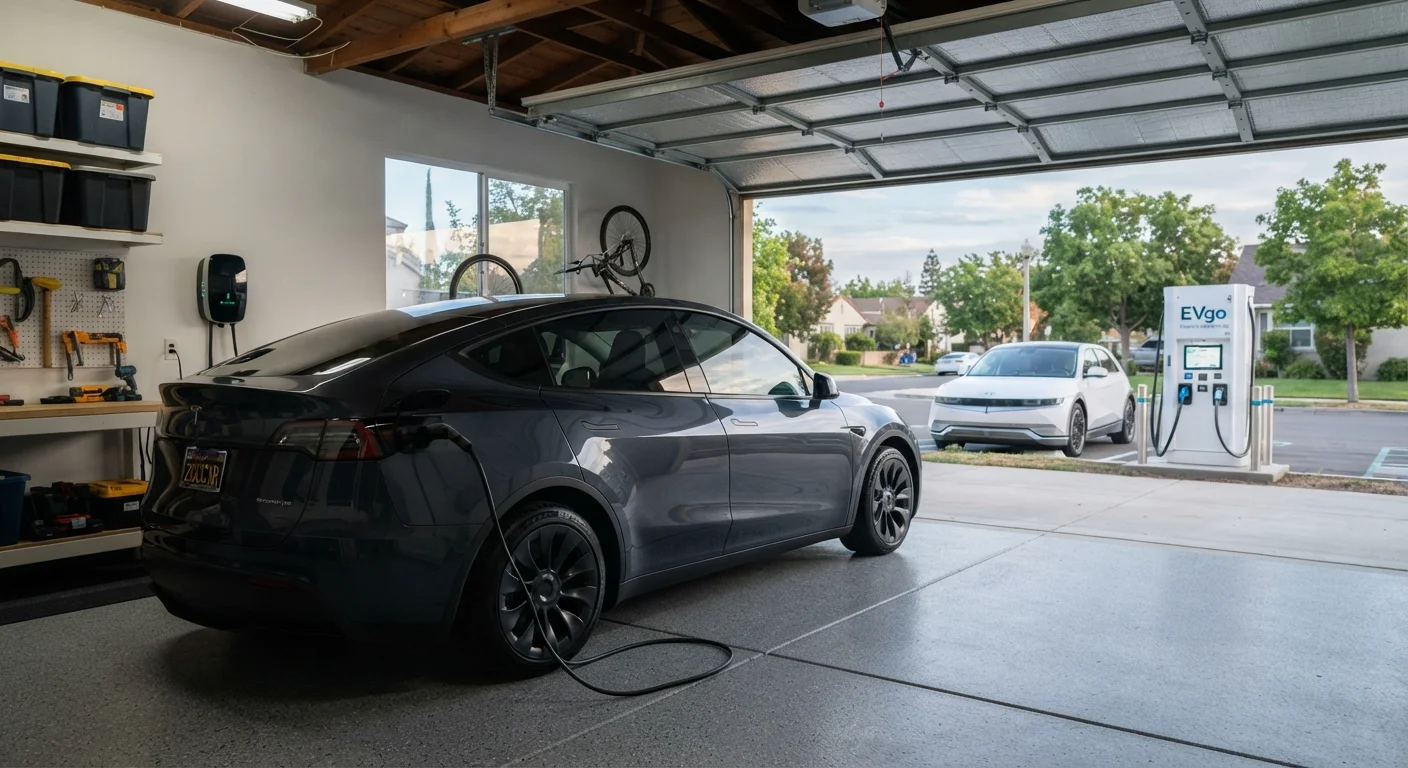
For most EV owners, home charging is the cornerstone of day-to-day ownership. You plug in when you arrive home and wake up to a full battery - much like charging a smartphone. Before purchasing an EVSE unit, work through these steps:
- Assess your electrical panel. A Level 2 charger requires a dedicated 240-volt, 40-50-amp circuit. A licensed electrician can evaluate whether your current panel has capacity or needs an upgrade.
- Check your living situation. Homeowners generally have straightforward options. Renters and condo residents should speak with property management about dedicated EV circuits or outlet access - policies vary widely.
- Consider installation costs. EVSE hardware and professional installation typically range from a few hundred to over a thousand dollars, depending on your panel location and wiring needs. Utility companies and state programs sometimes offer rebates; verify current offerings with your utility directly.
- Look into time-of-use rates. Many utilities offer lower electricity prices during off-peak hours (often late night). Scheduling charging during those windows can meaningfully reduce your monthly electricity costs.
Our EV home readiness checklist walks through these questions in detail before you commit.
Schedule Charging During Off-Peak Hours
Most EVs and EVSE units let you set a charging schedule directly through the vehicle's app or dashboard menu. Program your car to begin charging after 10 p.m. if your utility offers lower overnight rates. Over a year of daily charging, the savings can be meaningful - check your utility's rate schedule to confirm the off-peak window in your area.
Using Public Charging Networks
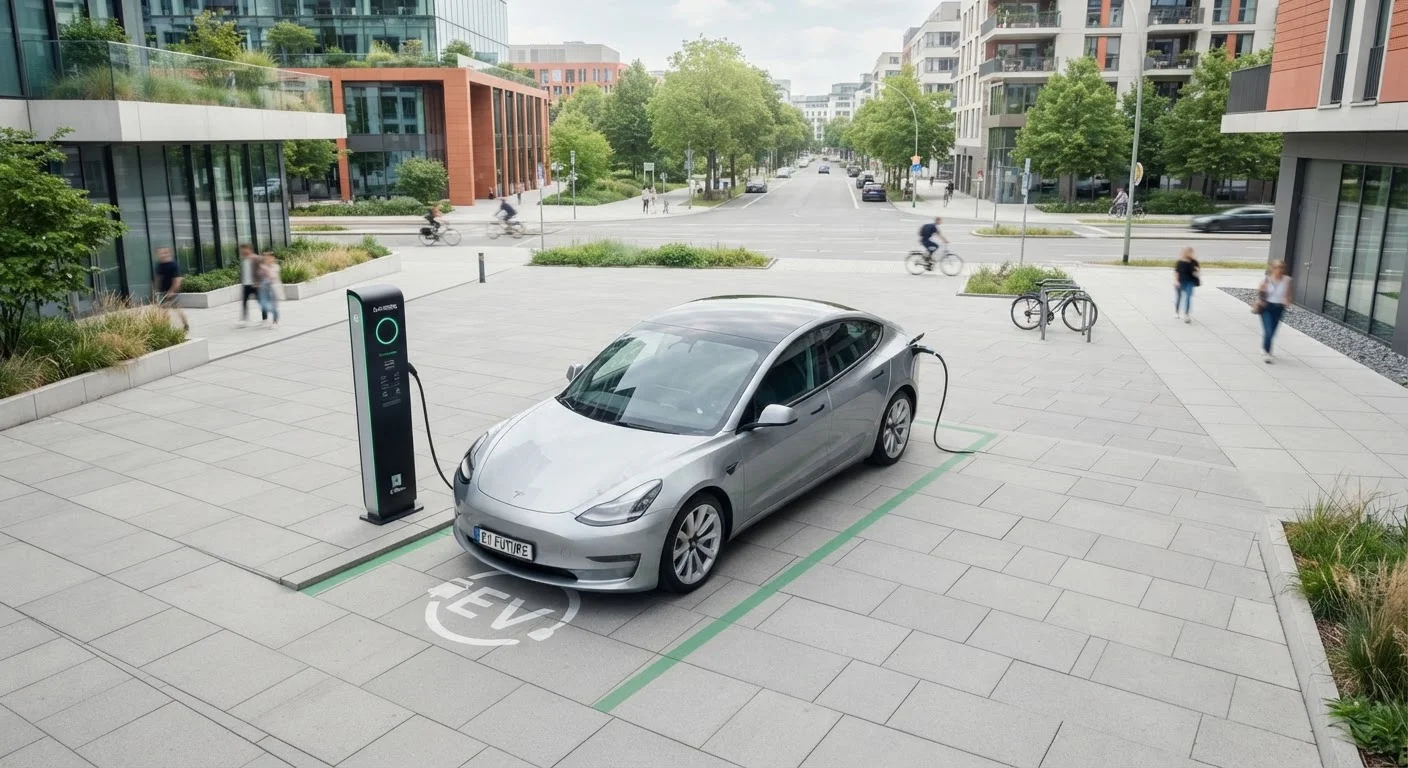
Public charging infrastructure across the US has expanded significantly, with stations now available at shopping centers, parking garages, hotels, and along major highway corridors. However, navigating the patchwork of networks takes some familiarity.
Connector Compatibility
Most non-Tesla EVs sold in the US use either the CCS (Combined Charging System) connector for both Level 2 and DC fast charging, or the older CHAdeMO standard for fast charging. Tesla vehicles have used a proprietary connector, though the company has opened many Supercharger locations to non-Tesla vehicles using a CCS adapter. The industry is gradually converging on the NACS connector, now adopted by multiple automakers - check your vehicle's documentation to understand exactly what connector type it uses.
Network Membership and Payment
Major public charging networks each have their own apps and pricing structures. Some require a membership, others accept credit cards directly at the station. Pricing may be per kilowatt-hour, per minute, or per session - compare these before relying on a particular network regularly. Our EV glossary explains charging terminology that often appears in these apps.
Charging Costs Vary Widely by Network
There is no single standardized pricing structure across US public charging networks. One network may bill per minute while another bills per kWh, making direct cost comparisons tricky. Download the apps for networks you plan to use regularly, review their current pricing, and note whether membership plans offer better per-session rates for frequent users.
Planning Road Trips in an EV
Long-distance driving in an EV requires more planning than a gas-powered trip, but the process becomes routine quickly. The core task is mapping charging stops before you depart.
Routing tools built into many EVs - or available through third-party apps - automatically calculate where you should stop based on your battery level, destination, and station locations along the route. These tools also account for elevation changes and weather, both of which affect range.
The 80% Rule on the Road
DC fast chargers add energy most quickly when the battery is below about 80%. Above that threshold, charging slows significantly as the battery management system protects the cells. On long drives, stopping at 10-20% and leaving at 80% is generally faster than waiting for a full charge at each stop.
Build in Buffer
Range estimates on the dashboard reflect ideal conditions. Cold temperatures, sustained highway speeds, and running the climate system all reduce real-world range. Leaving a buffer of 15-20% rather than arriving at each charger nearly empty gives you flexibility if a station is occupied or temporarily offline.
Understanding the full picture of EV ownership costs - including public charging fees - is covered in our real costs of EV ownership guide.
Common Charging Mistakes to Avoid
A few habits, formed early, make EV ownership significantly smoother:
- Skipping the home charging assessment. Assuming a standard outlet will be sufficient for your driving needs leads to frustration. Evaluate your daily mileage and decide whether Level 1 realistically meets it before foregoing a Level 2 installation.
- Charging to 100% every night. Unless you genuinely need maximum range the next day, keeping the daily charge ceiling around 80% helps preserve battery longevity over time. Most EVs let you set a charge limit in their app or settings menu.
- Ignoring connector compatibility. Arriving at a public station only to find an incompatible plug is a preventable problem. Verify your vehicle's connector type and carry any necessary adapters before long trips.
- Not checking station status in advance. Public chargers can be out of service. Use your network's app to confirm a station is operational before depending on it during a trip.
- Underestimating range in cold weather. Lithium-ion batteries lose meaningful capacity in freezing temperatures. In winter climates, plan shorter legs between charge stops than the dashboard estimate suggests.
If you're still weighing whether a fully electric vehicle fits your lifestyle, our comparison of all-electric vs. plug-in hybrid powertrains can help you think it through.
Don't Rely on a Single Public Charger
Public charging station availability is not guaranteed - units can be occupied, out of service, or temporarily offline. Always identify a backup station nearby when planning a route, especially in less densely served areas. Building in that redundancy prevents you from being stranded with a low battery and no alternative.