

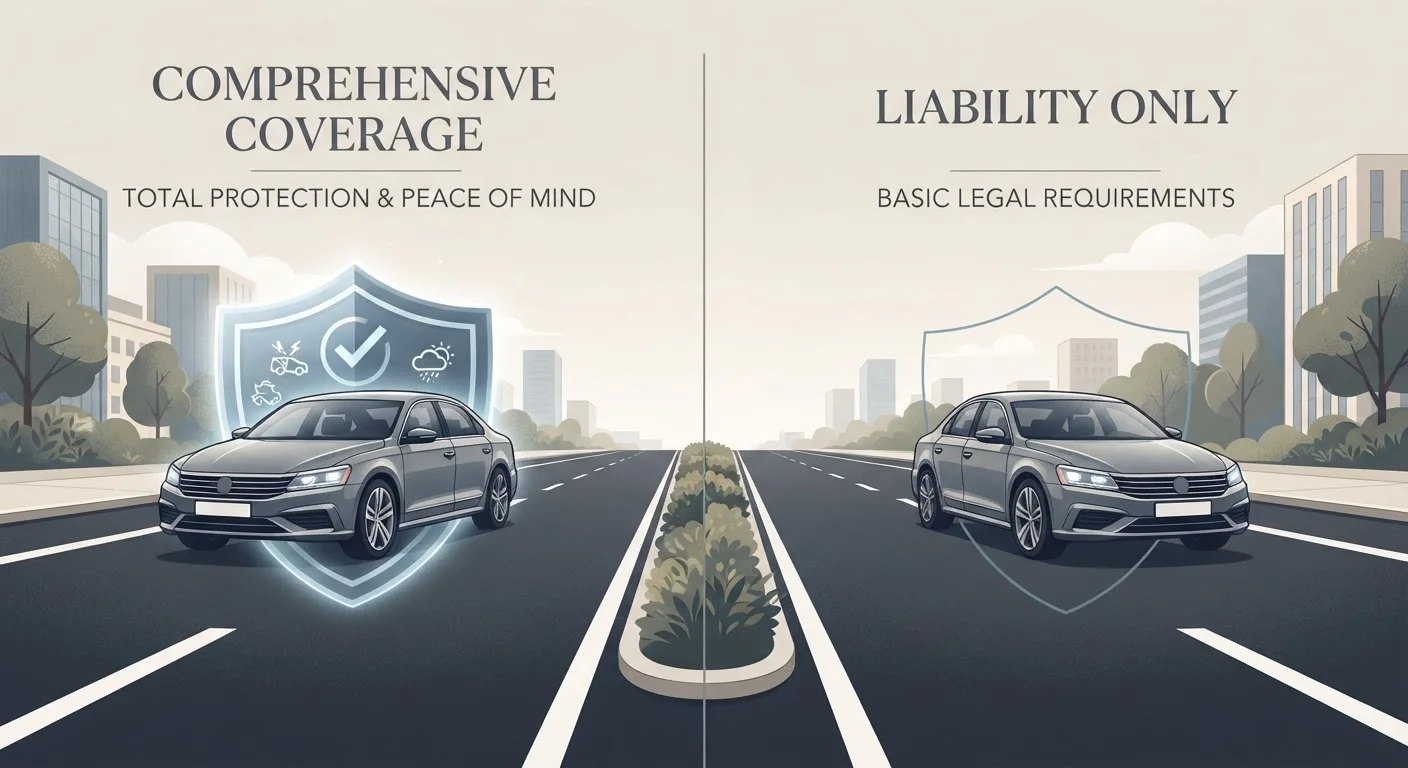
What Each Coverage Level Actually Includes
Understanding the distinction starts with knowing what each tier covers - and what it deliberately leaves out.
Minimum coverage refers to the legally mandated liability limits set by each state. Most states require bodily injury liability and property damage liability. These pay for injuries and property damage you cause to others in an at-fault accident. They do not cover your own vehicle or your own medical bills. A handful of states also mandate personal injury protection (PIP) or uninsured motorist coverage, but the core principle is the same: minimum coverage protects other people from you, not you from loss.
Full coverage is not a single policy type defined by law - it's an industry shorthand for combining liability with two additional coverages: collision (which pays for damage to your vehicle from a crash, regardless of fault) and comprehensive (which covers non-collision events like theft, hail, fire, or flooding). Together, these three layers address most scenarios a driver realistically faces. For a deeper breakdown of how these coverage types work individually, see our guide to liability, collision, and comprehensive coverage.
| Criterion | Full Coverage | Minimum Coverage |
|---|---|---|
| Covers damage to others | Yes (liability included) | Yes (liability only) |
| Covers damage to your vehicle | Yes (collision + comprehensive) | No |
| Covers theft or weather damage | Yes (comprehensive) | No |
| Required by law | No (lender may require it) | Yes (state mandated) |
| Premium cost | Higher | Lower |
| Deductible applies | Yes (for collision/comprehensive claims) | No (liability has no deductible) |
| Best for financed vehicles | Yes - typically required | No - usually prohibited by lender |
The Financial Gap Between the Two
The real-world cost difference between these two coverage levels is where many drivers make consequential decisions without full information.
~$700+
Average annual full coverage premium increase over minimum
Industry analyses suggest full coverage can cost several hundred to over a thousand dollars more annually than minimum coverage, depending on driver profile and state.
13%
Estimated share of U.S. drivers who are uninsured
The Insurance Research Council has estimated that roughly 1 in 8 drivers on U.S. roads carries no insurance at all, underscoring why uninsured motorist coverage is often recommended.
50
Different state minimum coverage requirements
Every U.S. state sets its own liability minimums; required limits and coverage types vary significantly, meaning "minimum coverage" differs depending on where you live.
When you carry only minimum coverage and cause a serious accident, your liability limits pay out - but any damage to your own vehicle comes directly out of your pocket. If your car is totaled and worth $18,000, that loss is entirely yours. On the other hand, full coverage carries a higher premium, a deductible you pay when filing a claim, and ongoing costs that may exceed the vehicle's depreciated value over time.
A common rule of thumb: if your annual full-coverage premium exceeds 10% of your vehicle's current market value, the cost-benefit math begins to shift toward minimum coverage - provided you have the financial cushion to self-insure a total loss. This is general guidance, not a guarantee of the right outcome for any individual situation. Consult a licensed insurance agent to evaluate your specific circumstances.
It's also worth noting that some drivers carry misconceptions about what their policy actually covers. Common car insurance beliefs that can cost you money explores how assuming "full coverage" means total protection can leave drivers underinsured in specific scenarios.
When the Choice Is Made for You - and When It's Yours
For many drivers, the decision isn't entirely free. If your vehicle is financed or leased, your lender or lessor almost certainly requires full coverage as a condition of the loan or lease agreement. Dropping to minimum coverage while still owing money on the car typically violates that contract and can trigger force-placed insurance - a policy the lender buys on your behalf at a significantly higher cost, often with less favorable terms for you.
If you own your vehicle outright, the choice is yours - and that's where careful analysis matters. Key factors to weigh include the vehicle's current market value, your deductible amount, your emergency savings, your typical driving environment, and your state's minimum liability requirements. States vary significantly in their mandated minimums, and some states' floors are considered inadequate by industry standards for covering a serious multi-vehicle accident.
"Full Coverage" Is Not a Standardized Term
No insurer or regulator defines "full coverage" in a uniform way. Two policies sold under that label can differ substantially in liability limits, deductible amounts, and optional add-ons like rental reimbursement or roadside assistance. Always read the actual declarations page of any policy to understand precisely what is and isn't covered. Never assume a label equals complete protection.
When comparing policies, premium cost is only one dimension. Evaluating a policy beyond the monthly premium - including deductibles, coverage limits, exclusions, and a provider's claims reputation - gives you a clearer picture of what you're actually purchasing.
This article provides general educational information about auto insurance coverage types and is not personalized insurance, legal, or financial advice. Coverage terms, exclusions, and state requirements vary by provider and location. Consult a licensed insurance professional before making coverage decisions.