

The Body Language Basics Every Cat Owner Should Know
Your cat is communicating with you constantly - through the angle of its ears, the curve of its spine, and the position of its tail. Understanding these physical cues is the fastest way to decode what your cat is actually feeling.
Tail position is one of the clearest signals available. A tail held high and straight indicates confidence or a friendly greeting. A puffed-up tail signals fear or threat perception. A tucked tail suggests anxiety or submission. A low, slowly swishing tail often means your cat is focused or mildly irritated - distinct from the fast lash of genuine agitation.
Ear orientation adds another layer. Forward-facing ears reflect curiosity or engagement. Flattened ears pinned back against the skull are a sign of fear or defensive aggression - a cue to give your cat room. Ears rotated sideways (sometimes called "airplane ears") often appear during mild stress or conflict ambivalence.
Eye shape matters too. Dilated pupils in normal light can reflect excitement, fear, or pain. Constricted pupils often accompany high alertness or mild threat display. That soft, half-lidded gaze paired with a slow blink? That's your cat at ease - and extending trust.
Try Returning the Slow Blink
When your cat makes soft eye contact and blinks slowly, try doing the same in return - close your eyes gently and reopen them. Research suggests cats respond positively to this gesture from humans. It's a low-effort way to reinforce trust in your relationship.
For a useful contrast on how another species signals mood, see our guide on reading your dog's body language.
Vocalizations: What Different Sounds Are Telling You
Cats have a remarkably flexible vocal repertoire, and adult cats appear to use many of these sounds primarily to communicate with humans rather than with other cats.
Meowing is the most human-directed call in a cat's toolkit. Kittens meow to their mothers, but adult cats in the wild rarely meow at each other. The meow your cat directs at you is, in a sense, a learned communication tool adapted for human interaction - a request, a greeting, or a complaint depending on tone and context.
Purring is often associated with contentment, but cats also purr when stressed, injured, or unwell. Researchers note that purring may have a self-soothing function. The frequency of a cat's purr (typically between 25 and 150 Hz) has been associated with bone and tissue healing in some studies, though the full picture is still being explored by scientists.
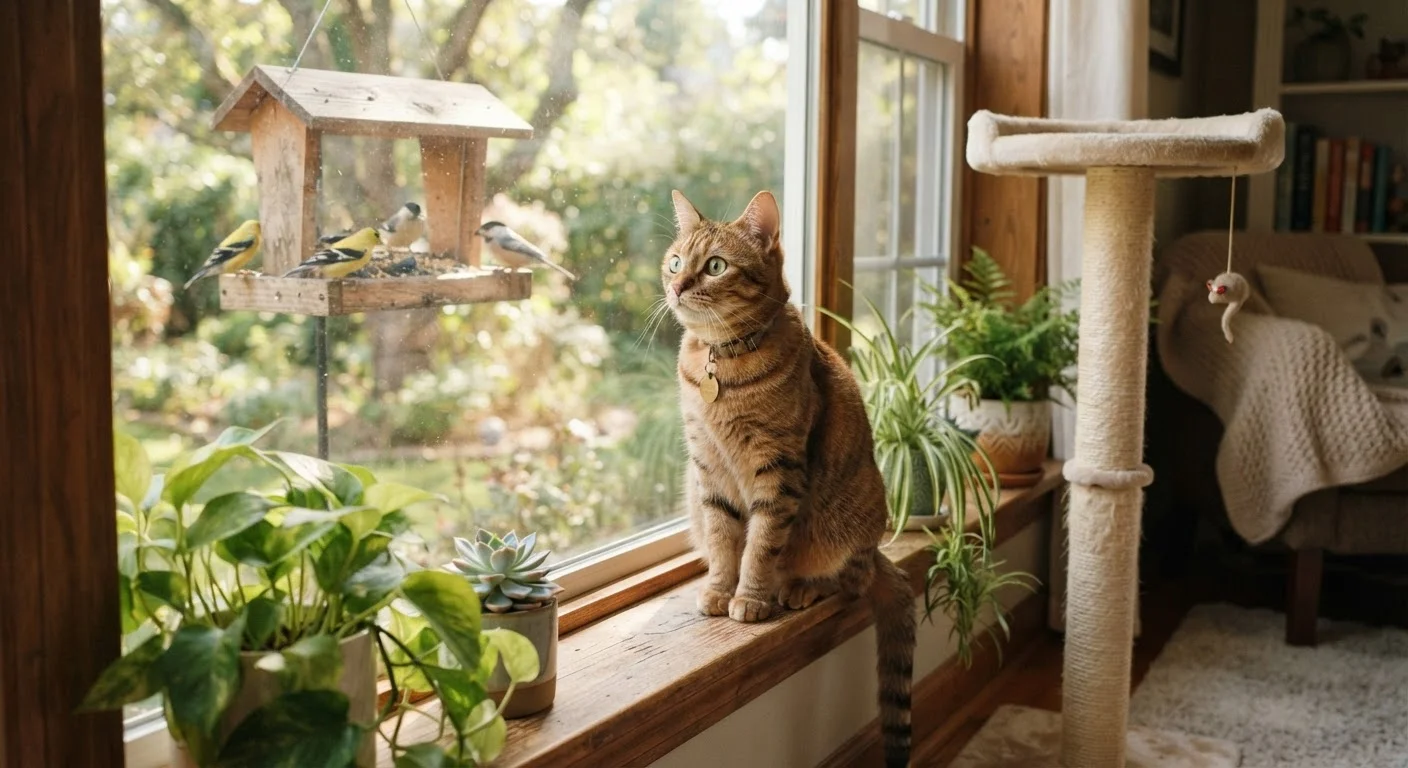
Chirping and chattering typically appear when a cat spots prey - a bird at the window, a squirrel in the yard. The teeth-clicking chatter is linked to predatory arousal. Hissing and growling are unambiguous: fear, pain, or threat. These are signals to back off and assess the situation calmly.
16+
Distinct vocalizations documented in domestic cats
Animal behaviorists have catalogued a range of cat sounds from meows and trills to chirps and growls, each with context-specific meaning.
25-150 Hz
Frequency range of a domestic cat's purr
Some researchers have noted this frequency range overlaps with vibrations associated with bone density maintenance, though studies are ongoing.
~70%
Of cat communication directed at humans, not other cats
Adult cats in multi-cat households rarely meow at each other, suggesting meowing evolved largely as a human-targeted communication strategy.
Common Behaviors Explained - No Mystery Required
Several feline behaviors confuse or concern owners until the reasoning behind them becomes clear.
Kneading - that rhythmic pushing with alternating paws - originates in kittenhood, when nursing kittens press against their mother to stimulate milk flow. Adult cats carry the behavior forward as a self-soothing reflex triggered by comfort and relaxation. If your cat kneads on you, consider it a compliment.
Head bunting (pressing their forehead or cheek against you) is a scent-marking behavior that also functions as a social bonding gesture. Cats have scent glands along their face, and bunting against a person or object deposits a familiar, calming scent. It signals ownership - in the most affectionate sense.
Bringing "gifts" - prey, toys, or miscellaneous household objects - reflects an instinctive social behavior. Cats that hunt share their catches with trusted companions. It isn't aggression; it's inclusion. Regular structured playtime can help redirect this hunting energy productively. See our article on what enrichment actually means for cats for practical ideas.
Hiding or retreating is normal when a cat is overwhelmed, but a cat that hides persistently or stops engaging altogether may be signaling illness or significant stress. This pattern always warrants veterinary attention.
When Behavior Changes Signal Something More
Individual cats have baseline personalities, and knowing your cat's normal is the most valuable diagnostic tool you have. A sociable cat that suddenly withdraws, a confident cat that becomes reactive, or a well-groomed cat that stops self-cleaning - these shifts matter.
Behavioral changes can be the first visible indicator of underlying health conditions. Pain, hyperthyroidism, dental disease, kidney issues, and cognitive decline (in older cats) can all manifest as changes in behavior before other symptoms become obvious. If your cat's behavior shifts noticeably and persists for more than a day or two without a clear environmental cause (a move, a new pet, a loud household event), a veterinary check is the right next step.
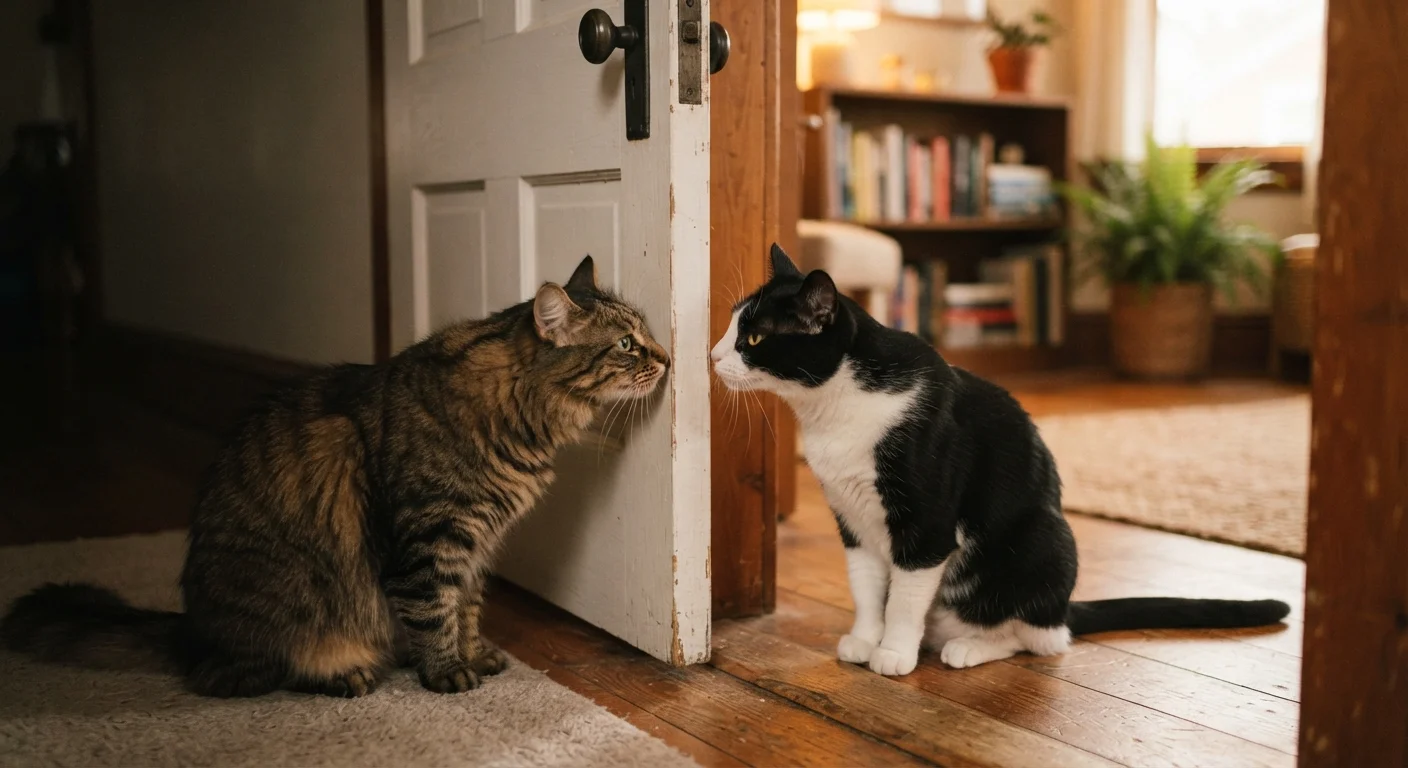
Environmental stress is equally worth examining. Cats are highly sensitive to changes in routine, household dynamics, and territory. If you're bringing a new animal home, our guide to introducing a second cat into your household walks through a low-stress approach. And if you're still building your foundational knowledge of cat ownership, what no one tells you before bringing home your first cat covers the essentials new owners often miss.
“Cats are subtle communicators. Owners who take the time to learn the signals - tail position, ear angle, eye contact - are far better equipped to recognize stress or discomfort early, before it becomes a clinical problem.”
— Dr. Karen Overall, Veterinary behaviorist and author on applied animal behavior
This article is for informational purposes only and does not constitute veterinary advice. If you have concerns about your cat's health or behavior, consult a licensed veterinarian.