
Why Mental Health Matters as Much as Physical Health
Most cat owners stay on top of vaccines, flea prevention, and annual vet visits - but mental wellness often gets overlooked. Cats are not low-maintenance animals by nature. They are predators with strong instincts to hunt, stalk, explore, and problem-solve. When those instincts have nowhere to go, the consequences show up in behavior and, over time, in physical health.
Chronic stress and boredom in cats are linked to issues like urinary problems, compulsive grooming, and suppressed immune function. The connection between mental stimulation and overall pet health is well-supported by veterinary behavioral research. Enrichment is how owners address that gap.
40%
Indoor cats showing stress-related behaviors
Veterinary behavioral studies estimate that a significant proportion of indoor cats display signs of chronic stress, often attributed to insufficient environmental stimulation.
2x
Daily play sessions recommended by behaviorists
Most veterinary behaviorists recommend at least two interactive play sessions per day to meet a cat's baseline hunting and activity needs.
12-16 hrs
Average daily sleep in healthy adult cats
Healthy cats sleep extensively, but sleep beyond this range combined with behavioral changes can signal under-stimulation or stress.
What Enrichment Actually Includes
The word "enrichment" can sound vague, but veterinary behaviorists have mapped it into concrete categories - each targeting a different aspect of feline psychology.
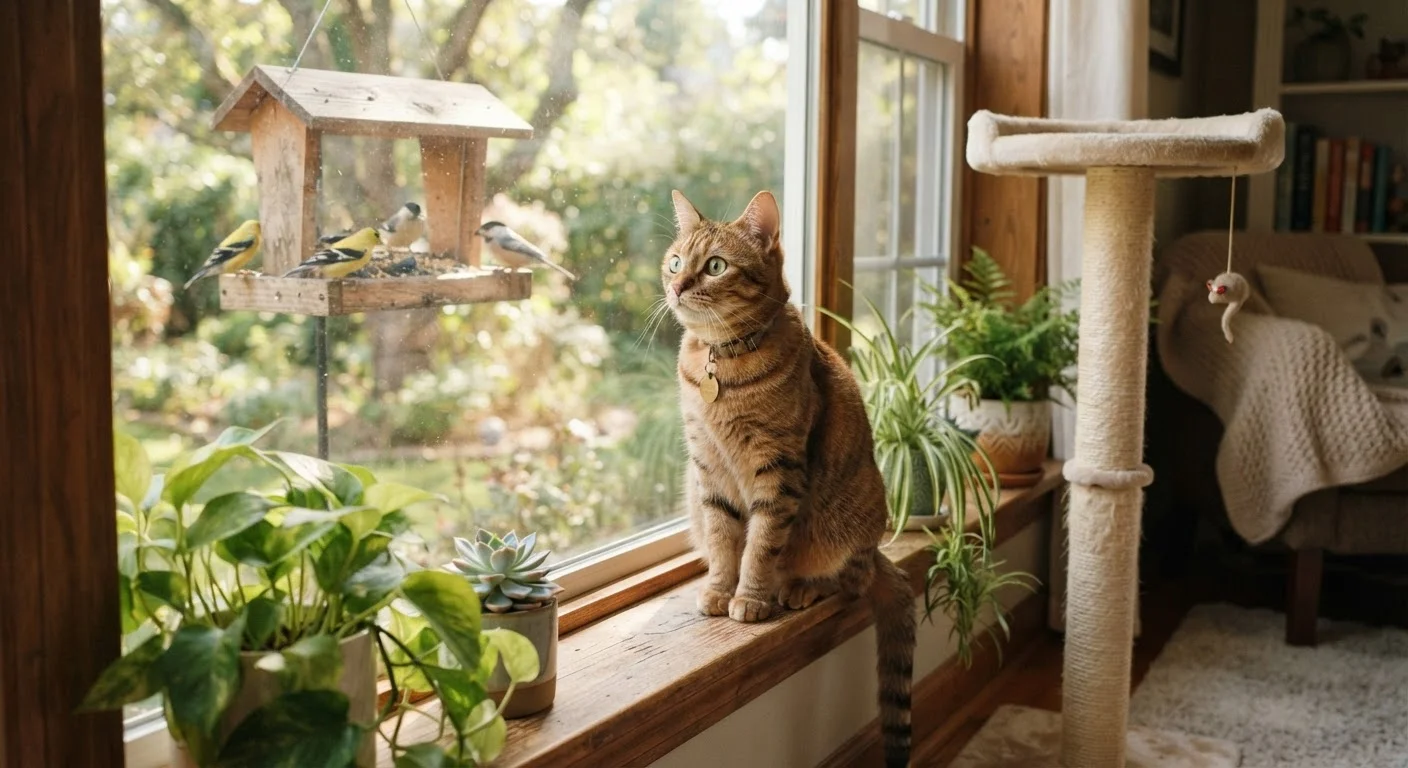
- Environmental enrichment: Vertical space (cat trees, shelves), hiding spots, and window access give cats a sense of territory and safety. Cats feel most secure when they can survey their surroundings from height.
- Sensory enrichment: New smells (safe herbs like catnip or valerian), sounds (nature videos), and textures stimulate a cat's senses in ways a static living room cannot.
- Feeding enrichment: Puzzle feeders, lick mats, and scatter feeding replace the bowl and require cats to work for their meals - closely paralleling how they'd hunt in the wild.
- Cognitive enrichment: Training simple behaviors using positive reinforcement builds mental engagement and strengthens the human-animal bond.
- Social enrichment: Regular, interactive play with a human using wand toys or prey-mimicking objects gives cats a satisfying "hunt" with a real outcome.
Rotate Toys Every Few Days
Cats habituate quickly to familiar objects, and a toy that's always available loses its novelty fast. Try keeping a small collection and swapping out two or three items every few days. A toy that's been "away" for a week often generates fresh interest when reintroduced.
Variety is key. Enrichment loses effectiveness when it becomes routine. Rotating toys, rearranging furniture occasionally, and introducing new smells periodically keeps the environment feeling novel and engaging.
Reading the Signs: When a Cat Needs More
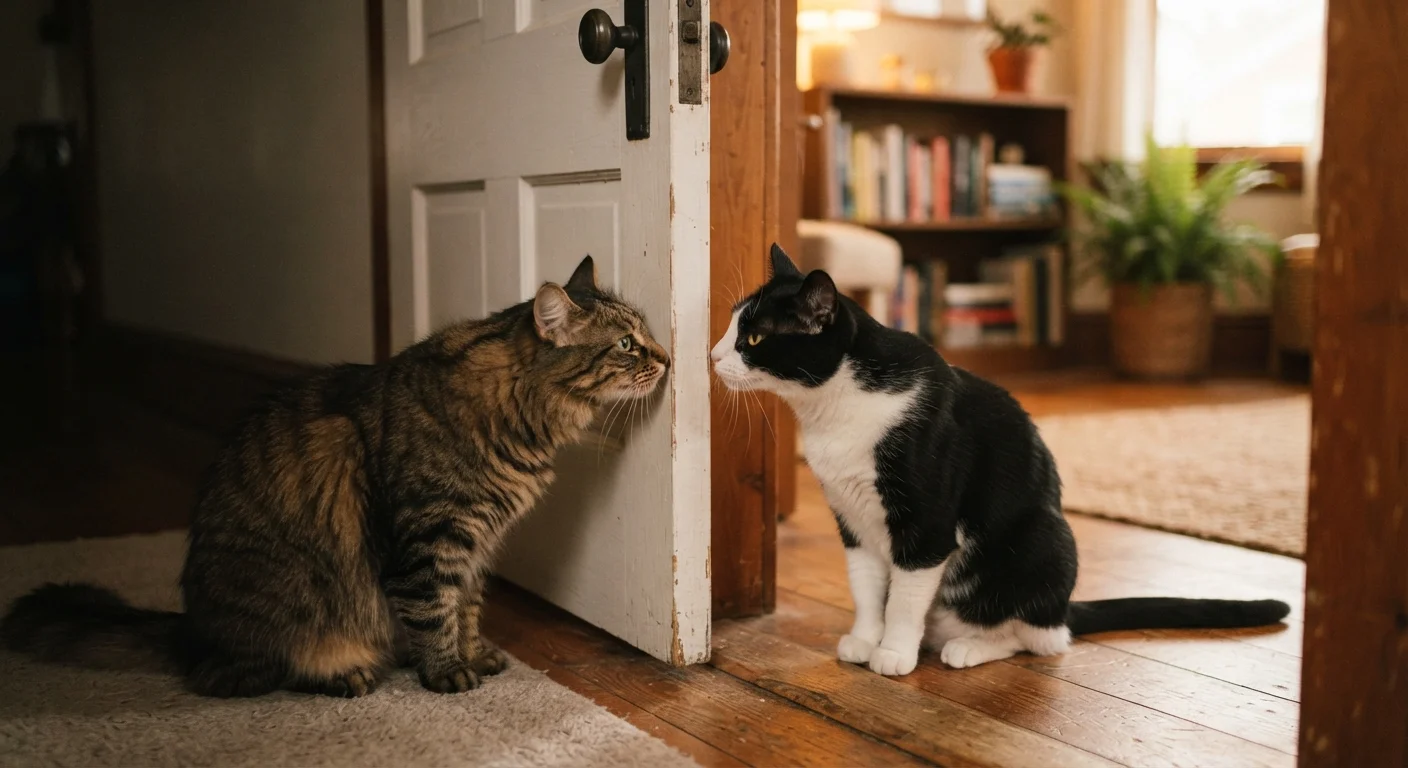
Cats are subtle communicators, which makes it easy to miss early signs of under-stimulation. Behaviors that owners often attribute to personality quirks - knocking objects off shelves, excessive vocalization at night, aggression during petting - can be expressions of unmet behavioral needs.
Watch for patterns: Is the behavior new? Is it escalating? Over-grooming to the point of bald patches, redirected aggression, and compulsive repetitive movements are particularly significant and warrant a veterinary conversation to rule out medical causes before assuming a behavioral origin.
Diet is another lever worth considering alongside enrichment. A cat eating the right balance of nutrients is better positioned to engage with its environment. Understanding how a cat's diet actually works can help owners make more informed decisions about what goes in the bowl.
Building an Enrichment Routine That Sticks
Effective enrichment doesn't require a major investment - it requires consistency and observation. Start by identifying what your specific cat responds to. Some cats are highly food-motivated and take immediately to puzzle feeders. Others are more social and prioritize interactive play. A few are solitary and find environmental complexity (new hiding spots, different textures) most rewarding.
A realistic daily enrichment plan for most indoor cats might include: a 10-15 minute interactive play session in the morning, a puzzle feeder at one meal, a window perch with an active outdoor view, and a second play session in the evening to discharge hunting energy before sleep. This schedule addresses sensory, feeding, and social enrichment with minimal effort.
Enrichment is also part of the broader framework of foundational pet wellness. Mental health and physical health are not separate categories - in cats, they're tightly linked. Building enrichment habits early is far easier than reversing chronic stress behaviors that have become ingrained.
When Behavior Changes Warrant a Vet Visit
Not all behavioral changes are rooted in boredom. Sudden shifts in activity, appetite, grooming habits, or litter box use can signal underlying medical conditions. Always consult a veterinarian before attributing new or escalating behaviors solely to environmental factors. A clean bill of health makes behavioral interventions more focused and effective.