
Why This Decision Matters More Than Most Owners Realize
The question of whether to keep a cat indoors, allow outdoor access, or blend both approaches is more consequential than it might first appear. It shapes your cat's lifespan, disease exposure, behavioral health, and your own responsibilities as an owner. There's no single correct answer - but there are clear, evidence-based trade-offs worth understanding before settling into a routine.
If you're still getting oriented as a new owner, our guide for first-time cat owners covers the foundational decisions that shape a cat's first weeks at home. This article focuses specifically on the lifestyle question that often comes next.
Longer average lifespan for indoor cats
Indoor cats are broadly estimated to live significantly longer than free-roaming cats, primarily because they avoid traffic, predators, and infectious disease. This is one of the most consistent findings across veterinary literature.
Easier health monitoring and disease prevention
Indoor cats are simpler to observe closely, making early detection of illness more likely. They're also at lower risk of contracting contagious diseases like FeLV and FIV.
Outdoor access supports natural behavioral instincts
Cats are hardwired to hunt, explore, and patrol territory. Outdoor environments provide sensory stimulation - sights, sounds, smells - that can meaningfully reduce boredom and stress.
Reduced parasite burden for indoor-only cats
Fleas, ticks, and intestinal parasites are far more commonly acquired outdoors. Keeping cats inside significantly lowers exposure, which benefits both the cat and the household.
Hybrid options balance safety and enrichment
Enclosed catios and supervised leash walks give cats outdoor stimulation while controlling most of the serious hazards, offering a practical middle ground for many households.
The Real Risks of Outdoor Life
Outdoor cats face a genuinely different risk profile than their indoor counterparts. Veterinary and wildlife organizations consistently identify traffic, predation, infectious disease, parasites, and exposure to toxins as the primary hazards. Outdoor cats are significantly more likely to contract feline leukemia virus (FeLV), feline immunodeficiency virus (FIV), and respiratory infections through contact with other cats.
10-15 yrs
Typical indoor cat lifespan
Veterinary sources commonly cite indoor cats living 10-15 years or more, compared to estimates of 2-5 years for free-roaming cats in some urban environments.
~26%
U.S. owned cats with outdoor access
According to the American Pet Products Association, a substantial portion of owned cats in the U.S. spend at least some time outdoors, though estimates vary by region and survey methodology.
Injury from cars remains one of the leading causes of death in free-roaming cats. Cats allowed outdoors also interact with wildlife - a concern for both the cat's safety and local bird and small-mammal populations, a point that matters to many owners beyond just pet health.
Outdoor cats face significant injury and mortality risk
Traffic is one of the leading causes of death in free-roaming cats. Encounters with dogs, wildlife, and other cats also result in frequent injuries that require veterinary care.
Indoor cats risk boredom and stress without enrichment
A sparse indoor environment can lead to anxiety, destructive behavior, and obesity. Meeting a cat's behavioral needs indoors requires consistent, deliberate effort from the owner.
Outdoor cats spread and contract infectious diseases
FIV and FeLV spread through bites and close contact with other cats - interactions that are common outdoors and difficult to control. Upper respiratory infections are also more prevalent in cats with outdoor exposure.
Free-roaming cats impact local wildlife
Domestic cats are efficient hunters, and free-roaming cats contribute to predation pressure on local bird and small-mammal populations - a legitimate ecological concern in many regions.
Transitioning adult cats between lifestyles is difficult
A cat accustomed to outdoor freedom often experiences significant stress if suddenly confined indoors. Similarly, an indoor-only cat released outdoors lacks survival instincts and orientation skills.
What Indoor Life Gets Right - and Where It Falls Short
The strongest argument for keeping cats indoors is longevity. Indoor cats are generally estimated to live considerably longer than outdoor cats, largely because they avoid the acute hazards listed above. They're also easier to monitor for health changes, easier to keep on a consistent diet - see our look at how a cat's diet actually works - and less likely to bring parasites or pathogens into the home.
The real challenge with indoor life is behavioral. Cats are predators with strong instincts to hunt, patrol, climb, and explore. Without adequate stimulation, indoor cats can develop boredom-related stress, destructive behavior, or obesity. This is a solvable problem - but it requires intentional effort. Our article on what cat enrichment actually means is a practical starting point for owners committed to indoor-only life.
Indoor Life Doesn't Mean Deprivation
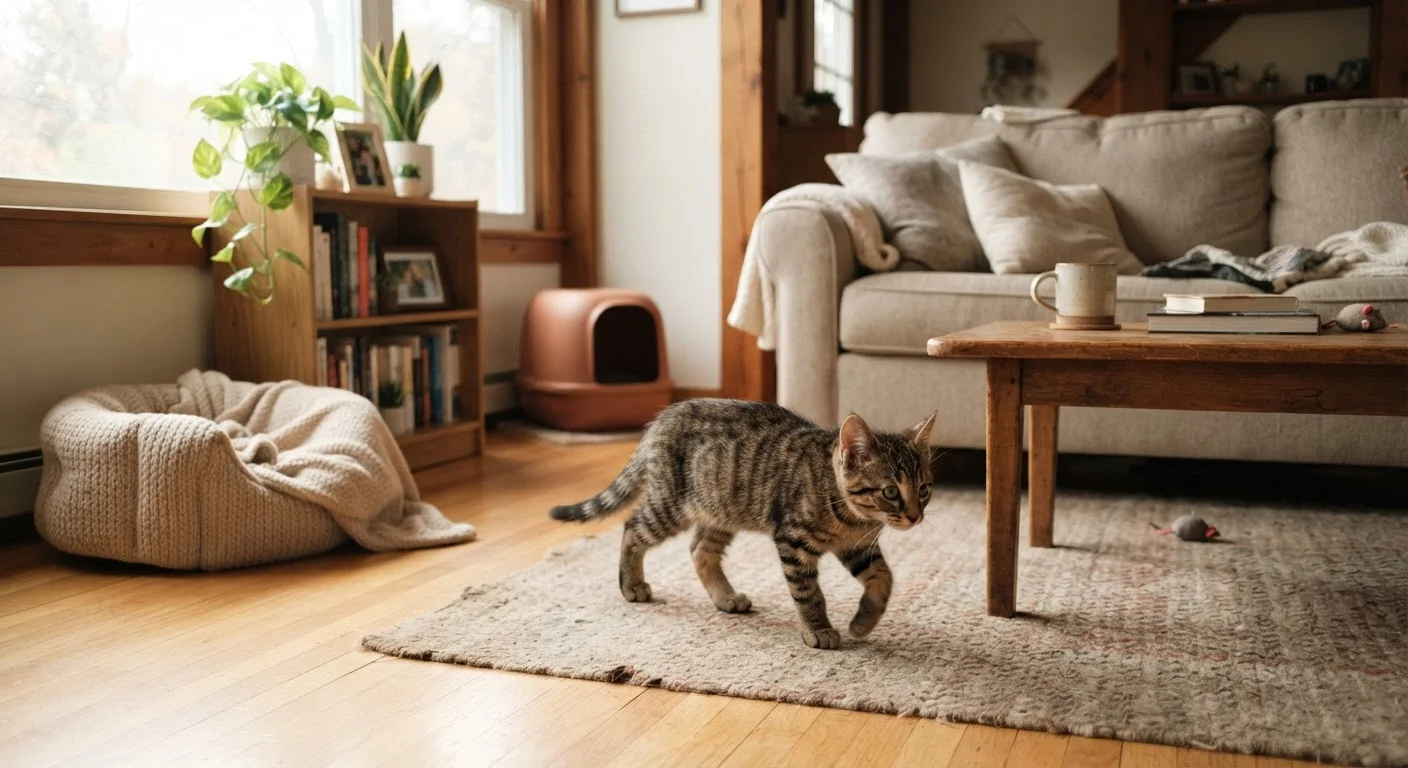
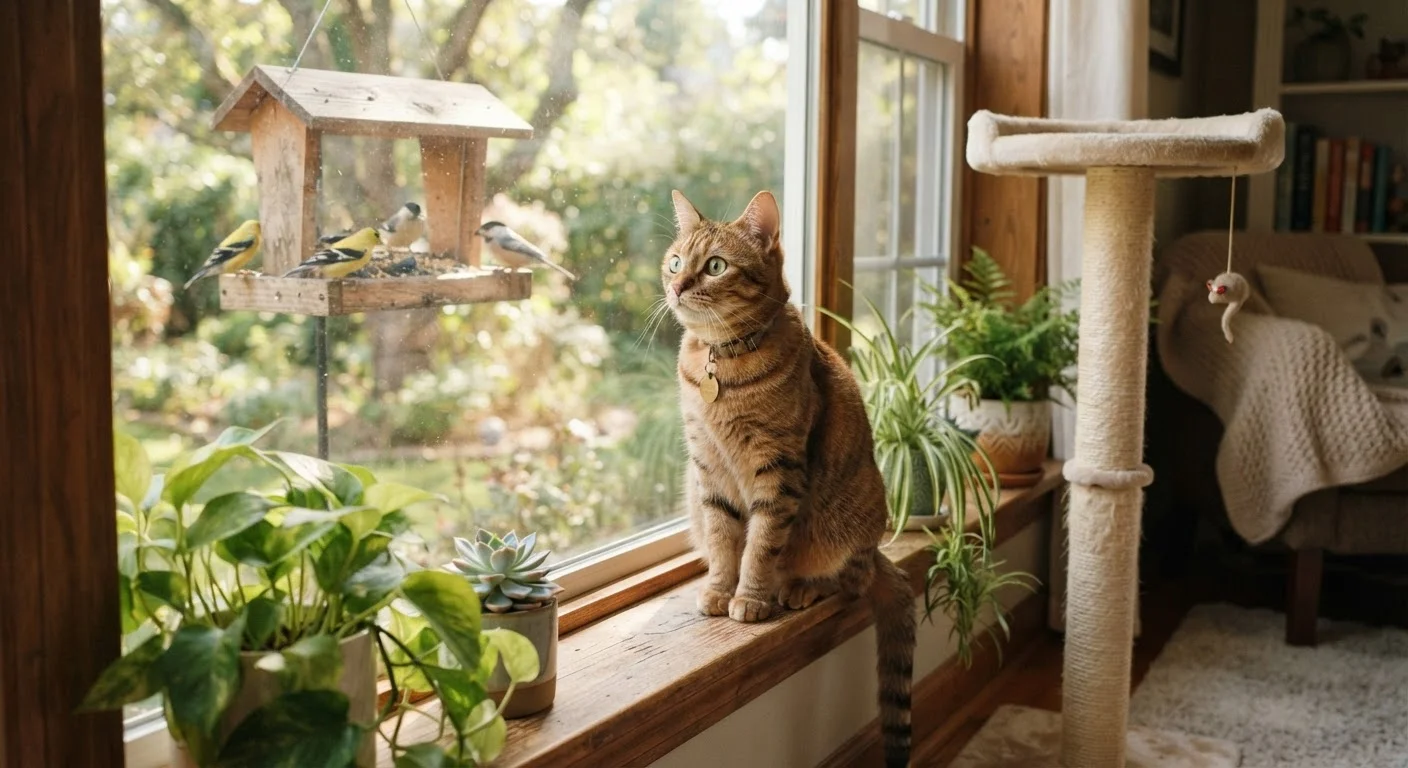
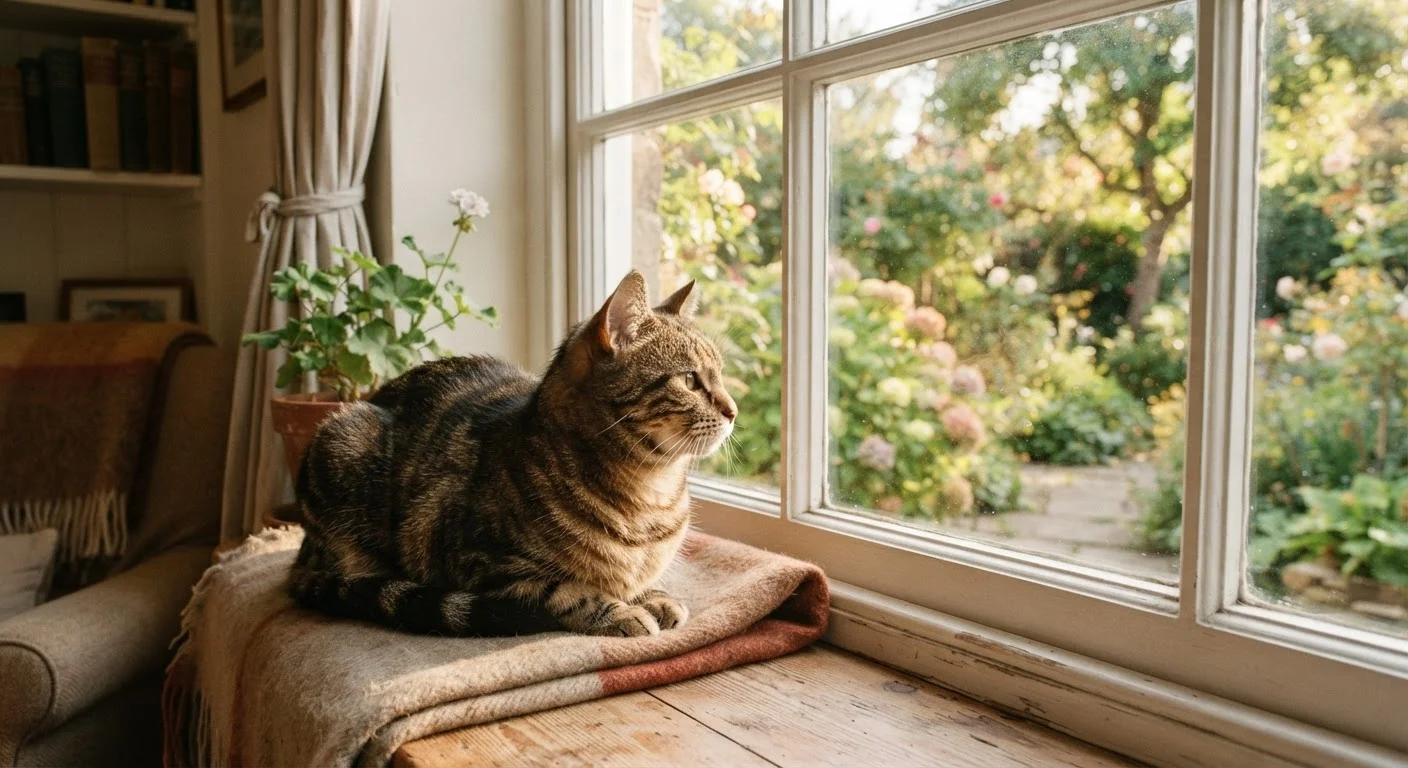
A common misconception is that keeping a cat indoors is inherently unkind. In practice, cats in well-enriched indoor environments - with climbing structures, play sessions, window perches, and social interaction - show strong behavioral health outcomes. The quality of the indoor environment matters far more than square footage. Litter box habits are also worth monitoring as a behavioral health indicator; our article on litter box problems explains what changes in elimination behavior can signal.
The 'Both' Option: Supervised Access and Catios
For many owners, a hybrid approach addresses the core tension. Supervised outdoor time - on a harness and leash, or in an enclosed outdoor structure called a catio - allows cats to experience fresh air, natural light, and sensory variety without exposure to traffic, loose animals, or disease transmission from other cats.
Catios range from simple window-box enclosures to full garden runs. They require upfront cost and planning, but they're increasingly popular among owners who want to give cats outdoor enrichment without accepting the full risk profile of free roaming. Leash training works well for some cats, particularly those introduced to it gradually as kittens, though many adult cats resist it - patience and realistic expectations matter here.
Whatever structure you choose, understanding common feline behaviors helps you read whether your cat is thriving or showing signs of stress in any environment.