
The Closet Paradox Nobody Talks About
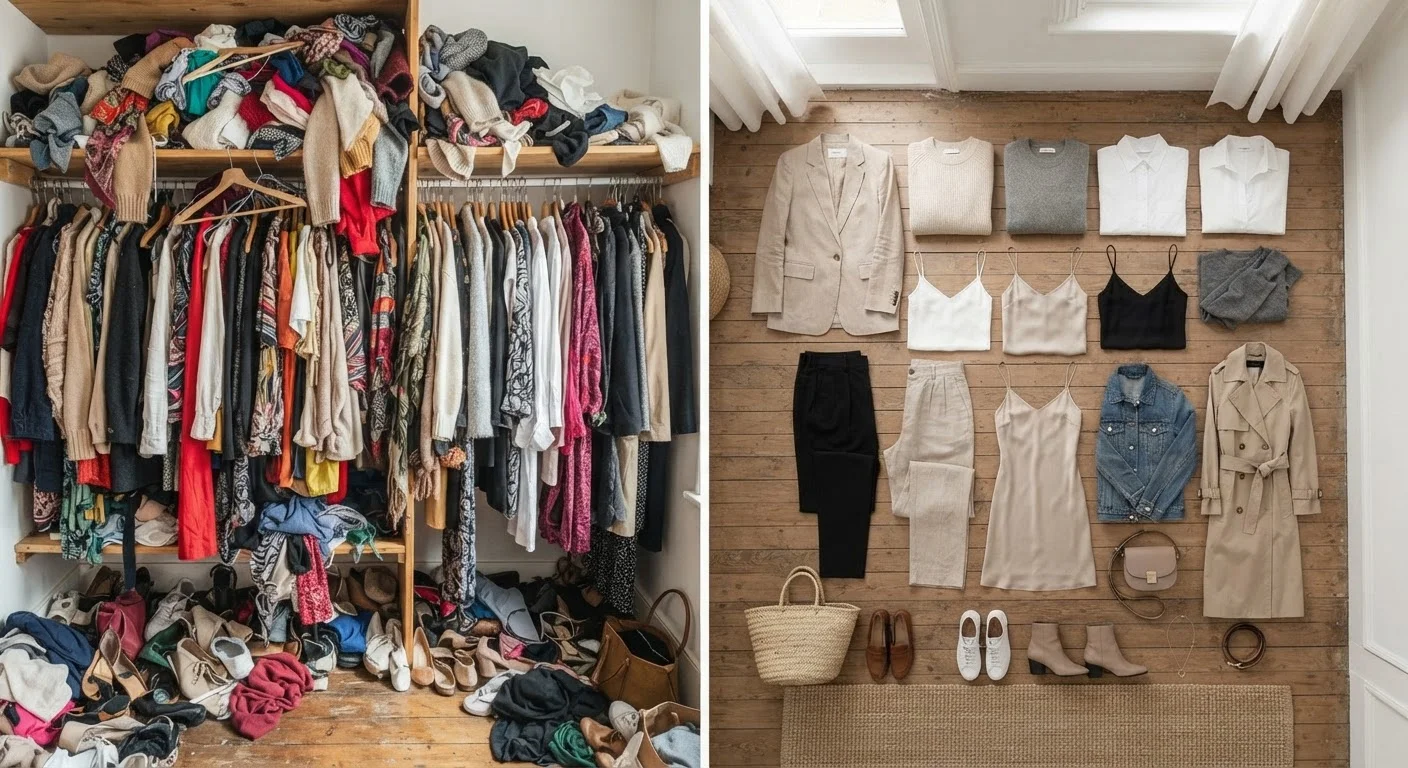
You've probably stood in front of a stuffed closet, stared at dozens of items, and still felt like you had nothing to wear. That frustrating feeling has a name - sometimes called the wardrobe paradox - and it's more common than you'd think. The more clothing we accumulate without a plan, the harder it becomes to actually get dressed.
The core problem isn't quantity. It's compatibility. When individual pieces don't work together, they don't add options - they add noise. A closet that looks full of choices can actually offer very few workable combinations when the pieces can't be mixed and matched. Understanding this shift in thinking is the first step toward building a wardrobe that genuinely serves you every day. For practical daily inspiration, explore the Everyday Outfit Ideas hub for real-life styling approaches.
Myth
The more clothing I own, the more outfit options I have.
Fact
Outfit options depend on how well pieces work together, not how many items you own.
A closet packed with pieces that don't coordinate actually shrinks your practical choices. If a bold printed blouse only works with one specific pair of pants, it functions as a single outfit - not a building block. Versatility multiplies options; volume alone doesn't. Neutral, mix-and-match basics can create exponentially more combinations than the same number of statement-only pieces.
Myth
Buying trendy pieces keeps my wardrobe fresh and exciting.
Fact
Trend-heavy items often become unwearable quickly, leaving your closet full of clothes that feel dated.
Trends cycle fast, and pieces bought solely to chase them tend to have a short styling window. Once the moment passes, they either get donated or pushed to the back of the rack. Incorporating a trend through one or two affordable accent pieces - a scarf, a shoe, a bag - keeps things current without sacrificing the reliable foundation your wardrobe depends on.
Myth
If I just had more storage, my wardrobe would work better.
Fact
More storage doesn't fix a coordination problem - it only hides it.
Expanding your closet space makes it easier to accumulate items you rarely wear, not easier to get dressed. When you can't see or access what you own, useful pieces get buried under things that don't serve you. A smaller, well-edited wardrobe housed in a modest space is almost always easier to navigate and use than a sprawling collection spread across multiple closets.
Myth
Expensive clothes are always a better investment than affordable ones.
Fact
Cost-per-wear - not retail price - determines whether a piece is worth it.
A $30 T-shirt you wear twice a week for two years delivers far more value than a $200 blouse you wear once. Price is one signal of quality, but fit, fabric durability, and versatility matter just as much. The smartest move is reserving higher budgets for high-frequency, hard-working staples - and spending less on trendier or occasion-specific items you'll wear rarely.
Myth
Shopping sales is always the smart move for building a wardrobe.
Fact
Discounted items that don't fit your existing wardrobe still cost you money without adding real value.
A bargain only becomes a bargain if you actually use it. Buying something because the price feels too good to pass up - rather than because it genuinely fills a gap in your wardrobe - is one of the fastest ways to accumulate clutter. Before any purchase, the more useful question is: Does this work with what I already own? If the answer is no, it's not a deal - it's a detour.
What Actually Builds a Functional Wardrobe
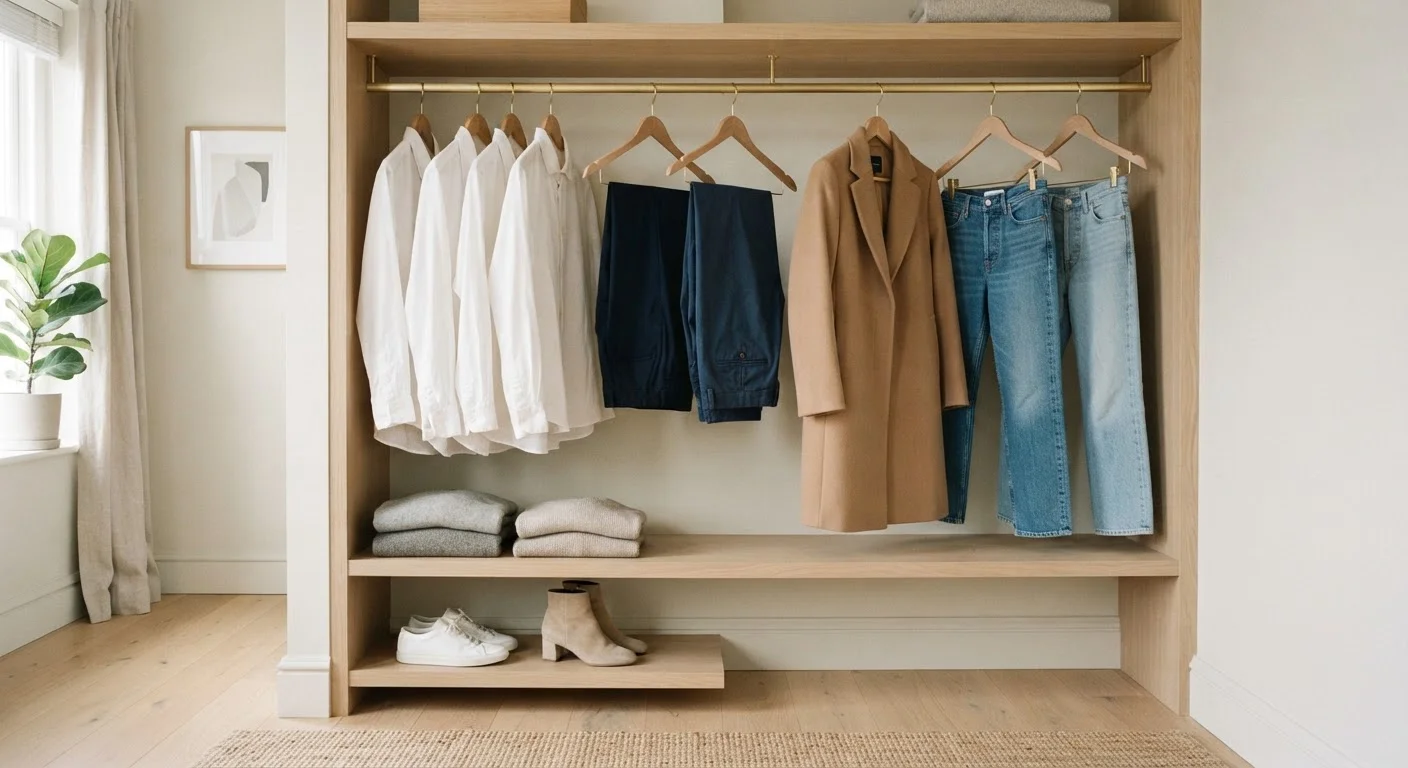
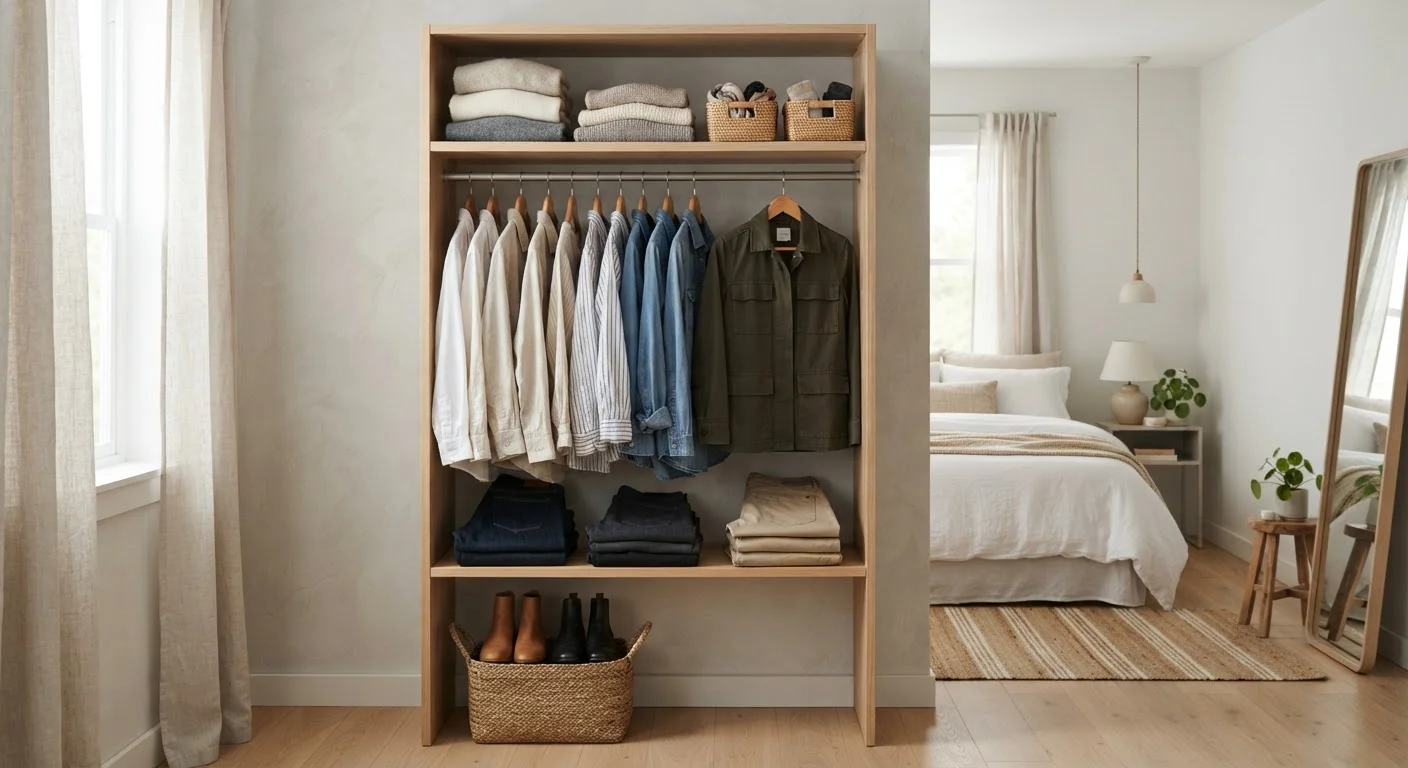
The antidote to closet chaos isn't purging everything and starting from scratch - it's being intentional about what earns a spot in your rotation. Foundational pieces (think well-fitting trousers, a few neutral tops, a versatile jacket) are the workhorses that make everything around them more useful. Each new item you add should connect to at least two or three things you already own.
~80%
Clothes worn only 20% of the time
Fashion industry observers frequently cite the 80/20 rule: most people regularly wear roughly 20% of the clothes they own.
7-10
Core pieces in a functional capsule wardrobe
Wardrobe consultants commonly suggest that 7-10 well-chosen foundational pieces can support the majority of everyday outfits.
A strategy-first mindset also saves money over time. Impulse purchases that get worn once or twice cost far more per wear than a slightly pricier piece you reach for constantly. If you're ready to put this into practice, The Anatomy of a Capsule Wardrobe breaks down exactly which pieces do the heaviest lifting - and why. You can also learn how a tight set of pieces can carry you through any situation with Building a Wardrobe That Works Every Day of the Week.
Watch Out for the 'Just in Case' Trap
Holding onto clothes you never wear because you might need them someday is one of the biggest drivers of closet clutter. If an item hasn't been worn in over a year and doesn't serve a clear, specific purpose in your wardrobe, it's likely a placeholder rather than a useful piece. Clutter makes the items you actually love harder to find and use.
Seasons add another layer of complexity, but the same principle holds: a handful of seasonally versatile pieces beats a tower of single-use items. The Capsule Wardrobe Essentials Worth Having in Every Season guide walks through which items genuinely earn their closet space year-round. And if you want to stretch what you already own even further, Layering Basics shows how one extra piece can completely transform a look.
Whether you're starting from zero or just trying to make better sense of what you already own, Dressed for Any Occasion offers a clear-eyed look at how foundational choices span every dress code - from weekend errands to the office to a night out.