
What Makes a Wardrobe a "Capsule"?
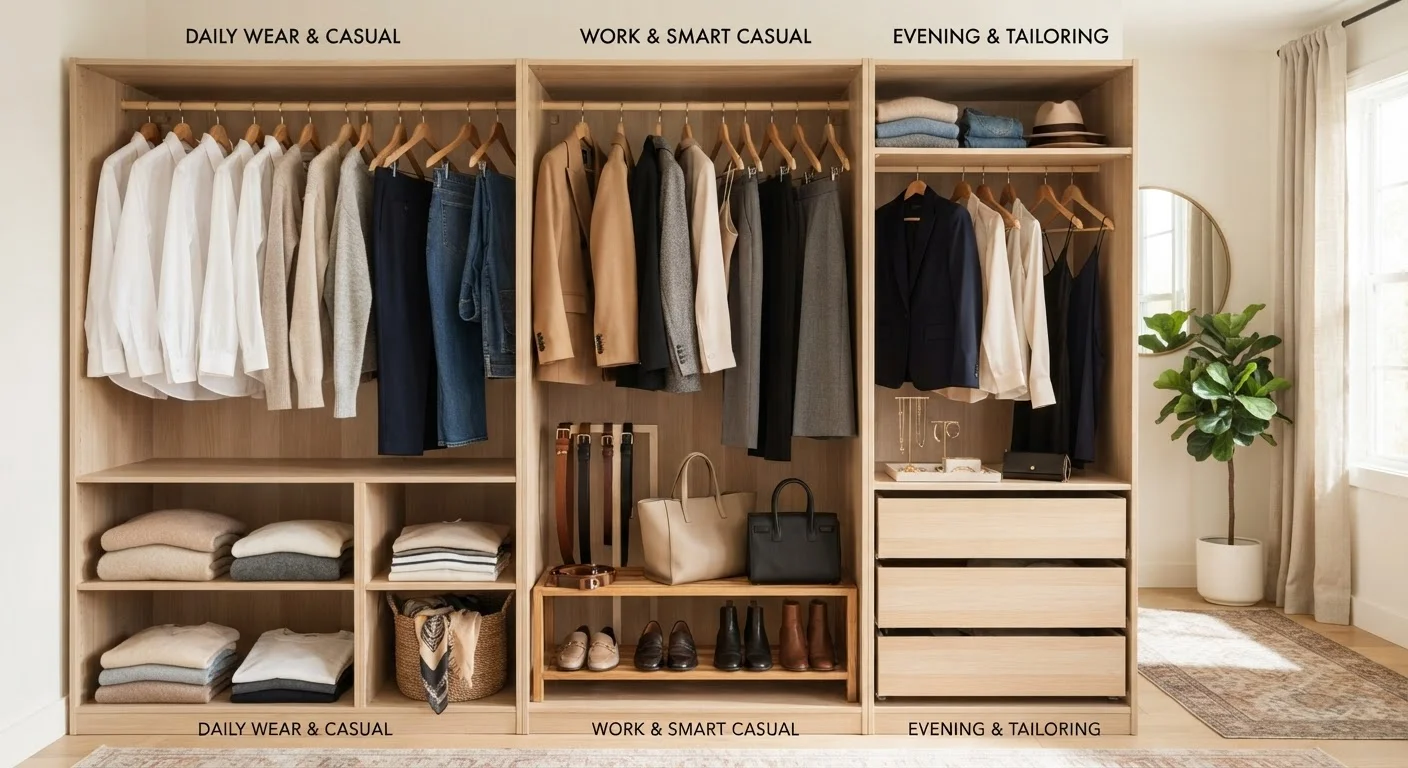
The word "capsule" captures the idea of compression - packing maximum usefulness into a compact, self-contained unit. When applied to clothing, it means selecting pieces so deliberately that the whole collection works as a system. Every top pairs with multiple bottoms. Every layer complements your shoes. Nothing sits idle at the back of the rail.
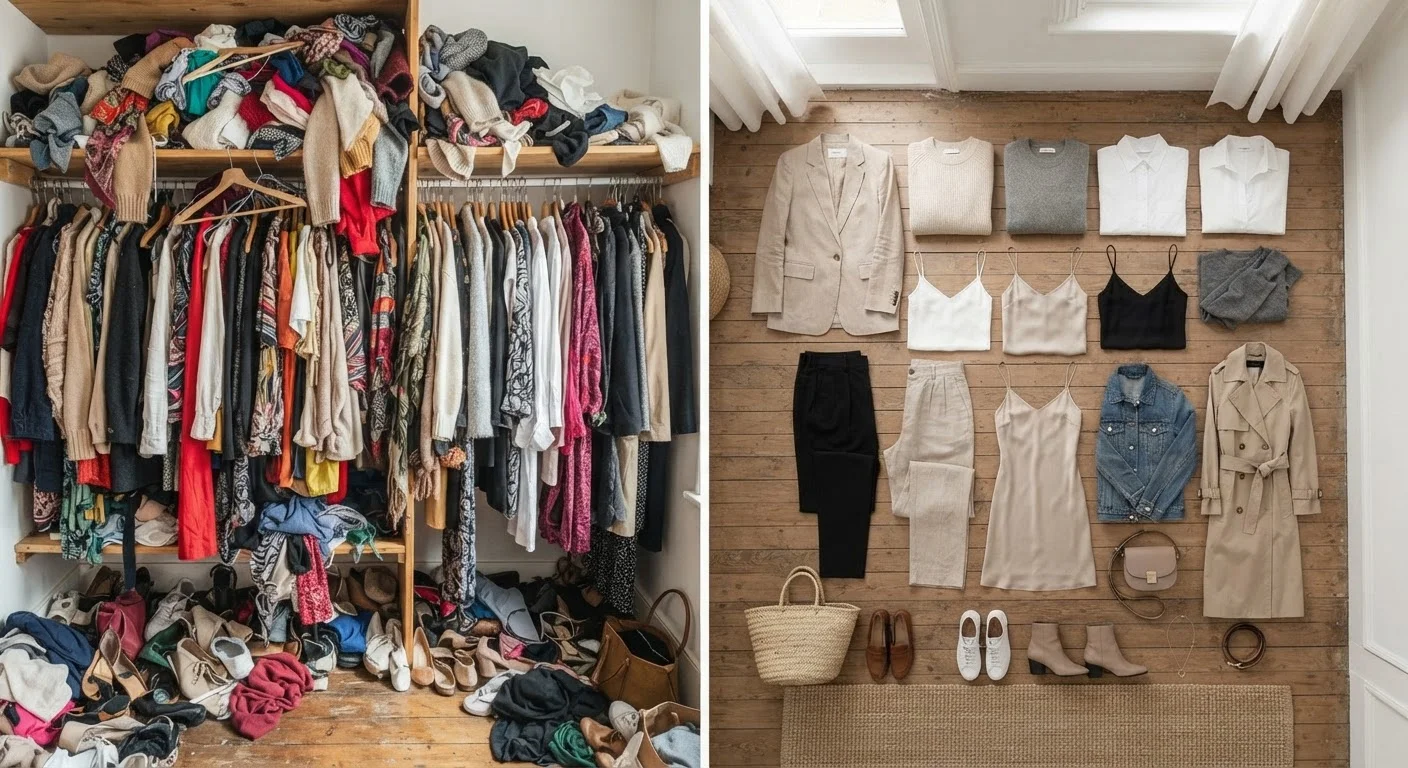
This is different from simply owning fewer clothes. A capsule wardrobe is curated. That distinction matters because the goal isn't minimalism for its own sake - it's outfit flexibility. When your closet functions as a system, getting dressed each morning becomes dramatically easier, and you stop experiencing that frustrating feeling of having nothing to wear despite a full rack. If that paradox sounds familiar, our article on why more clothes can actually leave you with less to wear unpacks exactly why it happens.
Your Capsule, Your Rules
There is no universal list of items that belongs in every capsule wardrobe. A teacher's capsule looks different from a remote worker's or a frequent traveler's. The concept is a framework, not a prescription. The test of a good capsule is simple: can you get dressed confidently on any given morning using only what's in your closet?
The Core Building Blocks
While every capsule wardrobe is personal, most share a similar structural logic: a foundation of neutrals, a handful of classic silhouettes, and a small number of accent pieces that reflect your personality.
- Tops: Crisp white shirts, plain crew-neck tees, a fitted turtleneck, and a soft button-down in a neutral stripe cover most daily needs and layer well.
- Bottoms: Well-fitted dark-wash jeans, tailored trousers in navy or grey, and a versatile midi skirt or chino shorts depending on climate give you range without redundancy.
- Outerwear: A classic trench coat, a structured blazer, and a casual denim jacket handle most seasons and settings between them.
- Footwear: White sneakers, a simple leather or leather-look ankle boot, and a low-heeled pump or loafer cover casual, smart-casual, and dressy without taking up half your budget.
The key is that each item earns its place by working with at least three or four others already in the collection. If a piece only pairs with one other item, it's a costume - not a capsule component.
~30-40
Typical capsule wardrobe item count
Fashion educators and wardrobe consultants commonly cite 30-40 total clothing items (excluding underwear and activewear) as a functional capsule range.
80%
Clothes most people never wear
A widely cited wardrobe study suggests that most people wear only about 20% of their clothing on a regular basis, leaving the majority of their closet unused.
Color, Fit, and Fabric - The Three Pillars
Successful capsule wardrobes rest on three principles that have nothing to do with trends.
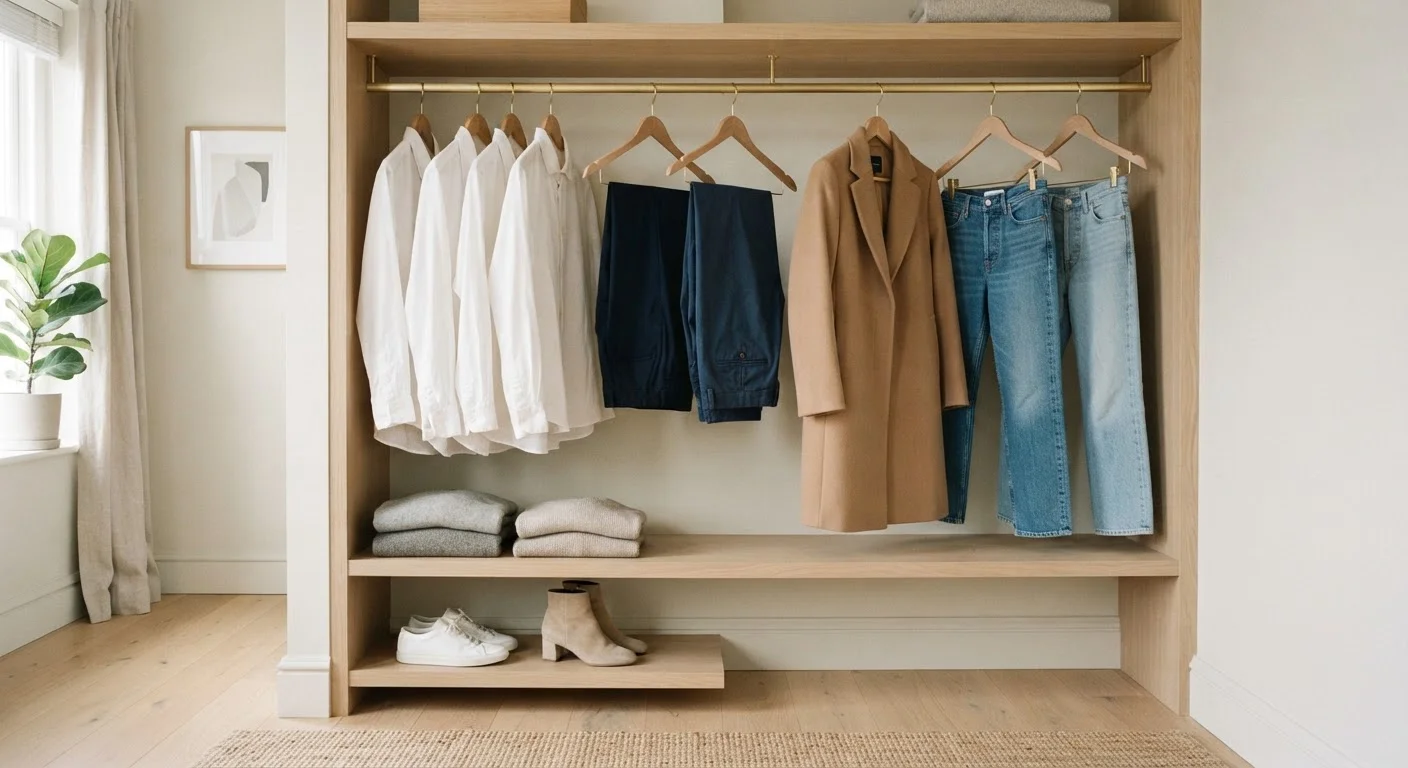
Color cohesion is the easiest to control. Anchoring your wardrobe in two or three neutral tones - say, white, navy, and camel - means almost everything pairs without effort. You can layer in one or two accent colors (a dusty rose, a warm rust) through softer pieces like scarves or knitwear without disrupting the system.
Fit is arguably more important than anything else. A beautifully simple T-shirt in a great fit reads as put-together; the same shirt in the wrong size looks unkind to everyone. Tailoring even inexpensive basics dramatically extends how polished a small wardrobe feels.
Fabric quality affects longevity. Natural fibers like cotton, wool, and linen tend to hold shape and breathe better over time than synthetic alternatives, which matters when you're wearing the same pieces frequently. That said, some synthetic blends offer excellent durability - pay attention to fabric weight and construction rather than chasing a specific fiber label.
Start With What You Already Love
Before buying anything new, do a quick closet audit. Pull out the five to ten items you reach for most often - these are the natural anchors of your personal capsule. Notice what they have in common (color, fit, fabric) and use those patterns to guide future additions rather than shopping based on impulse or trend.
Adapting Your Capsule Across Seasons
One of the smartest moves in capsule wardrobe building is planning for seasonal transitions. Rather than maintaining entirely separate warm- and cold-weather wardrobes, a well-designed capsule overlaps. Lightweight layers like a linen shirt or a cotton cardigan work across spring and summer. Heavier knitwear and a wool coat extend the same core pieces into fall and winter.
Storing off-season items in a single box or underbed container keeps your active closet clean and functional rather than cluttered. Our look at capsule essentials that work across all four seasons offers a practical breakdown of which pieces carry the most weight year-round.
For everyday outfit inspiration that shows these principles in action, the Everyday Outfit Ideas hub is a great place to see capsule pieces styled in real combinations. And if you want broader seasonal guidance, Seasonal Style Tips has you covered throughout the year.
“Style is knowing who you are, what you want to say, and not giving a damn. A capsule wardrobe simply gives you the vocabulary to say it clearly.”
— Susie Faux, London boutique owner credited with coining the capsule wardrobe concept