
Why Spring Trips Up Even Confident Dressers
Spring is arguably the trickiest season to dress for. Unlike winter, which calls for consistent warmth, or summer, which demands breathability, spring requires you to be ready for almost anything - sometimes within the same six-hour window. A 50-degree morning can turn into a 75-degree afternoon with zero warning.
The good news: once you understand why spring dressing goes sideways, avoiding those missteps becomes much more intuitive. Whether you're navigating pastel overload, pattern chaos, or that universal frustration of being too cold at 8 a.m. and too warm by noon, the fixes are practical and closet-friendly.
For a broader look at how seasonal dressing logic applies year-round, this year-round style primer is a great starting point. And if you want reliable outfit anchors for each season, check out seasonal outfit anchors to build from a dependable foundation.
Treating spring as a full-on warm-weather season from the start.
Why it happens: The calendar says spring, so people instinctively reach for sundresses and sandals - often before the weather has committed to anything above 55 degrees.
Wearing fabrics that are too heavy or too light for the actual temperature.
Why it happens: People default to either full winter-weight fabrics or breezy summer fabrics, skipping the middle ground entirely.
Mixing too many competing patterns without a unifying element.
Why it happens: Spring pattern mixing looks effortless in editorials, which makes it tempting to pile on florals, stripes, and checks all at once.
Relying on open-toe shoes before your feet are actually comfortable in them.
Why it happens: Sandals signal spring, and the seasonal excitement is real - but 52-degree mornings make open-toe footwear genuinely uncomfortable.
Avoiding color entirely out of habit from winter dressing.
Why it happens: After months of reaching for black, grey, and navy, lighter colors can feel unfamiliar or risky.
Pulling It All Together: Practical Spring Outfit Strategies
Avoiding individual mistakes is one thing - building a cohesive spring outfit strategy is another. The most effective approach treats spring as a layering season, not a transition period you just push through on the way to summer.
Pastels Can Wash Out Without Contrast
Wearing head-to-toe soft pastels can flatten your overall appearance, especially in overcast spring light. Ground the look with at least one piece in a deeper neutral - think camel, navy, or warm white - to give the outfit visual structure and prevent it from looking washed out.
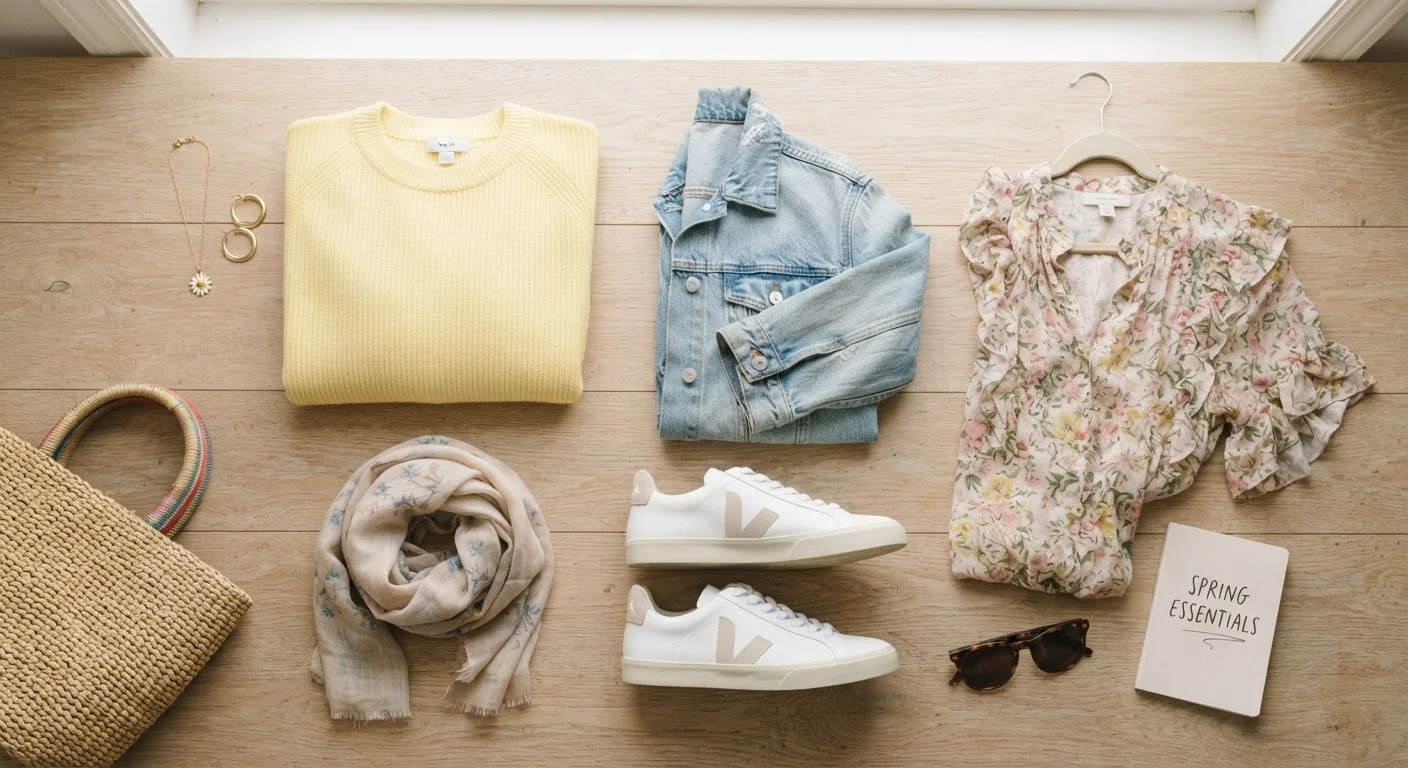
Start every spring outfit with a versatile middle layer - a lightweight button-down, a fitted long-sleeve tee, or a cotton mock-neck - that works on its own when temps rise and sits comfortably under a jacket when they don't. This one habit solves the 50-degree morning problem more reliably than any single purchase.
Don't Pack Winter Layers Too Early
Many people swap their entire wardrobe at the first warm weekend - and regret it by Tuesday morning. Spring weather is notoriously erratic, and a 65-degree Saturday can be followed by a 42-degree Wednesday. Keep a handful of medium-weight layers accessible well into May.
On the pattern and color front, think of your outfit as having a visual anchor. One piece earns the spotlight; everything else supports it. A floral midi skirt pairs cleanly with a solid ribbed top and a neutral crossbody. A striped poplin shirt carries an outfit when the pants and shoes stay simple.
Spring is also a great time to revisit your foundational wardrobe pieces. Many people discover that a few well-chosen basics give them more outfit options than a drawer full of statement pieces. Building a wardrobe that transitions from casual to formal covers exactly how to do that - and those principles apply just as much to spring layering as to dress code flexibility.
For days that shift from a work setting to afternoon errands, outfit ideas that stretch across the whole day can keep you from over-dressing or under-dressing for either context. Spring rewards people who plan lightly but layer smart - and that's a skill anyone can build. Browse everyday outfit ideas for seasonal inspiration grounded in real daily life.
30°F+
Typical daily temperature swing in spring
In many U.S. regions, spring mornings and afternoons can differ by more than 30 degrees Fahrenheit, making layering essential rather than optional.
3-4 layers
Recommended layering pieces for spring outfits
Style educators commonly suggest building spring outfits from three to four removable layers to accommodate unpredictable daily temperature shifts.