
The Cost Breakdown: What Families Actually Pay
Price is usually the first battleground in this debate-and it's rarely as simple as comparing a gas receipt to a ticket price. For a family of four, round-trip airfare can easily run $800-$2,000+ before checked bags, car rental at the destination, and airport parking enter the picture. Driving, by contrast, scales far more gently: fuel, tolls, and a night or two at a roadside hotel may cost a fraction of that, especially for regional trips under 600 miles.
That said, driving has hidden costs too. Long hauls may require overnight stays, extra meals out, and added vehicle wear. If your car isn't in road-trip shape, a pre-trip maintenance check is non-negotiable-and potentially costly.
| Criterion | Driving | Flying |
|---|---|---|
| Cost for family of 4 | Generally lower | Multiplies per person |
| Travel time (under 500 mi) | Comparable door-to-door | Faster in-air, slower overall |
| Luggage flexibility | Bring as much as fits | Strict limits and fees |
| Schedule flexibility | Fully on your terms | Fixed departure times |
| Toddler-friendliness | High-stop anytime | Low-confined space |
| Long-distance speed | Days of driving required | Hours in the air |
| Carbon footprint | Varies by vehicle/distance | Generally higher per trip |
The math consistently favors driving for families of four or more on domestic trips up to roughly 600-800 miles. Beyond that, the time cost of driving starts competing seriously with the financial cost of flying.
Time, Convenience, and the Airport Reality Check
Flying looks faster on paper-a two-hour flight versus a ten-hour drive seems like a no-brainer. But the full door-to-door experience tells a different story. Add an hour or two for check-in and security, a potential layover, baggage claim, and a rental car pickup, and that two-hour flight can easily become a six- or seven-hour ordeal-especially with children in tow.
Road trips hand you full schedule control. Need a bathroom break? Pull off. Kid melting down? Stop at a park for 20 minutes. Spotted a roadside attraction that looks genuinely amazing? That's your afternoon. Scenic US routes are full of these organic moments that simply don't exist at 35,000 feet.
~2-3 hrs
Hidden time added by airport logistics
Industry travel analysts consistently note that door-to-door domestic flight time often exceeds the published flight duration by two to three hours when check-in, security, and ground transport are included.
4 in 10
US families who road-tripped in the past year
Survey data from AAA suggests road trips consistently rank among the most popular family vacation formats in the United States.
Families with very young children often find the airport process-strollers, car seats, diaper bags, and TSA-stressful enough to tip the decision toward the car regardless of distance.
Kid-Friendliness: Comfort, Entertainment, and Sanity
Children experience both modes of travel very differently depending on age. Toddlers and preschoolers often struggle with the stillness and ear pressure of flights, while older kids and teens can manage long drives poorly if not engaged. Neither option is universally easier-it depends on your kids and your preparation.
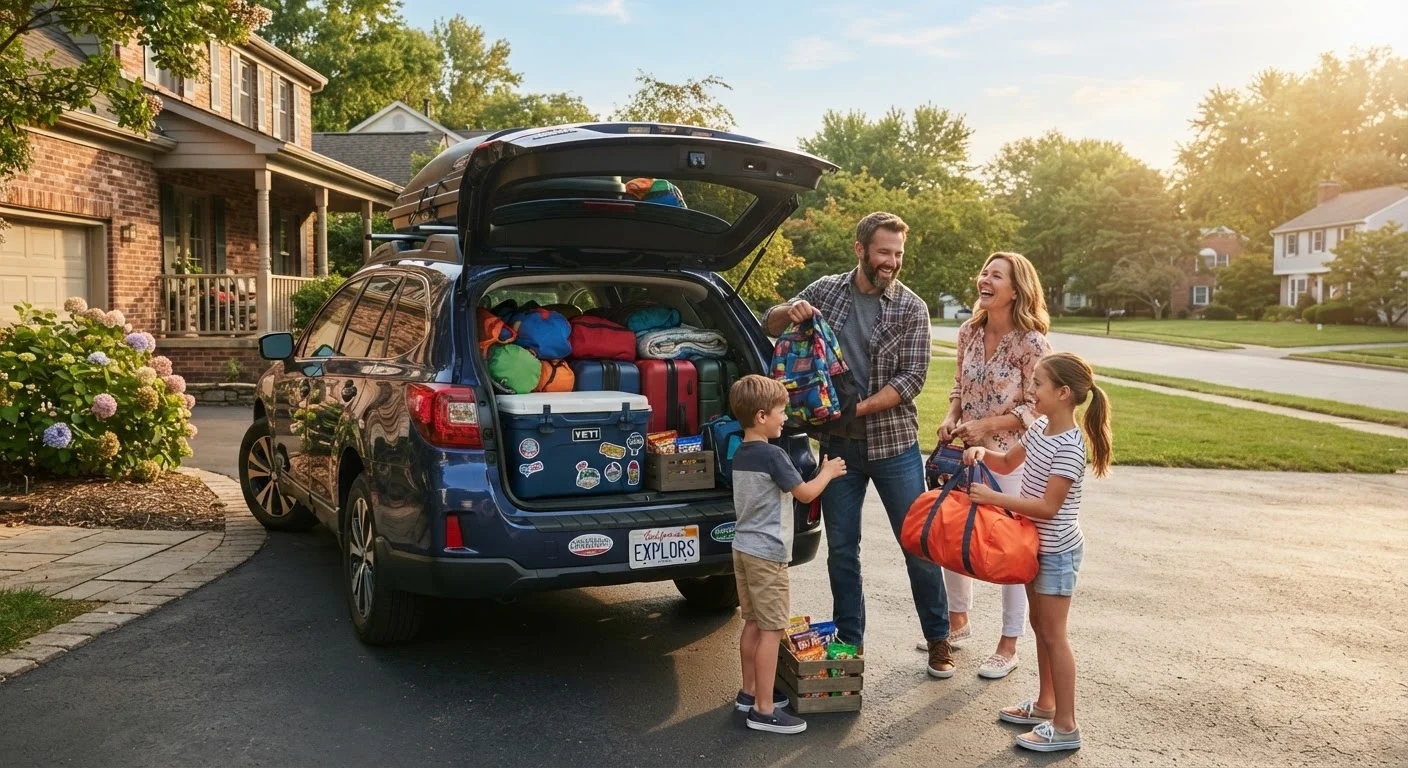
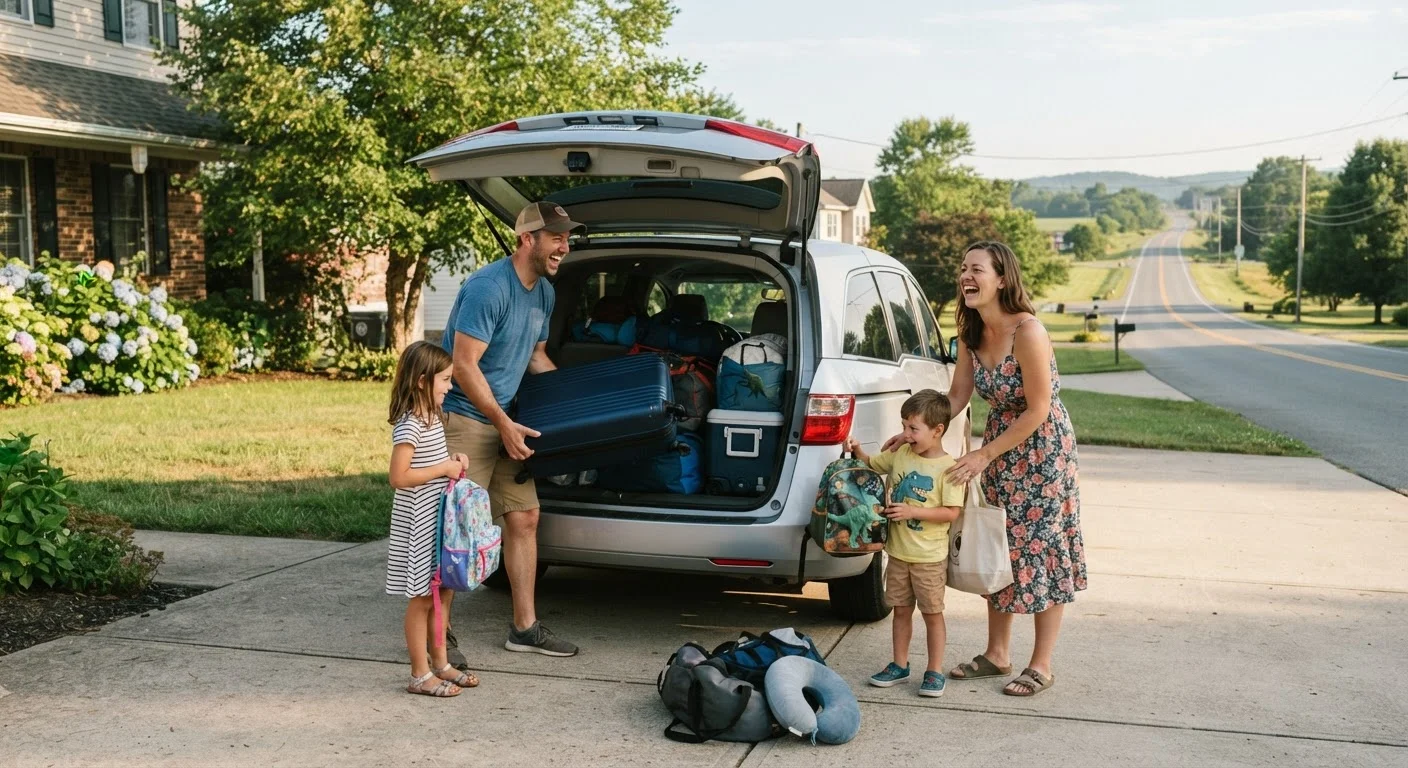
In the car, you control the environment completely. You can pack a tailored supply of snacks, games, and comfort items without worrying about liquid restrictions or overhead bin space. Activities like road trip bingo, audiobooks, or screen-free games can make hours vanish surprisingly fast.
On a plane, entertainment options are more limited, and turbulence or crying babies in a confined cabin creates pressure that parents feel acutely. That said, a smooth two-hour flight can be far less draining than nine hours on the highway-especially if your kids are school-age and relatively seasoned travelers.
Car Seats and Air Travel: Know the Rules
If you're flying with a child young enough to need a car seat at your destination, factor in the logistics of transporting it. You can check a car seat for free on most US carriers, gate-check it, or rent one at your destination-but rental quality and availability vary. Driving sidesteps this entirely since your child's familiar seat stays installed throughout the trip. Always verify current airline policies directly with your carrier before travel.
Which One Is Right for Your Family?
There's no universal answer-but there's almost always a better fit for your specific situation. A 400-mile trip to a national park? Drive it. A trip to Hawaii or Europe? You're flying. The nuanced middle ground-say, Dallas to Denver or Chicago to Washington D.C.-is where the real deliberation happens.
Consider these factors together: total family size, ages of your youngest children, available vacation days, budget flexibility, and whether the drive itself holds any appeal. A structured road trip plan can transform a grueling marathon into a multi-stop adventure that the whole family talks about for years. On the flip side, flying can free up precious vacation days you'd otherwise spend white-knuckling it through traffic.
If you do choose the road, go in prepared. Road trip safety fundamentals-from vehicle checks to managing driver fatigue-make a real difference on long stretches. And if you've been on the fence about a longer route, understanding what makes road trips feel hard can help you course-correct before you leave the driveway.