
Why Road Trips Go Wrong Before You Even Leave the Driveway
Family road trips carry a lot of expectation - windows down, snacks ready, everyone genuinely excited. But somewhere around hour four, things quietly unravel. The baby is restless, the older kids are bored, and the driver is running low on patience and coffee. Sound familiar?
The truth is, most road trip misery is planned in. Not intentionally - but through a handful of very common oversights that seem harmless during the excitement of trip planning. The good news: every one of them is fixable. Understanding what typically goes wrong is the first step to building a trip that actually delivers on its promise.
For a solid foundation before any of these details, start with our framework for planning a family road trip across the US - it covers route-picking and logistics from the ground up.
Setting a daily mileage target that looks fine on paper but ignores real-world driving conditions.
Why it happens: Online mapping tools show drive times under ideal conditions - no construction, no traffic, no toddler bathroom emergencies. Families trust those estimates and pack in too many miles.
Booking accommodations that leave zero flexibility in the schedule.
Why it happens: Pre-booking everything feels responsible and saves money - but it locks you into arrival times that leave no margin for detours, delays, or spontaneous stops worth making.
Treating the car ride as dead time rather than part of the experience.
Why it happens: Parents focus planning energy on destinations and underestimate how much time the family will actually spend in the car - often eight to ten hours per travel day.
Ignoring everyone's need for a predictable daily rhythm.
Why it happens: Vacation mode tempts families to throw out all routines - late nights, skipped meals, erratic nap times - which works for a day or two but accumulates into exhausted meltdowns.
Failing to plan snacks and meals strategically, then stopping at whatever is convenient.
Why it happens: Food feels like a detail, not a priority. But hunger - especially in kids - accelerates every other source of irritability on the road.
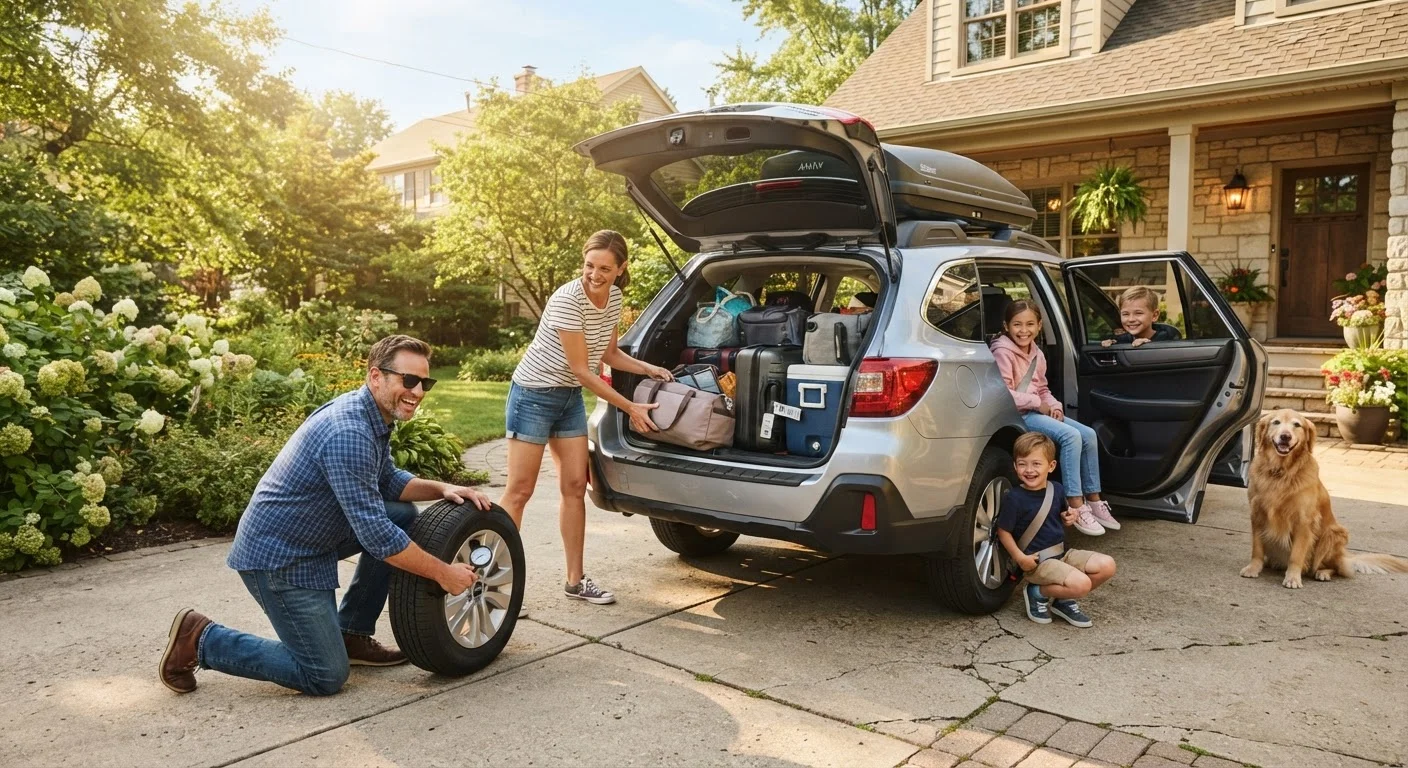
Skipping a pre-departure vehicle check and discovering problems mid-trip.
Why it happens: Most drivers assume a car that drove fine last week is fine now. Long highway drives put different demands on tires, fluids, and cooling systems.
Simple Shifts That Change the Whole Experience
Avoiding these mistakes doesn't require a perfect itinerary or a luxury vehicle - it mostly requires giving yourself permission to slow down. The families who tend to enjoy road trips the most aren't the ones who covered the most ground; they're the ones who built in enough breathing room to actually experience the trip.
655 miles
Average American family road trip distance
According to AAA research, the typical American family road trip covers around 655 miles one way, making pacing and comfort planning especially important.
38%
Drivers who report fatigue on long trips
The AAA Foundation for Traffic Safety has found that a significant share of drivers report drowsiness during extended highway drives, underscoring the need for planned rest stops.
Comfort and preparedness matter too. A well-stocked car reduces friction significantly - from the right snacks to the right entertainment. Our family road trip packing list covers exactly what to bring for every age group, so you're not improvising at a gas station somewhere in rural Kansas.
And don't underestimate driver safety. Fatigue is a real hazard on long stretches of highway, and it often sneaks up on even experienced drivers. Road trip safety for families walks through the vehicle checks, rest strategies, and fatigue warning signs that keep everyone safe on long hauls.
Driver Fatigue Is Serious - Plan Rest Stops Deliberately
It's easy to push through tiredness when you're eager to reach the next destination. But drowsy driving significantly impairs reaction time and judgment. Plan at least one 15-minute break for every two hours of driving, and never rely on caffeine alone to offset genuine fatigue. If you feel sleepy at the wheel, stop - no timeline is worth the risk.
The best road trips tend to feel a little loose at the edges - part planned, part discovered. Give your family that space, and the journey becomes the destination in the best possible way.