
Choosing a Route That Fits Your Family
The most important decision in any road trip is also the first: where are you actually going, and how are you getting there? Resist the urge to draw a single straight line across a map. Instead, think about what your family genuinely enjoys - mountains, beach towns, quirky roadside attractions, national parks - and build a route around that.
Route corridor
A named or established stretch of highway or road known for scenic or cultural highlights, like Route 66 or the Pacific Coast Highway. Traveling a corridor gives your trip a built-in theme and documented stopping points.
Daily drive budget
The maximum amount of driving time or miles you plan to cover in a single day. Setting this limit in advance prevents over-scheduling and keeps the trip enjoyable for everyone.
Gateway town
A town or city located near the entrance to a national park or major attraction. These towns often book up quickly because of their convenient location.
Dispersed camping
Camping outside of designated campgrounds on public land, typically in national forests or Bureau of Land Management areas. It usually requires no reservation but does have rules about where you can set up.
Roadside assistance
A service - often provided through auto insurance, a vehicle manufacturer, or a membership organization - that sends help if your car breaks down. Having active coverage before a long trip is strongly recommended.
Consider the ages of your kids. Toddlers and school-age children have very different stamina levels and attention spans. A route packed with long scenic drives may delight teenagers but frustrate a four-year-old who needs frequent movement. Look for routes that naturally break into manageable segments with interesting stops along the way.
Classic US road trip corridors - the Pacific Coast Highway, Route 66, the Blue Ridge Parkway, or a national park loop through the Southwest - are popular for good reason: they offer built-in variety and plenty of documented stopping points. Not sure whether driving is the right call at all? Our article on driving vs. flying for family vacations can help you weigh the real trade-offs.
Setting a Realistic Daily Drive Budget
Experienced road-trippers will tell you: the biggest planning mistake is being too ambitious with daily mileage. A useful rule of thumb is to cap driving at 4-6 hours per day, accounting for meal breaks, bathroom stops, and the inevitable detour someone insists on taking.
That typically means 250-350 miles per day in real-world conditions - not the optimistic figure your navigation app shows before the trip. Build your itinerary backwards from your total available days, subtract travel days at each end, and see what's genuinely achievable.
Build Buffer Time Into Every Day
Add at least 30-60 minutes of unscheduled time to each day's plan. This absorbs the inevitable detour, slow lunch, or impromptu photo stop without derailing your overnight destination. Families who over-plan their hours tend to arrive frazzled rather than excited.
Also factor in rest days. A trip that includes one or two slower days - where you stay put and explore one town on foot - prevents the exhaustion that can turn a dream trip into an ordeal. For more on why road trips feel harder than expected and how to fix that, see our piece on why long road trips feel harder than they should.
Booking Stops and Accommodations
You don't need every night locked in months ahead, but you should secure at least the first and last night of your trip - and any stays in high-demand areas like national park gateway towns, coastal hotspots, or major cities during peak summer weeks. These fill up fast, and last-minute prices at family-friendly lodging can be steep.
For the middle of your trip, a mix of pre-booked nights and flexible nights gives you room to adjust pace without creating anxiety. Campgrounds inside national parks typically require reservations well in advance; dispersed camping or sites outside park boundaries is usually more available.
National Park Reservations Fill Up Fast
Many national park campgrounds and some entry reservations (like timed entry permits) open months in advance and sell out quickly, particularly from May through September. If your route includes a major park, check the official National Park Service website for reservation timelines specific to that park. Flexibility in your dates can make a real difference.
Think about accommodation type relative to your kids' needs. A hotel with a pool can feel like an event in itself after a long drive. Vacation rentals with kitchens let you manage meals on your schedule, which is especially useful for families with dietary restrictions or young children on set routines.
Preparing the Car and Your Crew
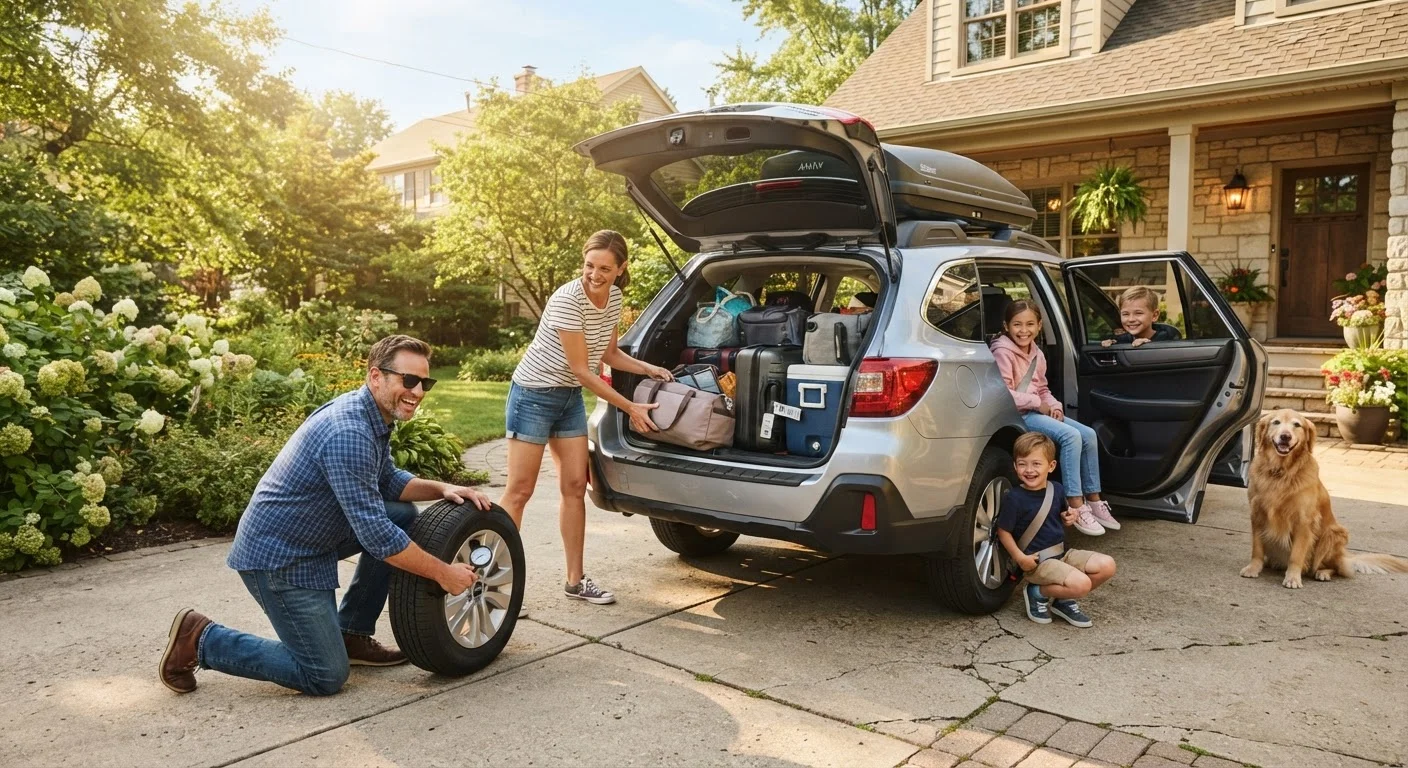
Before you roll out of the driveway, your vehicle needs a thorough check - regardless of how new or reliable it is. At a minimum, have a qualified mechanic inspect tires (including the spare), brakes, fluid levels, belts, and the air conditioning system. A breakdown on a remote highway with children in tow is no fun for anyone.
Our guide on road trip safety for families covers vehicle prep and driver fatigue management in greater depth - worth a read before departure. Make sure your roadside assistance coverage is current, and store your insurance and registration documents somewhere easily accessible.
For packing, discipline yourself. Overpacking creates a cramped, stressful car environment. Our family road trip packing list covers the essentials - snacks, safety items, entertainment, and comfort gear - without overwhelming your trunk.
Keeping Kids Engaged on the Road
Even with a great route and a well-stocked car, long stretches of highway can test any child's patience. The families who enjoy road trips most are usually the ones who treat the driving as part of the adventure, not just the getting-there part.
Involve kids in the planning before you leave. Let them mark destinations on a paper map, choose one stop they're most excited about, or build a playlist for the drive. Ownership creates enthusiasm. On the road, rotate between audiobooks, road trip games, podcasts designed for families, and occasional device time - rather than relying on screens from the first mile.
Schedule at least one stop per day that's purely for movement: a trailhead, a town square, a splash pad, a beach. Kids who can burn energy mid-day are far easier to travel with than kids who've been strapped into a seat since breakfast. That balance - moving forward on your route while staying present in the moment - is what transforms a road trip from a logistical exercise into a genuine family memory.