
Why Screen-Free Still Works
Every road trip parent has been there: the tablet dies an hour into a six-hour drive, and suddenly the whole car is holding its breath. The good news? Kids who are genuinely occupied with something interactive, social, or hands-on rarely notice they're missing a screen at all. The key is variety and a little intentional planning before you leave the driveway.
Research in child development consistently points to unstructured and social play as powerful tools for attention and regulation - which means the humble car game is doing more for your kids than you might think. Before your next long haul, check out our family road trip packing list to make sure you've got the physical supplies that support these activities.
Rotate Activities Every 45-60 Minutes
Even the most engaging game loses its appeal if it runs too long. Plan to switch activities roughly every 45 to 60 minutes to keep energy and interest fresh. Alternating between active games (verbal, competitive) and quieter activities (drawing, audiobooks) also helps prevent overstimulation during longer driving days.
8 Ways to Keep Kids Engaged Mile After Mile
Play Classic Verbal Games
Games like 20 Questions, I Spy, and the Alphabet Game require zero equipment and scale naturally across age groups. Older kids can riff on harder categories (animals only, things in national parks), while toddlers enjoy simpler color- or shape-based versions. The back-and-forth structure keeps everyone in the conversation rather than retreating into their own world.
Zero equipment, infinite rounds - verbal games are the road trip workhorse no family should leave home without.
Build a Collaborative Storytelling Chain
One person starts a story with a single sentence, and everyone takes turns adding to it. Set a loose theme - "our family discovers a hidden cave" - and let the plot go wherever it goes. This game works beautifully because there's no wrong answer, and kids who feel ownership over the narrative stay invested far longer than passive listeners do. Expect the story to get wonderfully bizarre by the third state line.
Collaborative stories give kids creative ownership, which keeps them genuinely invested for 20-30 minutes at a stretch.
Use a Road Trip Bingo or Scavenger Hunt Card
Prepare printed bingo cards or scavenger hunt lists before you leave - items like a yellow barn, a state welcome sign, or a horse trailer. Kids become active observers of the landscape instead of passengers waiting for it to end. You can find printable templates online or make your own tailored to the specific route you're driving. Laminate the cards and use dry-erase markers for a reusable version.
Scavenger hunts flip passive window-staring into active observation - a small shift with a huge payoff.
Pack a Curated Activity Kit
A small backpack stocked with a few carefully chosen items - a travel journal, sticker books, activity pads, or a travel-size magnetic puzzle - gives kids something tangible to look forward to. The act of discovering what's in the kit at the start of the trip creates genuine excitement. Resist overpacking: three or four items they haven't seen before are more engaging than a dozen familiar ones.
Novelty matters more than quantity - a few fresh items outperform a bag full of familiar toys every time.
Introduce the "License Plate Game"
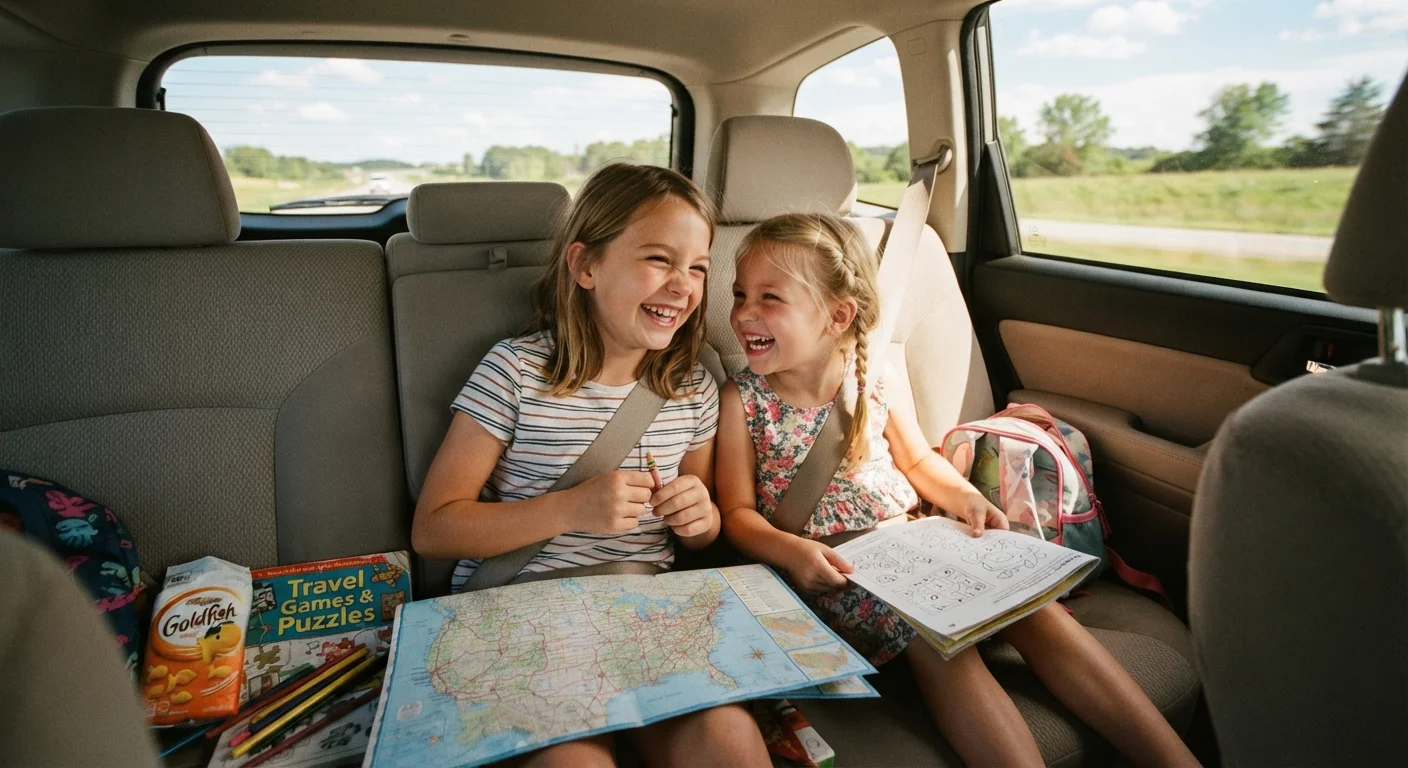
Spot and log license plates from as many different states as possible. Keep a printed US map in the car so kids can mark off each state they find. It's a surprisingly effective geography lesson disguised as a competition, and on major US interstates you can realistically collect 20 or more states in a single day. Offer a small non-screen reward - like picking the next rest stop snack - for hitting milestones.
The license plate game doubles as a quiet geography lesson that children genuinely want to keep playing.
Ask Open-Ended "What Would You Do?" Questions
Simple conversation starters - "If you could build your dream treehouse, what would be in it?" or "If our car could fly, where would we go right now?" - spark long, imaginative discussions that require no materials at all. These conversations also give parents a window into how their kids are thinking and feeling, making them genuinely rewarding for adults too. Keep a mental list of five or six you can deploy whenever the car goes quiet.
Imaginative questions turn quiet car time into meaningful conversation without any preparation or supplies.
Turn Rest Stops Into Mini Challenges
Give kids a simple physical challenge at each pit stop: find a rock of a specific color, do ten jumping jacks before getting back in the car, or photograph something unusual. This reframes the rest stop as an event worth looking forward to rather than just a bathroom break. It also burns off the physical energy that builds up during long seated stretches - which pays dividends for the next hour of calm driving. See why long road trips feel harder than they should for more on managing energy and pacing.
Mini challenges at rest stops give kids something to anticipate - turning a pit stop into a highlight.
Listen to Audiobooks or Podcasts Designed for Kids
This one technically involves a device, but it's shared, passive listening rather than solo screen time - a meaningful distinction. Story-based audiobooks or kid-focused podcasts (many are free through public library apps) create a shared experience the whole car can follow. When the chapter ends, kids often want to discuss what happened, which naturally flows into more conversation. Just make sure the driver can follow along safely - choose formats that don't require visual attention.
Shared audio storytelling creates a collective experience that sparks conversation long after the chapter ends.
Age-Appropriate Expectations Matter
Toddlers and preschoolers have much shorter attention spans than school-age kids - a game that captivates a seven-year-old for an hour may work for a three-year-old for only ten minutes. Plan more variety and shorter rotations for younger travelers. For mixed-age groups, lean toward games where each child can participate at their own level, like I Spy or collaborative storytelling.
Making the Journey Part of the Vacation
The most memorable road trips aren't remembered for the destination alone - they're remembered for the weird roadside giant ball of twine, the made-up story that took three states to finish, and the moment everyone in the car burst out laughing at a terrible pun. When you plan engagement into the drive itself, you're not just surviving the miles; you're building them into the trip.
If you're still weighing whether to drive or fly, our breakdown of driving vs. flying for family vacations can help you decide whether the road trip format is the right fit for your family's next adventure. And if you want to plan a route worth the drive, explore some of the scenic US road trip routes that combine great landscapes with manageable daily miles.