
What Each Layer Actually Does
Think of the layering system less like a rulebook and more like a toolkit. Each layer solves a specific problem, and understanding that makes it easy to build outfits that actually work.
Base layer: This is the piece touching your skin. Its main job is moisture management - keeping you dry when you sweat and comfortable when you don't. A fitted cotton crewneck, a thin modal tee, or a lightweight tank all qualify. In summer, a breathable base layer worn under something else keeps you cooler by wicking sweat away from your body.
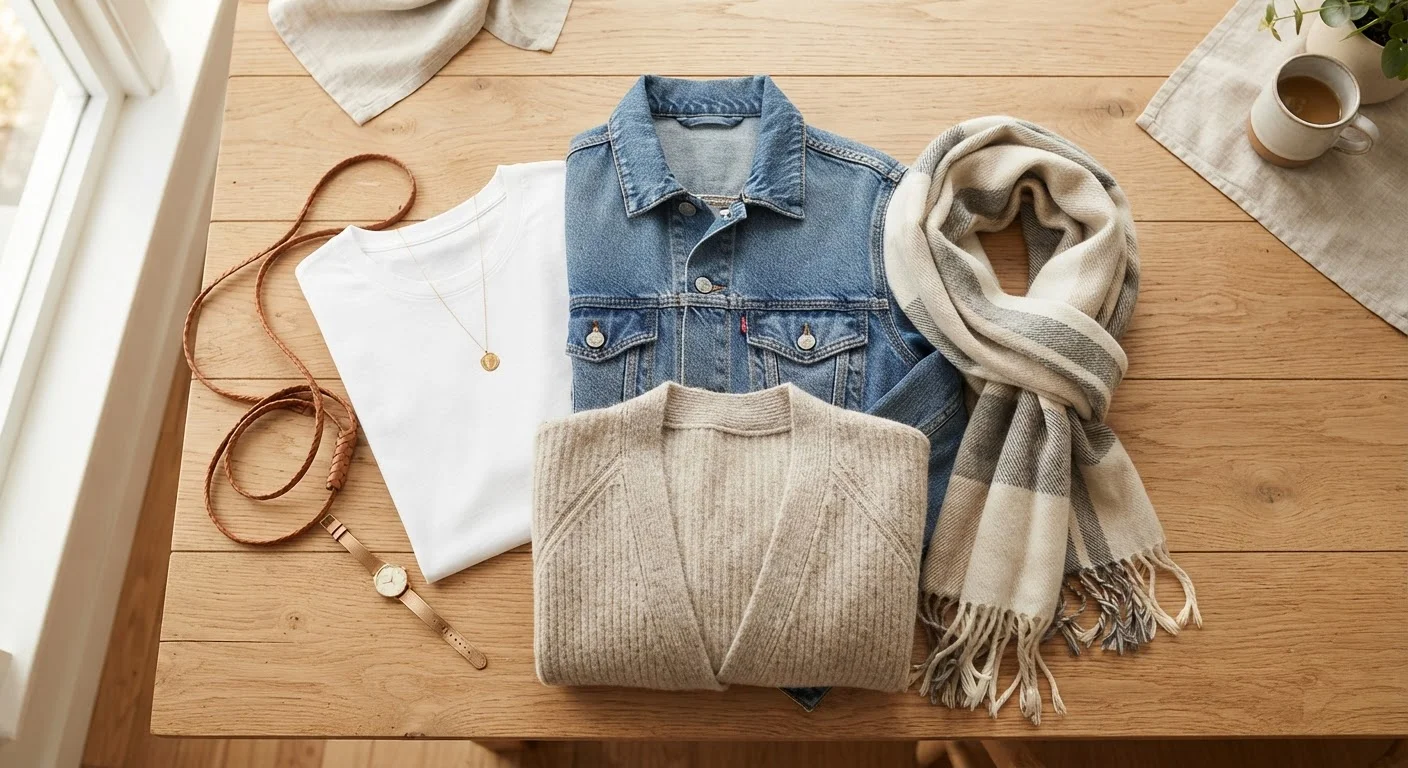
Mid layer: This is where insulation and style often overlap. A knit sweater, a structured button-down, a cardigan, or a fleece zip-up all count as mid layers. They trap warmth when you need it and act as your primary visible outfit layer when the outer layer comes off. Choosing a mid layer you love the look of independently makes the whole system more versatile.
Outer layer: The outermost piece does the heavy lifting against wind, rain, or temperature drops. A denim jacket, a trench coat, a puffer vest, or a water-resistant anorak can all serve this role - the right choice depends on the season and weather conditions.
Start With What You Already Own
You likely already have all three layers in your closet - you just haven't thought of them that way. Before buying anything new, pull out your basics and experiment with how they stack. A plain tee, a flannel, and a light jacket might be all you need to try the system today. For more ideas on getting mileage from existing pieces, see everyday outfit ideas.
Why It Works Year-Round, Not Just in Winter
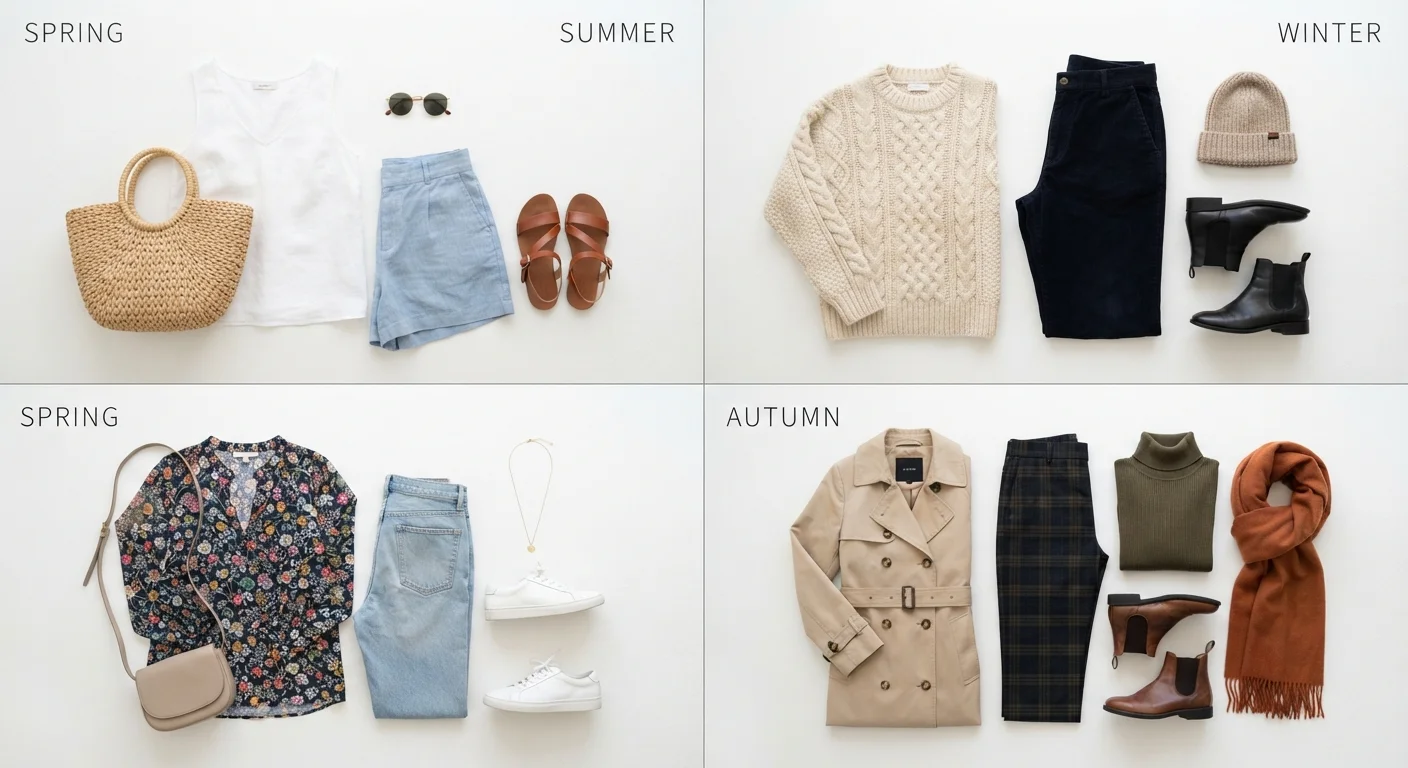
The biggest misconception about layering is that it's only for cold weather. In reality, the system adapts to every season - the materials and weights simply shift.
In spring, you might layer a lightweight long-sleeve base under a linen overshirt (your mid layer) with a light bomber or trench as your outer layer. On a warm afternoon, the trench comes off and the linen shirt carries the look on its own.
In summer, even a simple pairing of a breathable tank under a short-sleeve button-down qualifies as a two-layer approach - one that keeps you prepared for blasting air conditioning without overheating outside.
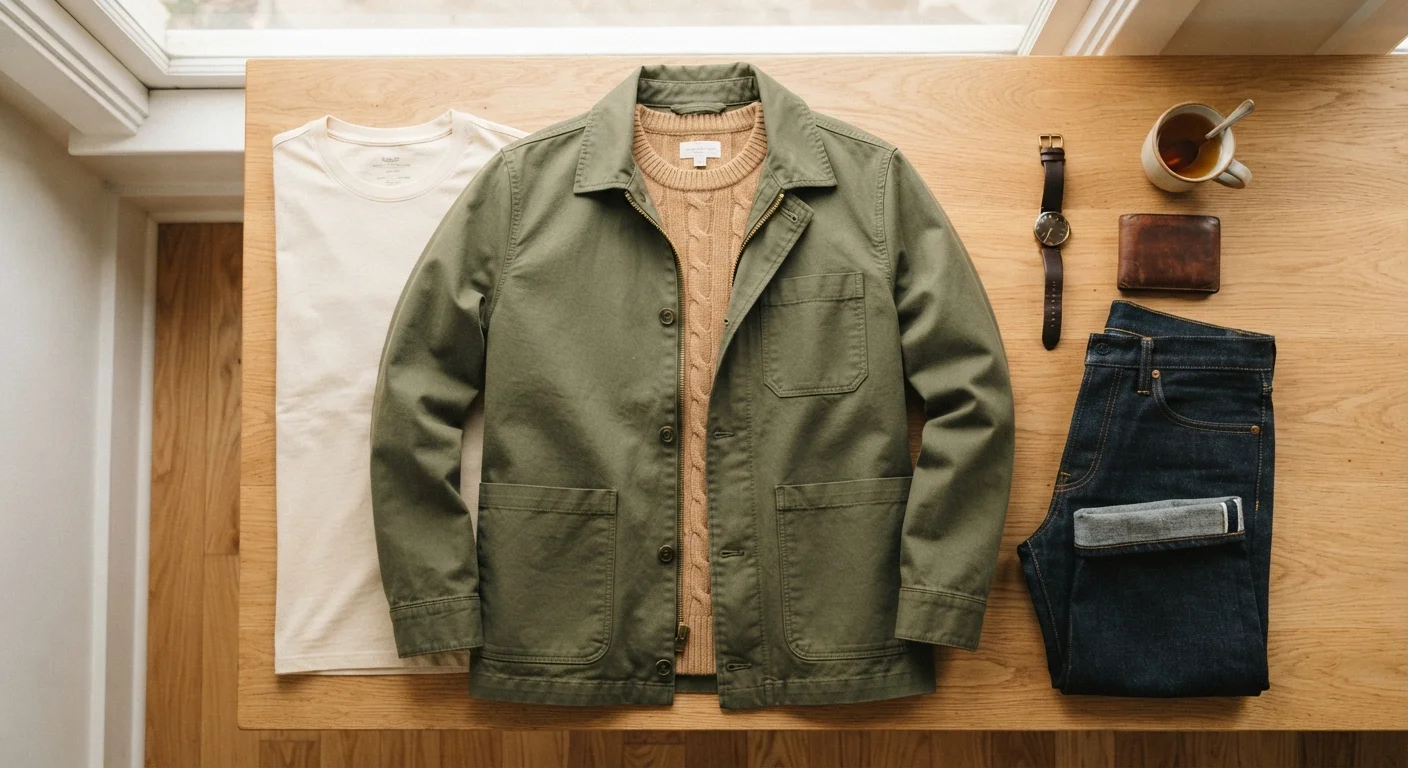
In fall, the classic three-layer formula really shines. A fitted base tee, a chunky knit or flannel mid layer, and a canvas or wool outer jacket gives you the flexibility to peel back as the afternoon warms up.
In winter, the outer layer becomes critical - but the system still rewards thoughtful fabric choices at the base and mid level rather than just piling on bulk. For a deeper look at seasonal dressing principles, see this year-round style primer.
3
Distinct functional zones in the layering system
Base, mid, and outer layers each serve a separate purpose - thermal regulation, insulation, and protection - allowing the system to scale across seasons.
~15°F
Temperature difference layering can help you manage
Outdoor and sportswear research suggests that wearing and removing layers lets individuals adapt to temperature swings of roughly 15°F or more within a single day.
Layering as a Style Strategy
Beyond function, layering is one of the most practical ways to build a genuinely versatile wardrobe. When individual pieces work well on their own and in combination, you can dress for more situations without owning more clothes.
A few principles that make layered outfits look intentional rather than accidental:
- Proportion matters. A fitted base under a slightly relaxed mid layer under a more structured outer piece creates a balanced silhouette. Avoid adding bulk at every layer simultaneously.
- Vary texture, not just color. A smooth base, a knit mid layer, and a woven outer jacket create visual interest even in a single-color palette.
- Let something show. The layering system looks deliberate when you can see each piece - a shirt collar peeking above a sweater, or a base tee visible below a shorter jacket.
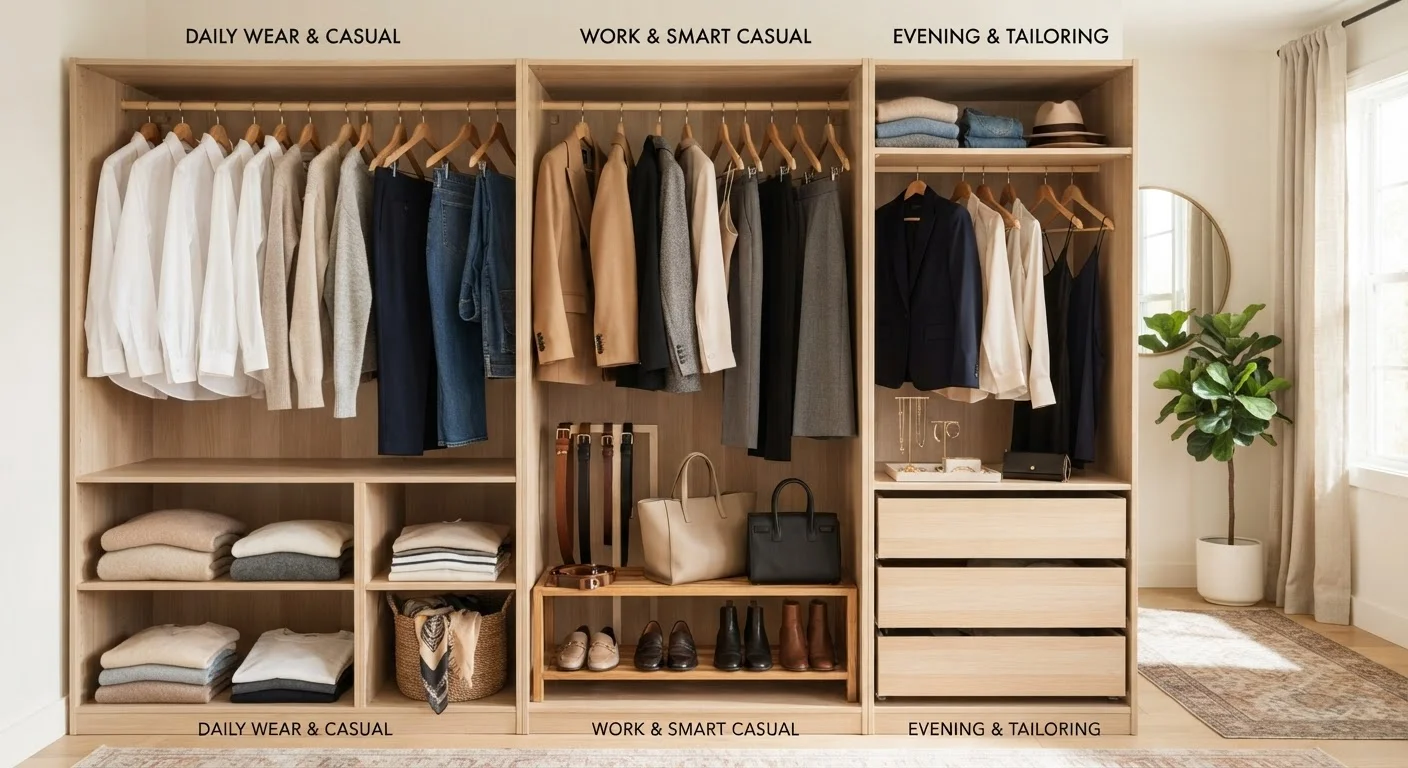
This approach also connects directly to building a wardrobe full of pieces that work across contexts. If you're thinking about foundational clothing that can shift between casual and more formal settings, this guide on occasion-ready wardrobes is a helpful companion read. And if you want to explore how to get more outfit combinations from what you already own, layering basics for existing wardrobes breaks it down simply.