

The Three Labels - and Why They're Not Interchangeable
Walk through any store and you'll see price tags in multiple colors and formats. Words like retail, sale, and clearance appear constantly, but they signal very different things about a product's pricing history and the retailer's intent. Understanding each one gives you a more accurate read on whether a markdown is meaningful.
| Retail Price | Standard full price; no active discount applied |
| Sale Price | Temporary reduction; item will return to regular price |
| Clearance Price | Deep discount on stock retailer won't reorder |
| Final Sale | Common on clearance; typically means no returns accepted |
| MSRP | Manufacturer's suggested price; retailers may price above or below |
| Price History Tracking | Third-party tools can show whether a "sale" price is genuinely reduced |
As a starting point: retail price reflects a product's standard, full cost. A sale price is a temporary reduction intended to drive short-term purchases. Clearance pricing signals that a retailer wants to move remaining stock - usually without restocking it. Each label carries different implications for quality, availability, and return eligibility. For more on how reference pricing works behind the scenes, see why original price tags are often less reliable than they look.
Retail Price: The Baseline (That Isn't Always Neutral)
Retail price - sometimes called the regular price or full price - is what a seller charges for a product when no promotional discount is active. It's often close to or equal to the manufacturer's suggested retail price (MSRP), though retailers are not required to follow it.
Here's the complication: retail prices are set by sellers, not by a neutral authority. Some products spend very little time actually selling at their stated retail price - meaning the "regular" price on the tag may function more as a reference anchor than a true market rate. Before assuming a sale is generous, it's worth checking whether the item has a consistent pricing history. Tools that track price histories across online retailers can help surface this.
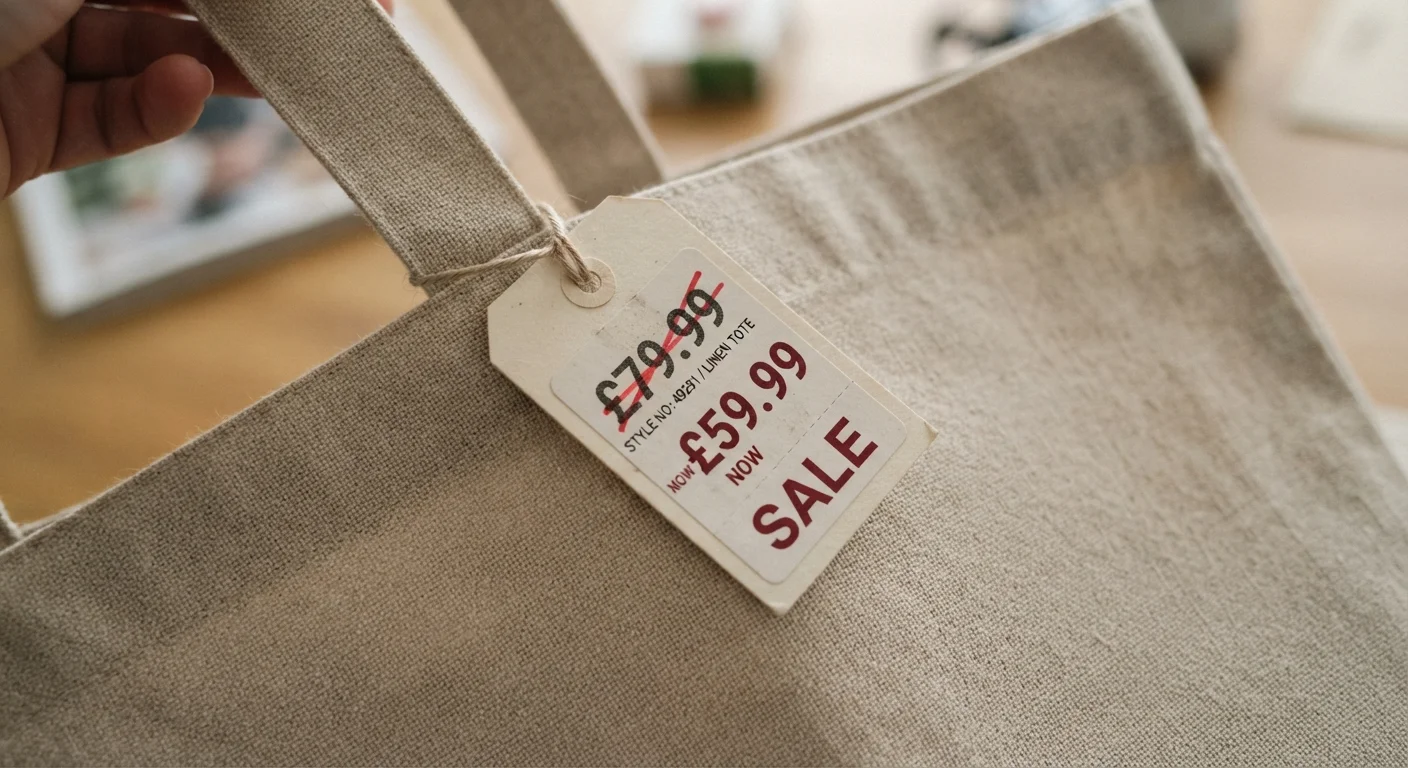
'Sale' doesn't always mean cheaper - and the retail price listed beside a markdown is a key part of why.
Sale Price: Temporary, Tactical, and Worth Scrutinizing
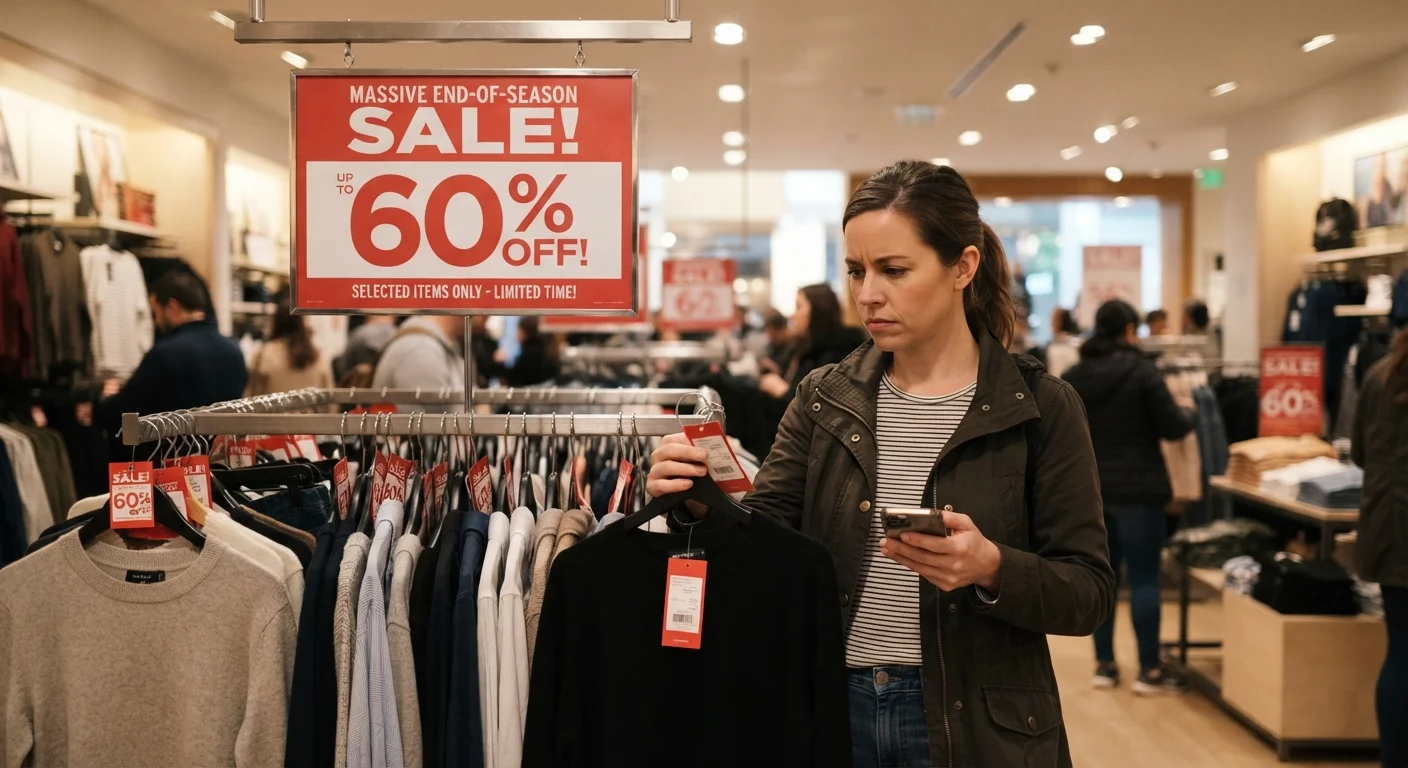
A sale price is a time-limited reduction from the stated retail price. Retailers use sales to clear seasonal inventory, respond to competition, reward loyalty program members, or generate traffic during slow periods. The reduction is real in the sense that the math checks out - but that doesn't mean the savings are always substantial.
Retail Price
The standard, full price a retailer charges for a product when no discount is active. It often references the manufacturer's suggested retail price but is ultimately set by the seller.
Sale Price
A time-limited reduction from the retail price, used to drive short-term purchases. Sale events may be seasonal, promotional, or ongoing - check pricing history to judge actual value.
Clearance Price
A discount applied to products the retailer does not plan to restock. Clearance pricing is typically deeper than sale pricing and often comes with final-sale conditions.
Final Sale
A purchase condition - common on clearance items - that means the item cannot be returned or exchanged. Always look for this label before buying a clearance product.
MSRP
Manufacturer's Suggested Retail Price. A pricing recommendation from the manufacturer that retailers are not legally required to follow; used as a common reference point.
Reference Price
A price shown alongside a markdown (often as a strikethrough) to establish perceived savings. Reference prices are not always verified or consistently applied.
A few things to watch for with sale pricing:
- Duration: Some items go "on sale" so frequently that the sale price is effectively the regular price. If a product has been promoted for most of the season, the markdown may not reflect genuine value.
- Depth: A 10% discount on a high-margin item may offer less savings than a 10% discount on a commodity product priced competitively. Percentage off and actual dollars saved are different measures.
- Return eligibility: Most sale items are still returnable under standard policy windows, but always confirm. See reading the fine print on return policies before purchasing.
Clearance Price: End-of-Life Pricing With Trade-offs
Clearance pricing occurs when a retailer discounts items it does not intend to reorder. The goal is to recover shelf space and recoup some cost on stock that would otherwise be marked down further or returned to the manufacturer. Clearance items typically include end-of-season apparel, discontinued product lines, display models, or items with packaging damage.
Clearance discounts are often deeper than standard sale pricing - but they come with trade-offs worth knowing:
- Limited sizes or quantities: What's on the rack is usually what's left. Restocking is unlikely or impossible.
- Final sale status: Many clearance items are marked "final sale," meaning no returns or exchanges. This is a meaningful distinction if you're unsure about fit, function, or compatibility.
- Condition variability: Inspect clearance items carefully. Some may have minor defects, missing components, or opened packaging.
Clearance is not the same as outlet pricing. For a breakdown of how those differ, see clearance vs. outlet pricing.
Unit Price Is a Separate but Related Check
Even when a price label says "sale" or "clearance," the per-unit cost tells you more about actual value - especially for groceries, consumables, and multi-pack items. Before assuming a markdown is worthwhile, check the unit price on the shelf tag. See how unit price works for a practical guide.