
How 'Sale' Pricing Actually Works
When a tag says 40% off, the natural assumption is that you're getting a meaningful deal. But that percentage is calculated against a reference price - and that reference price is where things get complicated. Retailers are generally free to set their own suggested retail prices, and in some cases those starting figures are set high enough that even a steep-looking discount lands at or above what competitors charge every day.
This isn't always deliberate manipulation, but the effect is the same: the framing of a sale can create a strong sense of savings where little or none exists. Understanding the mechanics behind promotional pricing puts you in a much better position to evaluate whether a deal is real. For a deeper look at how these reference figures are constructed, see why original price tags are often less reliable than they look.
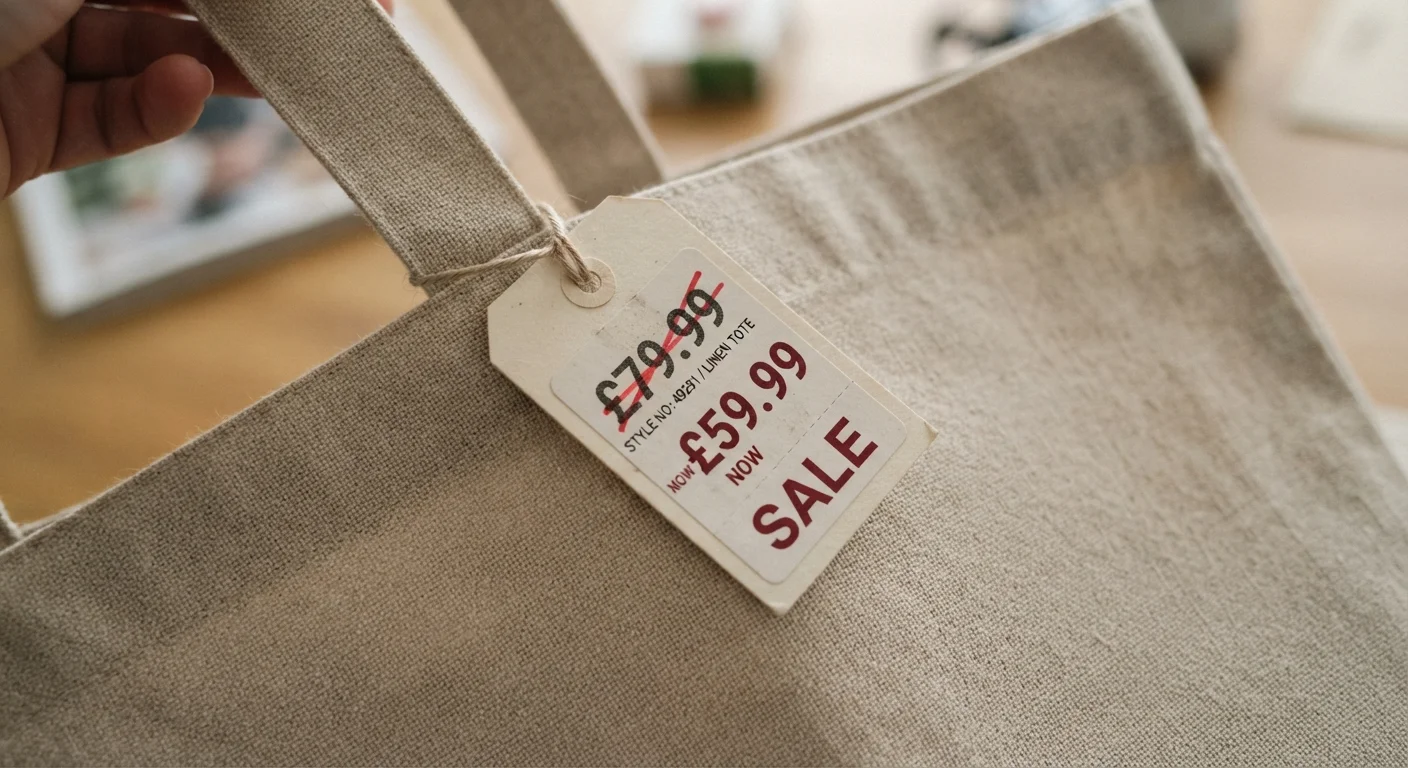
Trusting the strikethrough price as an accurate baseline.
Why it happens: Shoppers naturally anchor to the first number they see. Retailers know this, and the 'original' price printed in gray above the red sale price often does the heaviest persuasive lifting.
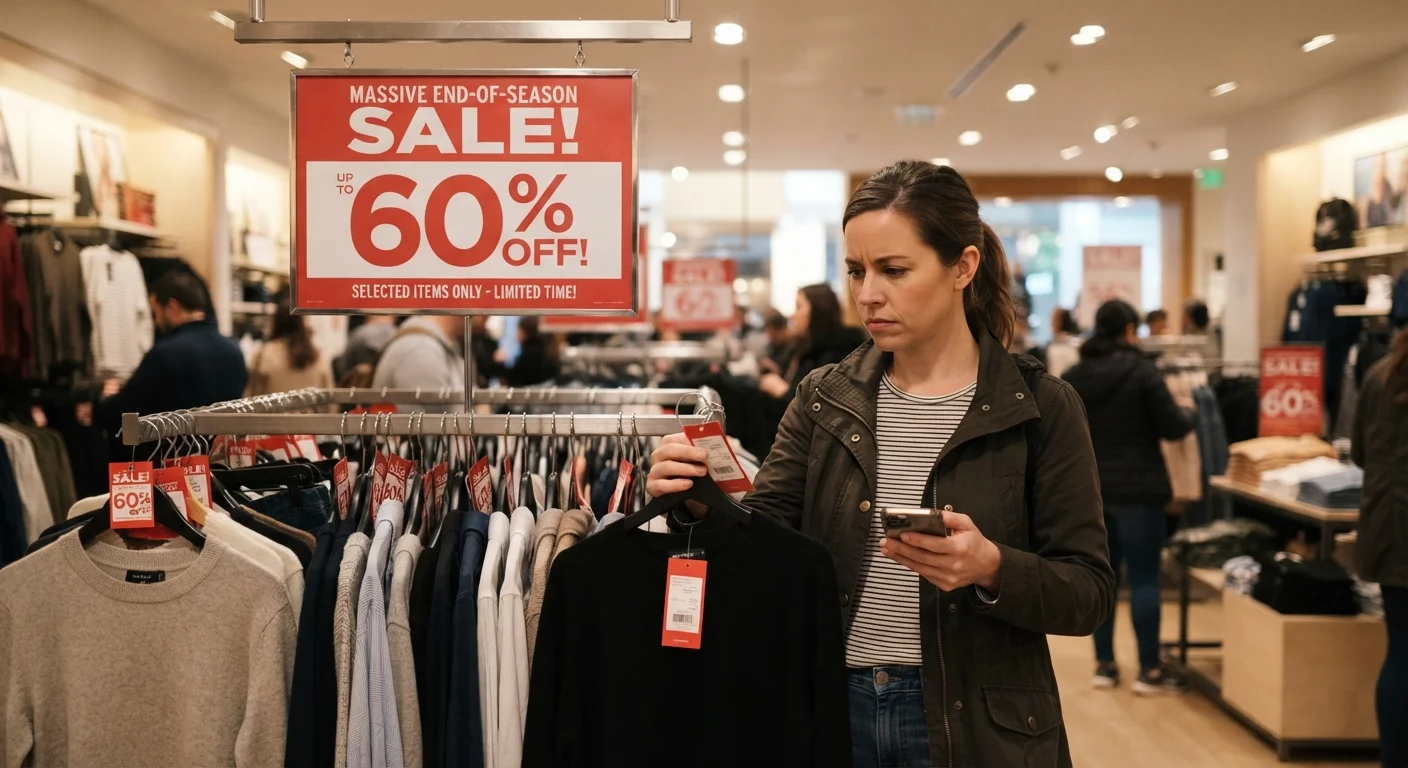
Interpreting urgency language as evidence of a real deal.
Why it happens: Phrases like 'today only' and 'limited quantities' trigger a fear of missing out that can short-circuit careful evaluation. This is a well-documented persuasion technique, not a reliable signal of value.
Assuming a higher percentage off means a better deal in dollar terms.
Why it happens: Percentage discounts are easy to compare mentally, so shoppers often use them as a proxy for value. But 60% off a highly inflated price can cost more than 10% off a fair market price.
Skipping price comparison because the sale label feels authoritative.
Why it happens: Sale tags carry an implied endorsement - the store is vouching for the savings. That social trust often replaces the verification step shoppers would otherwise take.
Buying more than needed because bulk 'sale' pricing seems like automatic savings.
Why it happens: Multi-unit promotions ('buy 3, save 15%') imply that more is always better. But if you don't use the extra units, or they expire, the per-unit math quickly stops working in your favor.
Key Data Points on Promotional Pricing
Research into consumer behavior and retail practices consistently shows that sale framing influences purchasing decisions - often more than the actual price does. A few statistics help put the scale of this into perspective.
~40%
Products sold primarily at discounted prices
Academic research on reference pricing has found that a significant share of items in some categories spend the majority of their time at 'sale' price, suggesting the 'original' price is rarely what consumers actually pay.
3 in 4
Shoppers influenced by sale framing
Consumer behavior studies have repeatedly found that the presence of a crossed-out reference price meaningfully increases purchase likelihood, even when the final price is unchanged.
Awareness alone shifts behavior. When shoppers know that reference prices can be inflated, they're more likely to pause before purchasing and seek out a price comparison. The Shopping Basics hub covers several foundational habits that reinforce this kind of critical thinking at the point of purchase.
Protecting Yourself Before You Buy
A few practical habits go a long way toward cutting through promotional noise. First, look up the item's price history using browser extensions or retailer price-tracking tools - these reveal whether the 'original' price is a realistic baseline or a seldom-charged ceiling. Second, compare the sale price to what other sellers charge for the same item right now. If it's widely available at a similar price without a 'sale' label, the discount is largely cosmetic.
Recurring 'Sales' Are a Red Flag
If a retailer runs the same promotion on the same item every few weeks, that promotional price is effectively the real price. A sale that never ends isn't a sale - it's the standard selling price with extra framing. Check whether an item's 'original' price ever appears without a corresponding discount label, and be skeptical when it doesn't.
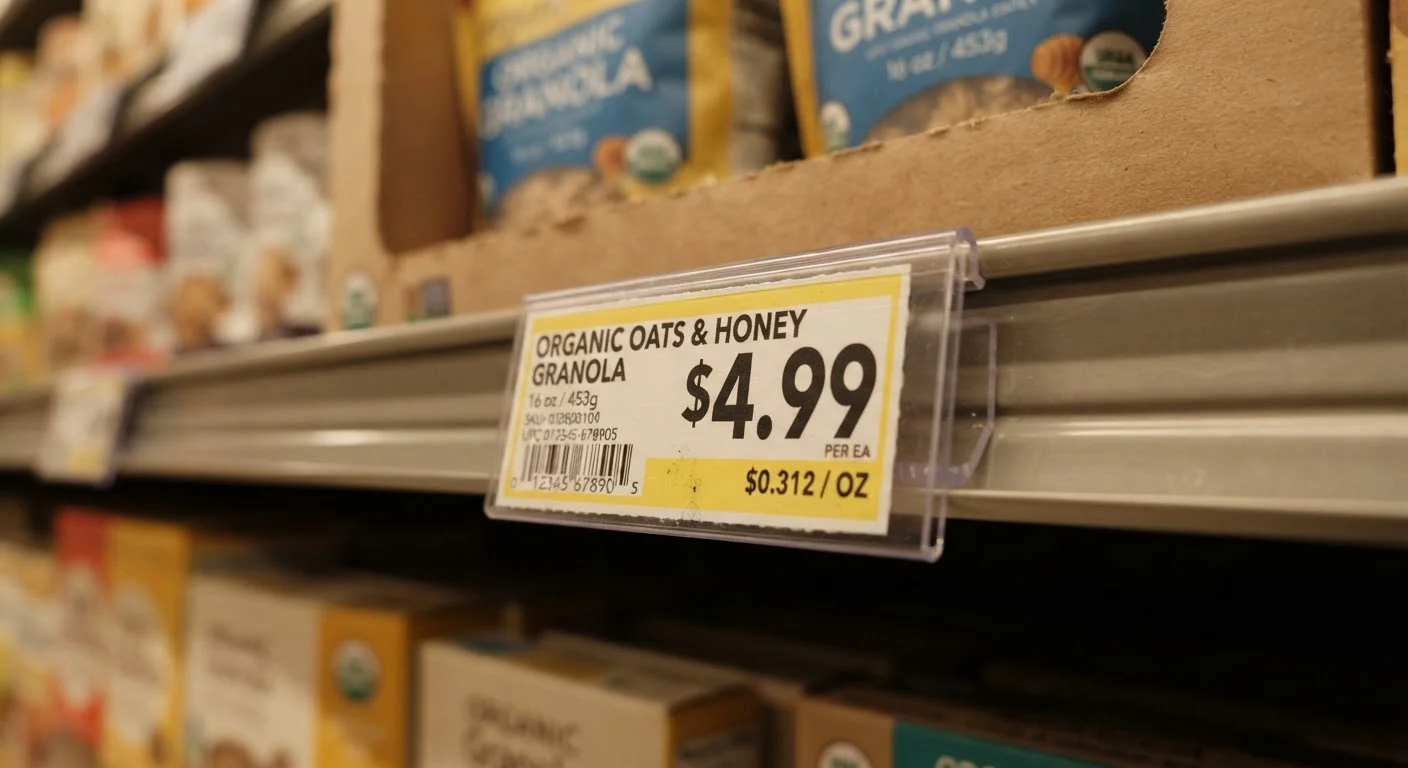
Third, apply unit-price thinking even to non-grocery categories. A 'sale' that bundles two items together may cost more per unit than buying separately at regular price. Our guide on unit price and shelf tags explains how to do this math quickly. Finally, understand that retail, sale, and clearance labels each signal something different about why a price was reduced - and only one of those reasons consistently reflects genuine savings.
Taking sixty seconds to verify a price before checkout is one of the most effective no-cost tools available to any shopper.