

What's Actually Behind Each Price Tag
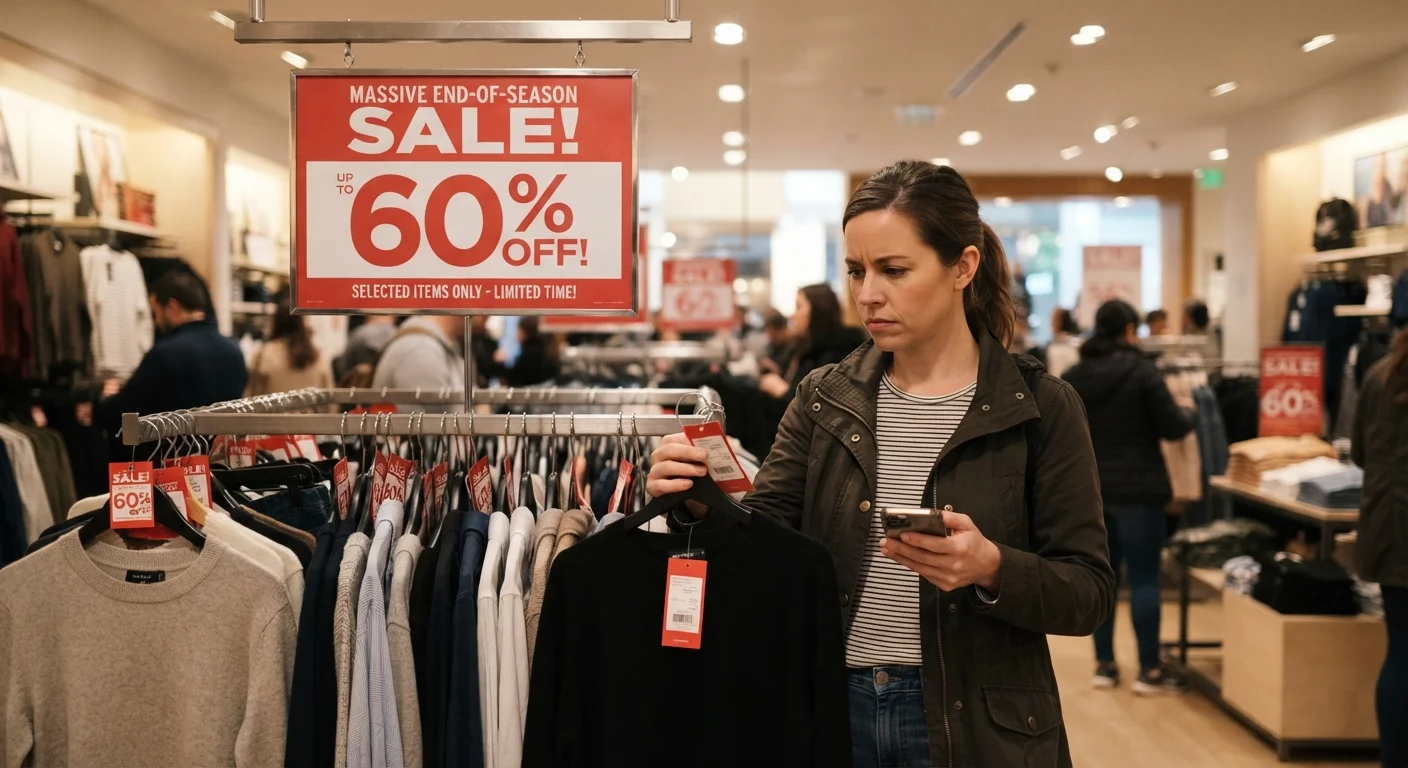
When a retailer marks something clearance, that item came off the same truck as everything else in the store. The price drop reflects an inventory problem - the store bought too many units, a season is ending, or a product line is being discontinued. The item itself is unchanged; the retailer simply needs the shelf space more than they need the margin.
Outlet pricing works differently. A significant share of outlet merchandise - particularly in apparel and housewares - is produced specifically for the outlet channel, often under separate SKUs with adjusted materials or construction details. Brands can maintain the appearance of a discount (a tag reading "compare at" a higher price) without actually reducing a product that was ever sold at full price. This practice is legal and widespread, but it changes what a lower price actually means.
Understanding this distinction is foundational. As our guide on what "sale" really signals explains, a markdown is only meaningful if the original price was real and the product is comparable.
| Criterion | Clearance | Outlet |
|---|---|---|
| Source of discount | Overstocked or end-of-season inventory | Dedicated lower-price channel |
| Product origin | Identical to full-price store stock | Often outlet-exclusive manufacturing |
| Quality predictability | High - same product, lower price | Variable - specs may differ |
| Return policy | Usually standard store policy applies | Often stricter; final sale common |
| Selection | Limited to what retailer needs to clear | Broader, year-round assortment |
| Price transparency | Original price typically verifiable | "Compare at" prices harder to verify |
| Timing sensitivity | Markdowns often deepen over time | Prices relatively stable by format |
Quality, Returns, and the Fine Print
Because clearance items are identical to full-price stock, their quality is predictable - you can research the product normally before buying. Outlet-exclusive items are harder to evaluate because they may not appear in independent reviews, and product specs are rarely disclosed in-store.
Return policies compound this difference. Most full-line retailers apply the same return window to clearance items as regular purchases, though some tag items "final sale" - so always check before buying. Outlet store return policies vary more widely and tend to be stricter; some are final sale by default. Before purchasing at either, it's worth reviewing the policy closely. Our article on reading return policy fine print walks through what to look for.
Watch for "Compare At" Price Claims
Outlet stores frequently use "compare at" or "originally" pricing on tags, implying the item was sold at a higher price elsewhere. In many cases, outlet-exclusive products were never sold at that reference price - it may reflect a similar (but not identical) full-line product. The Federal Trade Commission has guidance on deceptive pricing that's worth understanding as a consumer. When in doubt, look up the item independently before assuming the stated discount is real.
Neither format eliminates the need for price comparison. An outlet price may still be undercut by a clearance sale at a full-line retailer, or by standard pricing at a different store entirely. Use a reference price from a neutral source - not the "compare at" tag on the outlet shelf - to judge whether you're actually getting a deal.
How to Shop Each Format Strategically
At clearance sections, timing matters. Markdowns typically deepen as a season closes, so waiting a few weeks can unlock further reductions - though popular sizes and colors sell out first. If you find a clearance item you're confident about, check whether the same product is available via the retailer's website, where clearance inventory is often broader.
At outlet stores, treat the shopping experience more like browsing than targeted purchasing. Go in knowing the brand's typical full-line quality so you can assess whether an outlet-specific version meets your needs. Look for labels or hangtags that indicate when an item was made and whether it includes any model or style number you can cross-reference. When comparing outlet and full-line options side by side, our guide to reading product comparisons without getting fooled is a useful framework for spotting meaningful differences versus superficial ones.
In both cases, the same principle applies: the origin of a price reduction matters as much as the size of it. A 40% clearance discount on a product you've researched is more reliably valuable than a 40% outlet discount on a product made to lower specs. Knowing which situation you're in puts you in a much stronger position before you reach the register.