
What Unit Price Actually Tells You
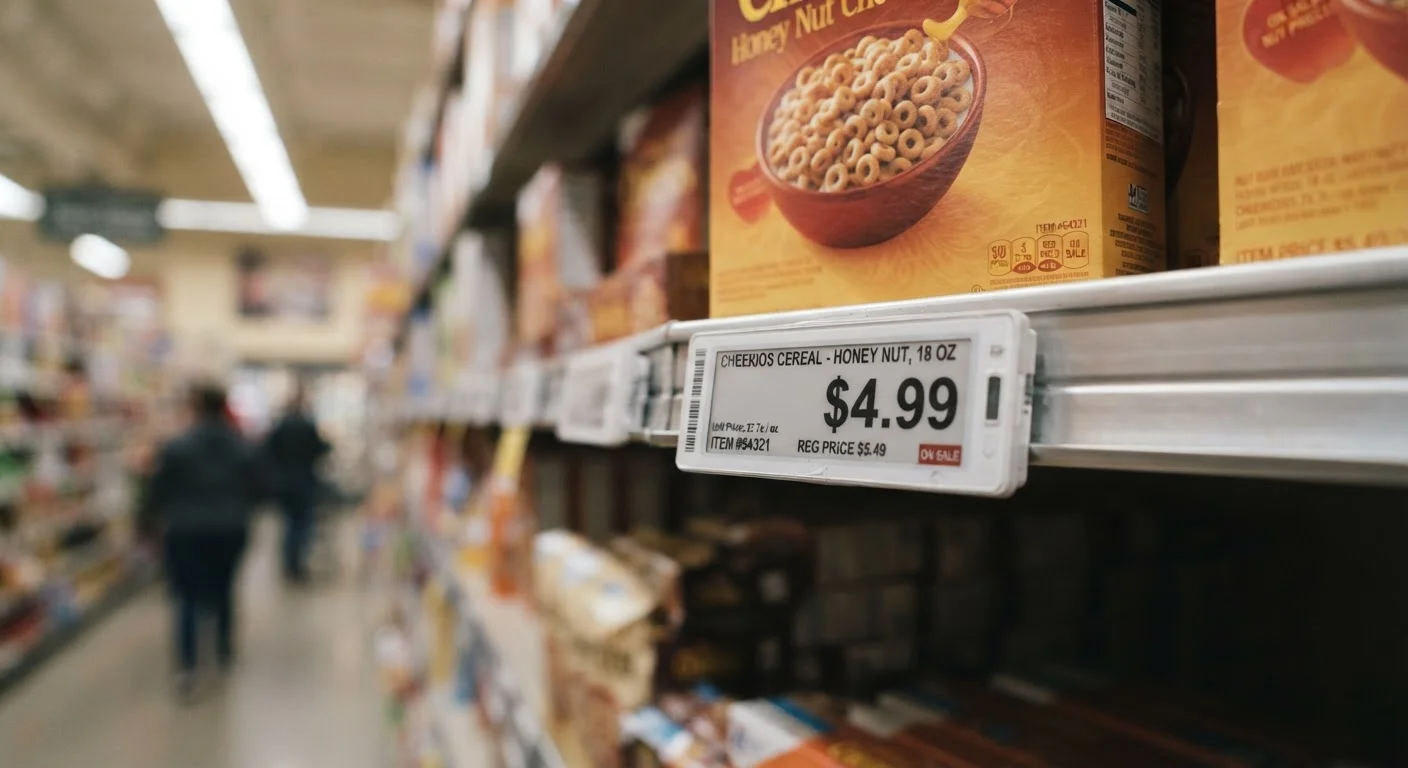
The retail price printed largest on any shelf tag tells you one thing: what you'll hand over at the register. The unit price - that smaller figure usually tucked in a corner - tells you something more useful: what you're actually paying for what's inside.
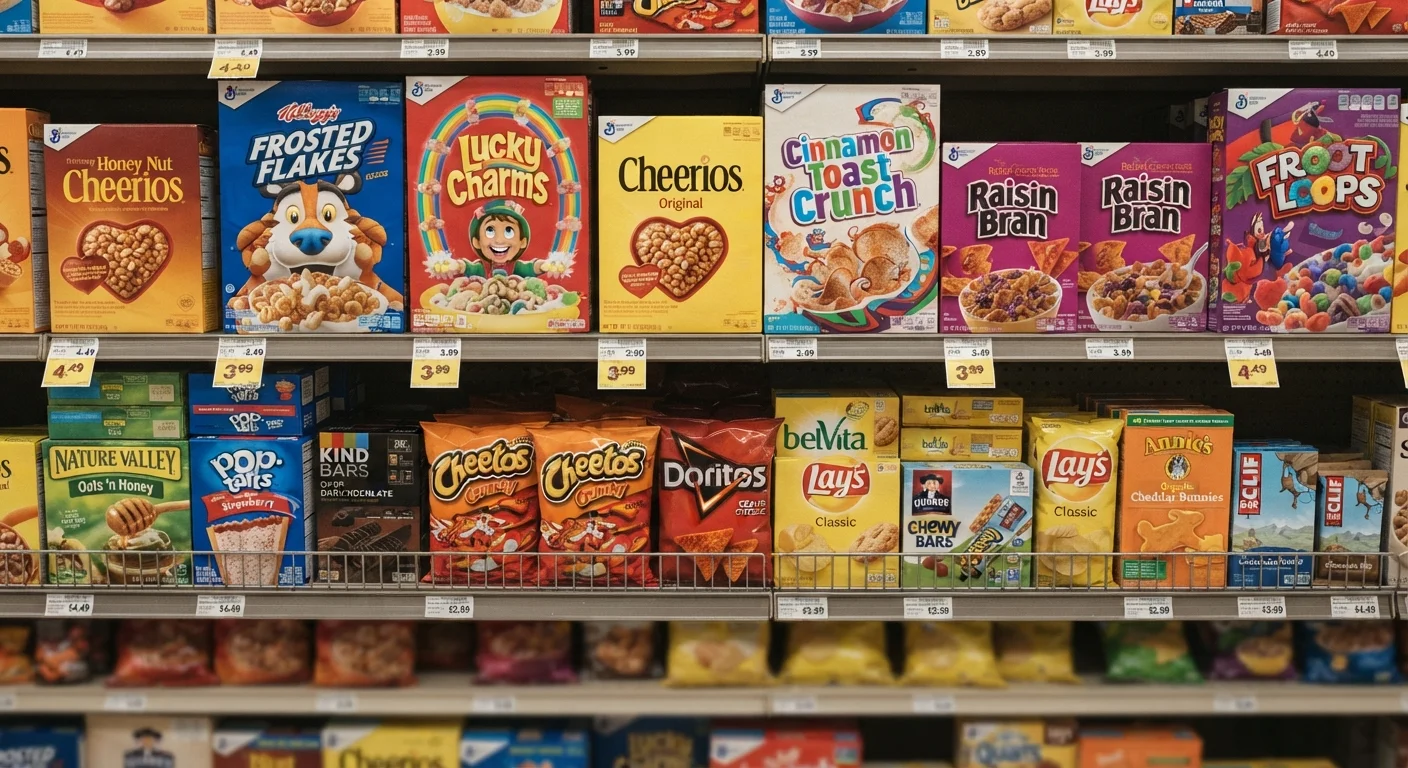
Unit price standardizes cost to a common measure. Whether a box of cereal contains 12 oz or 19.3 oz, the unit price converts both to a cost per ounce so you can compare them directly. The same logic applies to paper towels (per sheet), laundry detergent (per load or per fluid ounce), and bottled water (per fluid ounce).
For a deeper look at how shelf tags can mislead in other ways, see how reference pricing works - unit price is one of the few tag elements that's genuinely informative rather than persuasive.
~30%
Shoppers who regularly check unit prices
Consumer behavior research consistently shows that a minority of shoppers actively use unit price information at the shelf, despite its availability in most grocery stores.
46 states
U.S. states with some unit pricing requirements
According to consumer policy research, the majority of U.S. states have enacted unit pricing rules for grocery and drug stores, though scope and enforcement vary considerably.
Why Bulk Isn't Always the Better Deal
Shoppers often assume that buying more means paying less per unit. That's frequently true - but not reliably so. Promotional pricing on smaller sizes, store-brand competition, and clearance dynamics can flip the math in any given week.
Consider laundry detergent: a 100-load jug might seem obviously cheaper than a 40-load bottle, but if the smaller size is on sale and the larger one isn't, the unit prices can cross. The shelf tag tells you immediately; intuition alone won't.
There's also a practical consideration: buying more than you'll use before a product expires or loses effectiveness isn't a savings - it's a loss. Unit price tells you the cost comparison, but only you can factor in your household's actual usage rate.
Make Unit Price Comparison a Two-Second Habit
Before placing any packaged item in your cart, glance at the unit price rather than the total price. If you're comparing two sizes or brands, look at both unit prices and pick the lower one - assuming the quality is comparable. Over dozens of shopping trips, this habit compounds into real savings without requiring coupons or sale tracking.
How Shrinkflation Hides in Unit Price Changes
One of the most practical uses of unit price awareness is catching shrinkflation - when a product's package size decreases while the retail price stays the same or goes up. The sticker price looks unchanged, but the unit price quietly rises.
This happens regularly across grocery categories: chip bags, yogurt containers, paper towel rolls, and cleaning products have all seen package reductions in recent years. Without checking unit price, a shopper comparing "same price as always" to last month's receipt may not notice they're getting less.
Our piece on shrinkflation and skimpflation covers the broader landscape of how products get quietly more expensive - unit price tracking is one of the clearest defenses against it.
When Comparisons Get Complicated
Unit pricing comparisons get tricky when stores use different base units for similar products. Dish soap might be priced per fluid ounce on one tag and per unit on a multi-pack tag. Paper towels are sometimes compared per sheet, sometimes per roll. Without a consistent unit, you're doing conversion math on the fly.
A few strategies help. First, use your phone's calculator - dividing a total price by the package's ounce or count takes under 10 seconds. Second, check whether you're comparing the same attribute: price per sheet is a fairer comparison for paper towels than price per roll, since rolls vary in sheet count. Third, remember that unit price reflects quantity, not quality or concentration - a lower price per ounce of shampoo doesn't mean the same washing power per ounce.
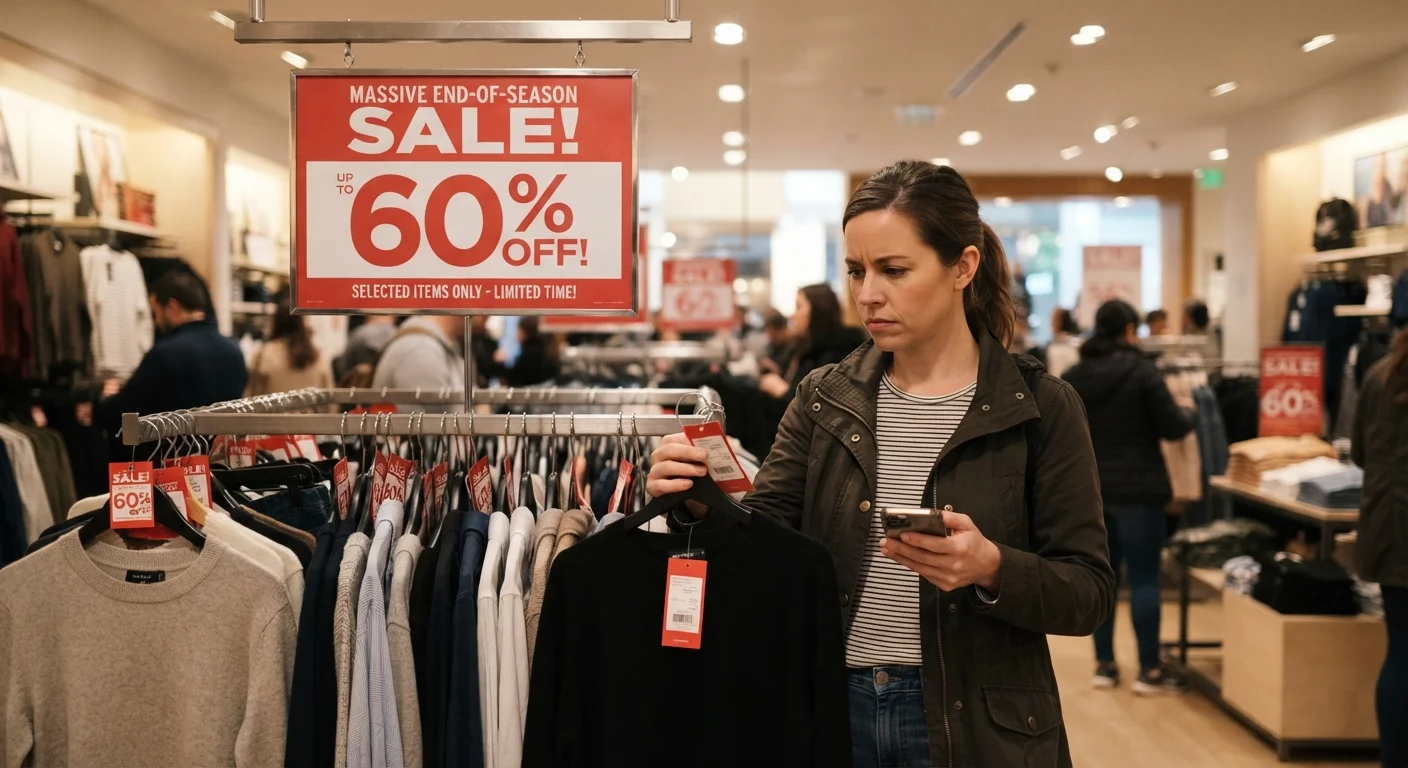
Understanding how sale tags interact with unit pricing matters too. A product marked down may still have a higher unit price than a non-sale alternative. See why a sale price isn't always cheaper for more on that dynamic.
“Unit pricing is one of the most powerful consumer tools in the store - and one of the most consistently overlooked. Most shoppers focus on the total price because it's the biggest number. Flipping that habit is one of the easiest ways to shop smarter.”
— Edgar Dworsky, Consumer advocate and founder of Consumer World, a long-running consumer information resource