
Two Organizations, Two Rating Systems
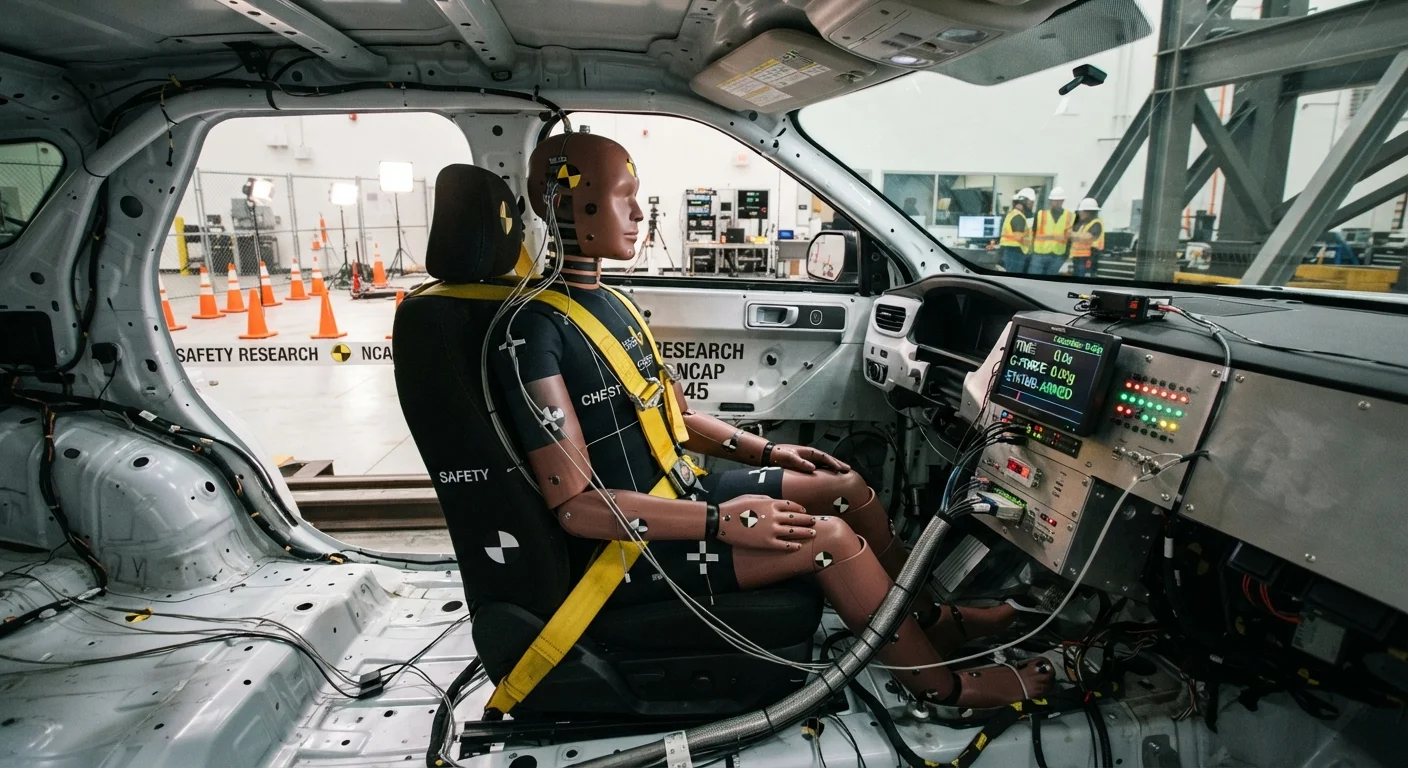
When shopping for a vehicle or simply verifying how safe your current car is, you'll encounter ratings from two distinct organizations: the National Highway Traffic Safety Administration (NHTSA) and the Insurance Institute for Highway Safety (IIHS). Both evaluate crash protection, but they use different tests, scoring scales, and goals - and understanding the difference matters.
NHTSA is a federal agency within the U.S. Department of Transportation. Its New Car Assessment Program assigns star ratings on a scale of one to five across several crash scenarios. IIHS, by contrast, is an independent nonprofit funded by auto insurers. It uses letter-grade verdicts - Good, Acceptable, Marginal, or Poor - and its own suite of tests. Neither organization's ratings automatically override the other's; a vehicle can score well with one and less well with the other.
For a broader perspective on how numeric ratings can sometimes mislead, see why higher-rated doesn't always mean better.
What NHTSA's Star Ratings Measure
NHTSA tests focus on three primary categories, each producing a star rating that feeds into an overall vehicle score:
- Frontal crash: A full-width barrier test at 35 mph, measuring injury risk to the driver and front passenger.
- Side crash: A moving deformable barrier strikes the vehicle at 38.5 mph, simulating an intersection collision.
- Rollover resistance: Rated by a combination of a static stability factor calculation and a dynamic handling test.
Five stars is the highest possible score in each category. It is important to note that five stars does not mean the vehicle is crash-proof - it means the vehicle performed best among tested vehicles under those specific conditions. NHTSA's overall rating is not a simple average; a low score in one category can limit the overall result.
38,000+
Annual U.S. traffic fatalities
According to NHTSA data, the U.S. consistently records tens of thousands of traffic deaths annually, underscoring the importance of crash safety standards.
25%
Front-end overlap in IIHS small overlap test
IIHS introduced the small overlap test because a significant share of serious frontal crashes involve only the outer edge of the vehicle's front end.
2021
Year IIHS updated its side crash barrier
IIHS updated its side-impact barrier to be heavier and taller to better reflect the growing proportion of SUVs and trucks on U.S. roads.
How IIHS Tests Differ
IIHS was created largely because the auto insurance industry recognized that real-world crashes often differ from government test protocols. Its evaluations include:
- Small overlap front: Simulates hitting a tree or utility pole with only 25% of the vehicle's front end - a scenario NHTSA's frontal test doesn't replicate.
- Moderate overlap front: A 40% overlap barrier test at 40 mph.
- Side crash (updated barrier): IIHS updated its side test in 2021 to use a heavier, taller barrier, better reflecting the prevalence of SUVs and trucks in the vehicle fleet.
- Roof strength: Measures how well the roof resists collapse during a rollover.
- Head restraints and seats: Evaluates whiplash injury risk in rear-end collisions.
IIHS also evaluates headlight performance and vehicle-to-vehicle and vehicle-to-pedestrian crash avoidance systems - areas NHTSA has historically not scored as directly. Vehicles that pass threshold scores across all evaluations earn the coveted TOP SAFETY PICK or TOP SAFETY PICK+ designation.
For more on car safety assumptions that drivers often get wrong, read our article on common car safety myths.
NHTSA
The National Highway Traffic Safety Administration is a U.S. federal agency responsible for vehicle safety standards and crash testing through its New Car Assessment Program. It publishes star ratings on safercar.gov.
IIHS
The Insurance Institute for Highway Safety is an independent nonprofit research organization funded by auto insurers. It conducts crash and safety-system tests and publishes Good-Poor ratings along with TOP SAFETY PICK awards.
Small Overlap Test
An IIHS crash test that simulates striking a fixed object - such as a tree or pole - with only the outer 25% of a vehicle's front end. It evaluates structural integrity in scenarios where the main front crumple zone is bypassed.
TOP SAFETY PICK+
The highest safety designation awarded by IIHS. Vehicles must earn Good or Acceptable ratings across all crash tests and meet specific requirements for headlight performance and crash-avoidance technology.
Rollover Resistance
An NHTSA category that rates how likely a vehicle is to roll over in a single-vehicle crash. It combines a static stability factor - based on vehicle height and track width - with results from a dynamic handling test.
New Car Assessment Program (NCAP)
NHTSA's consumer information program that independently crash-tests new vehicles and publishes star ratings to help buyers evaluate safety before purchasing.
How to Use Both Ratings Together
Because NHTSA and IIHS test different scenarios with different methods, safety advocates generally recommend consulting both sources when evaluating a vehicle. A few practical guidelines:
- Look at category-level scores, not just the overall. A five-star NHTSA overall rating can mask a three-star rollover score. Drill into the subcategory data on safercar.gov.
- Check the IIHS headlight rating. Poor headlights are a recognized risk factor, and IIHS is the primary source for this data.
- Note the model year. Tests are updated periodically, and a vehicle rated years ago may not reflect current testing standards. Always confirm ratings match your target model year.
- Consider vehicle class. Both organizations test vehicles against others in similar categories; a five-star compact and a five-star full-size pickup have been rated against their own peer groups, not each other.
Understanding how rating systems are designed - and what they don't measure - is a principle that applies well beyond automotive safety. The same critical thinking applies when evaluating star ratings in any product category.
This article provides general educational information about vehicle safety rating programs. For guidance specific to your vehicle or situation, consult the official NHTSA (safercar.gov) and IIHS (iihs.org) databases and, where appropriate, a qualified automotive professional.
This article is for general informational purposes only and does not constitute safety, legal, or purchasing advice tailored to your specific situation.