
Why the Number Alone Misleads
When you're comparing two products and one has a 4.8 average while the other sits at 4.2, the instinct to pick the higher number is understandable. Ratings feel like a shortcut - a crowd-sourced quality signal that saves research time. The problem is that they often aren't measuring what you think they are.
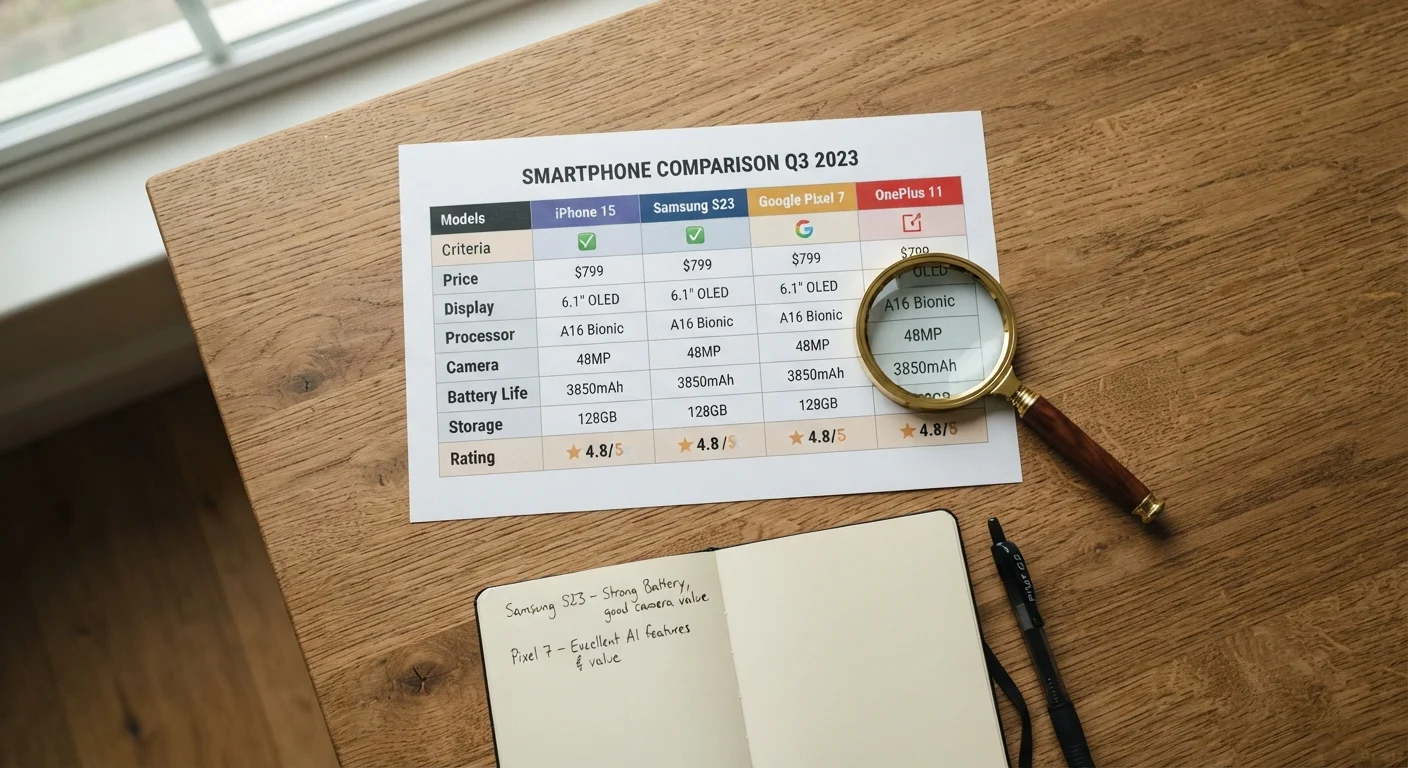
Star ratings aggregate satisfaction across every type of buyer who reviewed that product, regardless of whether those buyers share your priorities, your skill level, or your intended use. A kitchen knife that earns 4.8 stars from casual home cooks might disappoint someone who preps food professionally. A budget-tier blender might be rated generously because buyers compared it only to other budget options. The number reflects an average of varied experiences - not a reliable proxy for how the product will serve you.
Myth
The product with the most stars is objectively the highest quality option.
Fact
Star ratings measure average customer satisfaction, not objective quality - and satisfaction depends heavily on the buyer's expectations and use case.
A rating of 4.9 stars might mean a product reliably meets the expectations of its typical buyer - not that it's built from superior materials or outperforms competitors in lab tests. A cleaning spray beloved by casual users might score lower than a specialized alternative simply because some buyers expected it to do things it was never designed to do. Satisfaction and quality are related but distinct concepts, and conflating them leads to poor purchasing decisions.
Myth
More reviews always make a rating more trustworthy.
Fact
Volume improves statistical reliability only if the reviews are genuine, recent, and from relevant users - none of which volume alone guarantees.
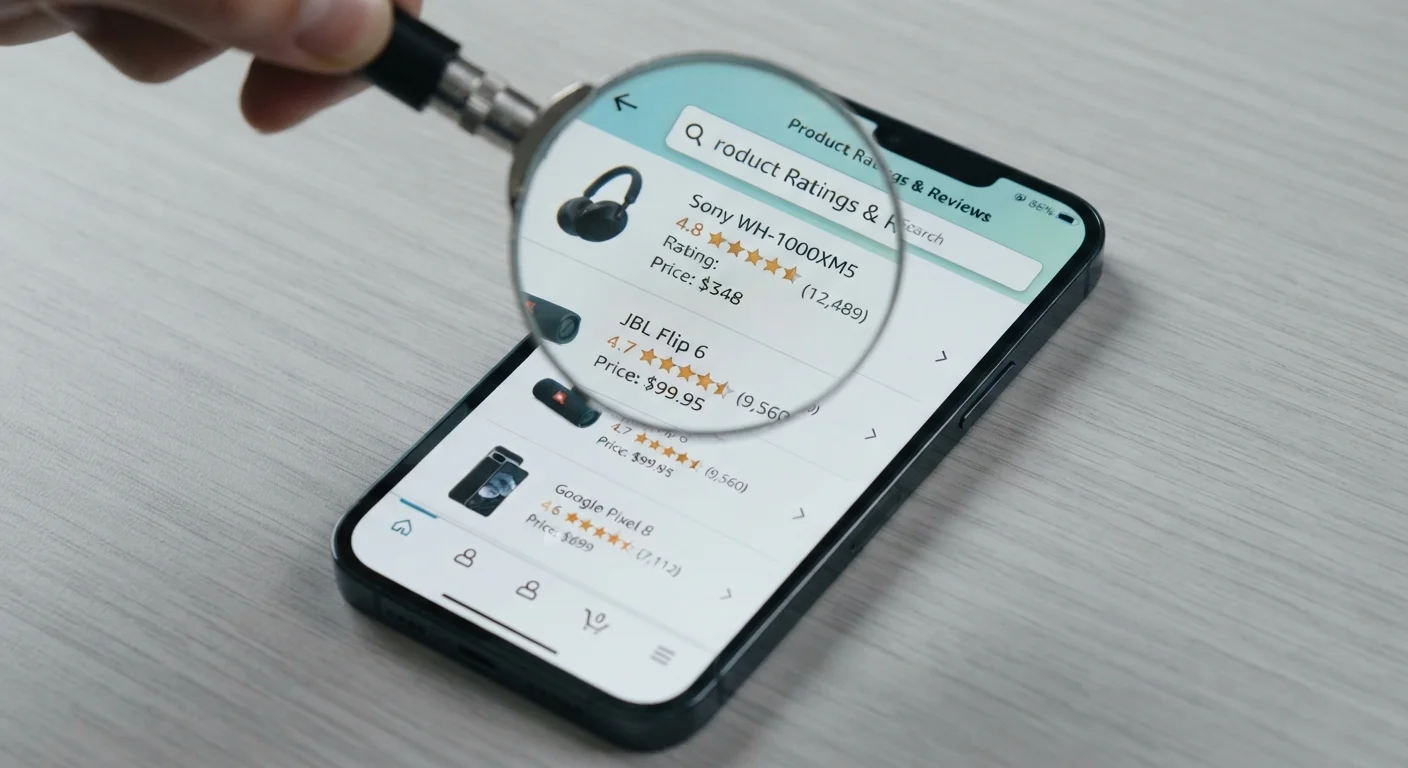
A product with 15,000 reviews sounds credible, but if many were collected years ago under a different version, solicited through reward programs, or left by buyers with completely different needs, the number inflates confidence without adding clarity. Review recency matters especially for electronics, where software updates or manufacturing changes can significantly alter performance. Look at the distribution - a high number of reviews concentrated in a short burst may indicate a promotional campaign rather than organic feedback.
Myth
A lower-rated product is almost always the worse choice.
Fact
Products that attract demanding, expert, or niche users often score lower simply because those users hold them to a higher standard.
A professional-grade tool might carry a 4.1-star rating because its buyers are experienced enough to notice its limitations - while a consumer-grade alternative sits at 4.7 because its buyers expected less and got it. Context shapes ratings as much as the product itself does. Similarly, a product in a competitive category where alternatives are genuinely strong will naturally attract more critical comparisons than one with no real competition. Reviewing which types of buyers left low scores is often more instructive than the score itself.
For a more structured approach to comparing options, see our guide to reading product comparisons without being misled by fine print before committing to a decision.
Myth
Star ratings work equally well across all product categories.
Fact
Ratings are far less reliable for complex, safety-critical, or highly subjective product categories where personal fit dominates outcomes.
Bedding comfort, shoe fit, and supplement effectiveness vary so widely by individual that aggregate ratings often tell you almost nothing about whether you will be satisfied. Meanwhile, for safety-critical purchases like car seats or protective gear, independent testing and certification data from credentialed organizations is far more meaningful than consumer star scores. For vehicle safety specifically, structured third-party evaluations - like those explained in our guide to NHTSA and IIHS safety scores - carry significantly more weight than retailer ratings.
Myth
Reading the top positive and top critical reviews gives a balanced picture.
Fact
Curated 'top' reviews are algorithmically selected and may not represent the most common or most relevant experiences.
Platforms surface reviews based on helpfulness votes and engagement signals - which means the reviews most readers click on are the most dramatic or polarizing, not necessarily the most typical. A more useful approach is to filter reviews by your specific concern (e.g., durability, ease of setup, sizing) and sort by recency rather than relevance score. Written reviews mentioning specific product details - dimensions, materials, real usage duration - tend to be more actionable than starred reactions with minimal commentary.
What to Look For Instead
Moving beyond the aggregate score doesn't mean ignoring reviews - it means reading them differently. Start by filtering for your specific use case. If you're buying running shoes and plan to log high mileage, look for reviews from buyers who mentioned similar use. Ignore reviews that are clearly rating a shipping delay or a customer service interaction rather than the product itself.
Ratings Reflect Averages, Not Your Situation
An aggregate star rating pools feedback from thousands of buyers with different needs, expectations, and use cases. A 4.8 average could include both delighted customers and deeply disappointed ones whose concerns simply get drowned out. Always read the written reviews - especially the 2- and 3-star ones - before treating any rating as a signal of quality for your particular situation.
Pay attention to recurring themes across mid-range reviews (2-4 stars) rather than the extremes. These often contain the most calibrated, nuanced observations. Phrases like "works well but..." or "good for light use" frequently signal limitations that matter in real-world conditions.
Also consider where those reviews come from. Some sellers manage reviews across multiple storefronts, and the score may differ meaningfully depending on platform. Cross-referencing a product's ratings across two or three retail environments gives you a more stable signal than a single platform's aggregate. Our pre-shopping checklist walks through the verification steps worth running before you pull up any comparison.
Watch for Incentivized and Gated Reviews
Some sellers offer discounts, free products, or rewards in exchange for reviews - a practice that tends to inflate ratings. Retailers and platforms have policies against this, but it still occurs. If a product has thousands of reviews but almost none mention drawbacks, that pattern is worth treating with skepticism. Cross-referencing across multiple retail platforms can help you spot inflated scores.
Finally, lean on specification comparisons and independent testing sources where they exist. For categories where objective measurements are possible - efficiency ratings, tensile strength, water resistance - third-party lab data provides a grounding that star ratings simply cannot. See our breakdown of features worth paying more for to understand which specs signal genuine value versus marketing padding.
~30-40%
Estimated share of online reviews that may be unreliable
Independent research groups and consumer watchdogs have estimated that a significant portion of product reviews on major retail platforms may be fake, incentivized, or otherwise unreliable - though exact figures vary by category and platform.
1-star & 2-star
Review tiers most likely to surface real product failures
Consumer behavior researchers consistently find that low-star written reviews contain the most specific, actionable product defect information compared to high-star reviews, which tend to be brief and non-specific.