
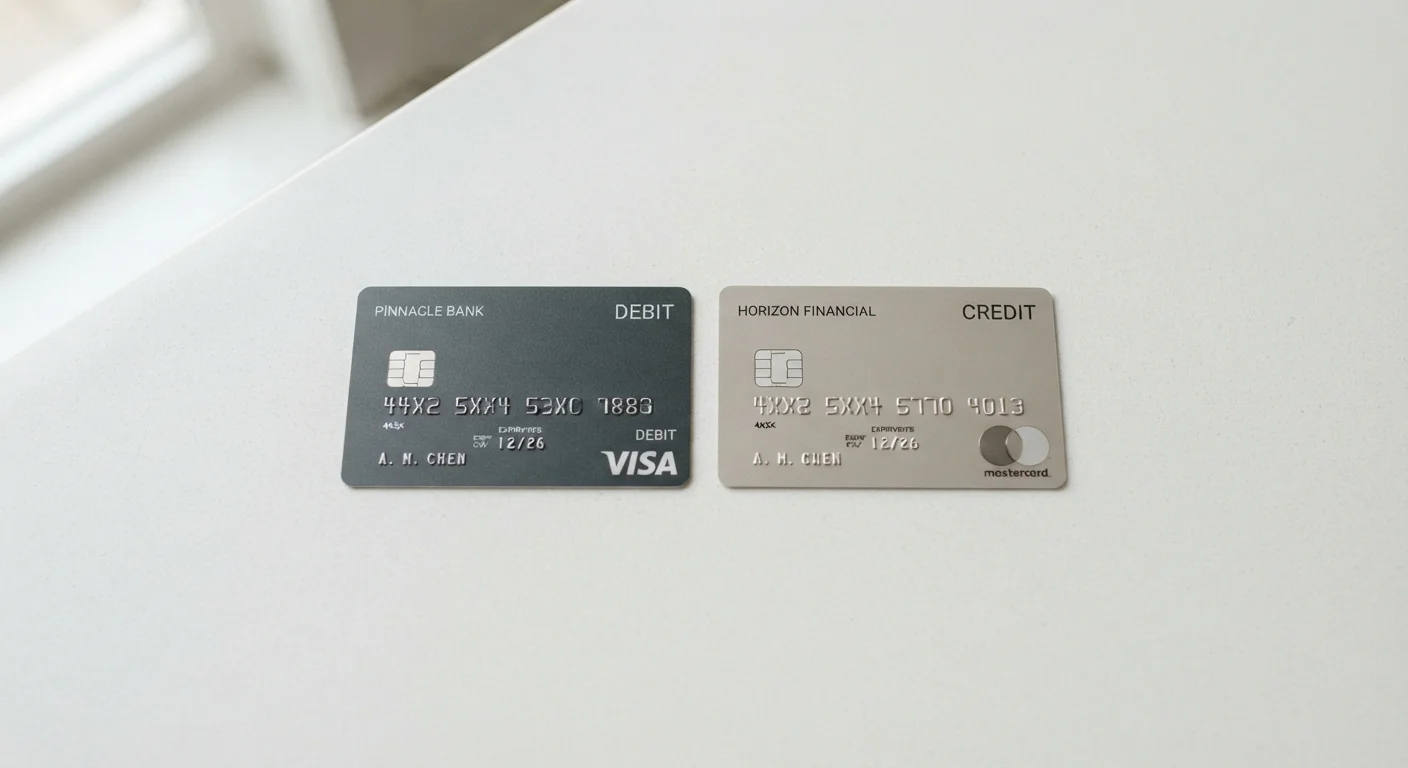
How Each Card Connects to Your Money
The core difference is timing. A debit card pulls funds directly from your checking account at the moment of purchase - the money leaves immediately. A credit card is essentially a short-term loan: the card issuer pays the merchant, and you repay the issuer later, typically within a billing cycle.
That gap in timing shapes almost every practical difference between the two. Your bank balance shrinks instantly with debit. With credit, the impact to your finances arrives on your statement - which gives you a window to track spending, dispute charges, or pay in full before interest accrues. For foundational context on how borrowing terms work, see key debt and billing terms that appear on statements and agreements.
Fraud Protection: Where the Law Draws the Line
Federal law treats debit and credit fraud differently, and the gap matters in practice.
Under the Electronic Fund Transfer Act (EFTA), your liability for unauthorized debit card transactions depends heavily on how quickly you report the loss. If you report within two business days, your maximum liability is generally $50. Wait longer - up to 60 days after your statement - and that cap rises to $500. After 60 days, you could be liable for all losses.
The Fair Credit Billing Act (FCBA) caps unauthorized credit card liability at $50 regardless of when you report it, and most major issuers extend this to a $0 liability guarantee voluntarily. Critically, disputed credit card charges are typically suspended until resolved - your own money is never at risk during the investigation. With a debit card, the funds may already be withdrawn from your account while the dispute is being investigated, which can disrupt bill payments or other planned expenses.
| Criterion | Debit Card | Credit Card |
|---|---|---|
| Funds source | Your checking account (immediate) | Issuer credit line (repaid later) |
| Fraud liability limit (federal) | Up to $500 if reported late | $50 max; often $0 by issuer policy |
| Disputed funds during investigation | Already withdrawn from your account | Held; not yet paid by you |
| Builds credit history | No | Yes (if reported to bureaus) |
| Risk of interest charges | None | Yes, if balance carried month to month |
| Overspending risk | Limited to account balance | Higher without disciplined payoff habits |
| Chargeback process | Varies by bank; EFTA governs | Standardized under FCBA |
Dispute Rights and Chargebacks
Both card types allow you to dispute a charge - but the mechanics differ. A chargeback is a formal request to reverse a transaction, typically when goods weren't delivered, were significantly not as described, or when fraud occurred.
For credit cards, the FCBA gives you the right to withhold payment on disputed amounts while the issuer investigates. This is a meaningful protection for larger purchases. For debit cards, the process runs through EFTA and your bank's own policies. The funds are generally gone from your account first; a provisional credit may be issued during investigation, but timelines and outcomes can vary by institution.
Debit vs. Credit at Rental Car Counters
Many car rental companies place a temporary hold on debit cards that can be substantially larger than the rental cost itself, tying up funds in your checking account for days. Credit cards typically handle holds differently, since the hold doesn't affect your liquid cash. If you're renting a vehicle, it's worth checking the rental company's specific policy on debit card holds before you arrive.
Chargeback rights don't make either card a substitute for reading merchant return policies or verifying sellers before purchase. They're a safety net, not a first line of defense.
Credit Building, Spending Control, and the Bigger Picture
One area where credit cards hold a clear structural advantage is credit history. Debit card use is not reported to the three major credit bureaus (Equifax, Experian, TransUnion), so it does not affect your credit score. Responsible credit card use - on-time payments and low utilization - is reported and can strengthen your profile over time. For a deeper look at how scoring works, see what your credit score actually measures.
That said, credit cards carry a real risk: carrying a balance means paying interest, sometimes at high rates. Debit cards make overspending structurally harder because you're limited to your account balance. For shoppers who have struggled with revolving balances, understanding how revolving debt differs from installment debt can clarify what's at stake. There's also a common misconception that carrying a credit card balance helps your score - it doesn't. See credit score myths that cost people money for more on that.
$50
Max federal credit card fraud liability
Under the Fair Credit Billing Act, unauthorized credit card charges carry a federal liability cap of $50, regardless of how quickly the loss is reported.
$500
Potential debit card fraud liability
Under the Electronic Fund Transfer Act, debit card holders who fail to report unauthorized transactions within two business days may face losses up to $500 or more.
This article is for general informational purposes only and does not constitute personalized financial, legal, or tax advice. Consult a licensed financial professional for guidance specific to your situation.