
The Core Distinction: How Each Debt Type Works
Revolving debt is a type of credit account with a set borrowing limit that you can draw from, repay, and use again - repeatedly, without applying for a new loan each time. Credit cards are the most common example. Your available credit resets as you pay down your balance, and your required monthly payment typically varies based on how much you owe.
Installment debt, by contrast, is a lump-sum loan you receive once and repay in fixed, regular payments - called installments - over a set period. Auto loans, mortgages, personal loans, and student loans are all installment debt. The payment amount, interest rate, and payoff date are established upfront.
The key difference comes down to structure: revolving debt is open-ended and flexible; installment debt is closed-ended and scheduled. Before diving deeper, it helps to be familiar with terms like APR (annual percentage rate) and principal - see our plain-language guide to common debt terms for quick definitions.
How Each Type Appears on Your Credit Report
Both revolving and installment accounts are reported to the major credit bureaus - Equifax, Experian, and TransUnion - and both influence your credit score. However, they affect different scoring factors.
| Criterion | Revolving Debt | Installment Debt |
|---|---|---|
| Common examples | Credit cards, HELOCs | Mortgages, auto loans, student loans |
| Borrowing structure | Reusable credit line up to a limit | One-time lump-sum disbursement |
| Monthly payment | Varies with balance | Fixed throughout loan term |
| Payoff timeline | Open-ended; no set end date | Defined term (e.g., 36 or 60 months) |
| Credit utilization impact | Yes - directly affects score | No utilization ratio calculated |
| Budgeting predictability | Lower - payment fluctuates | Higher - payment is consistent |
| Interest accrual risk | High if balance carried month-to-month | Fixed; amortized over loan term |
With revolving debt, lenders and credit scoring models pay close attention to your credit utilization ratio - the percentage of your available revolving credit that you're currently using. For example, if your credit card limit is $5,000 and your balance is $2,000, your utilization is 40%. Most credit guidance suggests keeping utilization below 30%, though lower is generally better. High utilization can drag down your score even if you never miss a payment.
Installment accounts don't factor into utilization. Instead, they primarily affect your payment history (the largest component of most credit scores) and add to the diversity of account types on your report - a factor sometimes called credit mix. To learn more about what happens when you apply for either type of account, see our article on hard vs. soft credit inquiries.
Cash Flow and Budgeting: Predictability vs. Flexibility
Installment debt makes monthly budgeting more predictable. Because your payment amount is fixed from the start, you know exactly what you owe each month for the life of the loan. There's no surprise balance to manage, and there's a clear finish line.
Revolving debt introduces variability. Your minimum payment changes based on your balance, and because there's no required payoff date, it's easy to carry a balance - and accumulate interest - indefinitely. This flexibility can be useful, but it requires more active management to avoid debt creep, which is when balances gradually grow over time without a deliberate paydown plan.
30%
Recommended maximum credit utilization
Credit scoring guidance widely cited by financial education sources suggests keeping revolving balances below 30% of your total available credit limit.
~35%
Weight of payment history in FICO scores
According to FICO, payment history is the single largest factor in your credit score, making on-time payments critical for both debt types.
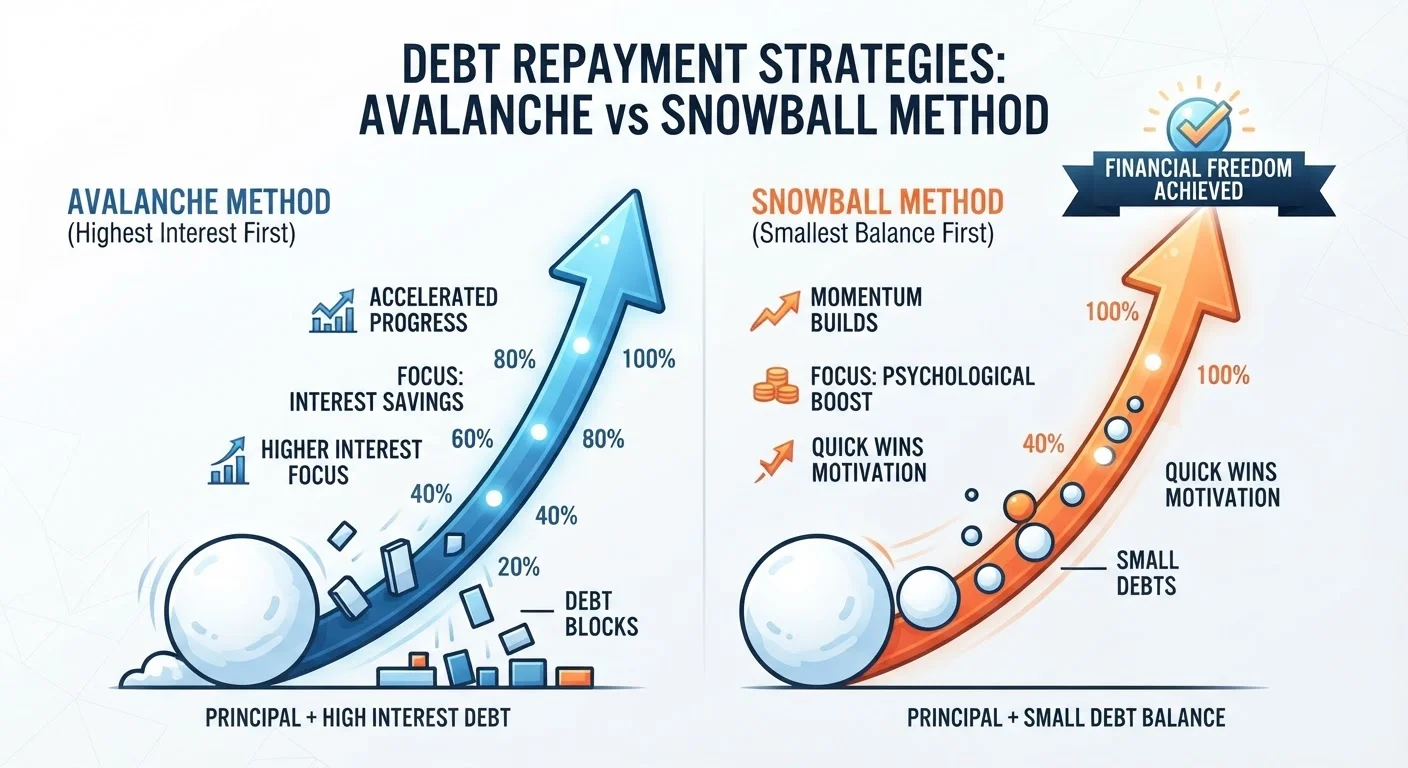
If you're currently juggling both types and want a structured payoff strategy, our side-by-side breakdown of the debt avalanche and debt snowball methods can help you decide which approach fits your situation. It's also worth checking our foundational tips on credit and savings for broader context.
This article is for general informational and educational purposes only. It does not constitute personalized financial, tax, or legal advice. Consult a qualified financial professional for guidance specific to your situation.