

Why What You Do Before Comparing Matters More Than the Comparison Itself
Most shopping mistakes aren't made at the checkout - they're made before the research even begins. You pull up a side-by-side comparison chart without knowing what you're actually comparing for, and suddenly you're evaluating 47 specifications when only three of them have any bearing on how you'll use the product.
This checklist is designed to run before you open a single comparison tab. Think of it as calibrating your instrument before you take measurements. When you know your constraints, priorities, and context, comparison charts stop being overwhelming and start being useful filters.
Once you've worked through these questions, you'll be better positioned to use our guide to reading comparison tables without getting misled - and eventually, our pre-payment checklist before you finalize anything.
Define Your Actual Need
Set Your Budget Parameters
Clarify Must-Haves vs. Nice-to-Haves
Vet Your Information Sources
Tools and Resources to Have Ready
You don't need much to run through this checklist, but having a few things in place makes the process faster and the results more reliable.
Notepad or notes app
Record your must-haves, budget ceiling, and key use-case details before you start comparing.
Spreadsheet (basic)
Track features side by side in your own format, filtered to criteria that actually matter to you.
Manufacturer product pages
Verify specifications directly from the source before trusting third-party listings.
Independent review sources
Find editorially independent evaluations that disclose how testing was conducted.
If this is a larger purchase - say, over $100 - consider pairing this checklist with a budget review first. Our pre-buy checklist for avoiding overpaying covers the financial side of that decision in more depth.
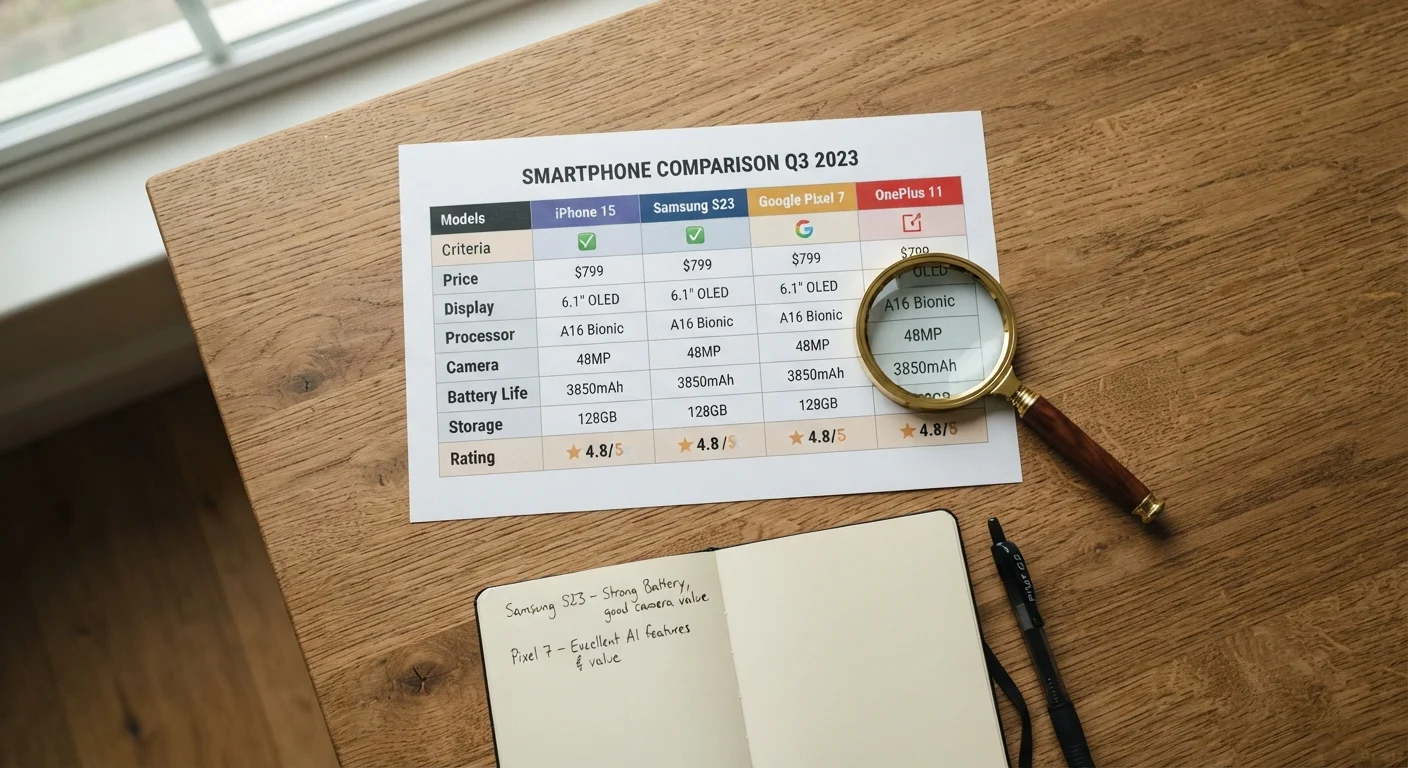
Comparison Charts Can Mislead if You're Not Careful
Many comparison charts are built by sellers or affiliates and are structured to make a particular option look favorable. Specs may be selectively included, and important limitations can be buried in footnotes or omitted entirely. Always check who produced the comparison and whether they have a financial stake in the outcome.
For category-specific research - like evaluating an insurance policy - the same underlying logic applies, but the criteria shift. Our article on what to compare when shopping car insurance shows how this framework adapts to a more complex purchase. You can also explore Shopping Basics for more foundational consumer guidance, or Deals & Savings for strategies on stretching your budget without sacrificing quality.