
Why Most Bill-Payment Attempts Fall Apart
The most common reason people miss bills isn't carelessness - it's lack of structure. When due dates are scattered, amounts vary, and reminders live in your head instead of somewhere reliable, something eventually slips. A single missed payment can trigger a late fee, a penalty interest rate, or a mark on your credit report, all of which cost far more than the time it takes to build a working system.
This guide focuses on creating a straightforward, repeatable process rather than a perfect one. If you're also working on your overall spending plan, our first-month budgeting walkthrough pairs well with the steps below. And if you want a broader framework first, start with the monthly budget setup checklist.
Late Payments Can Damage Your Credit
Payment history is the single largest factor in most credit scores, typically accounting for around 35% of a FICO score. A payment that is 30 or more days late can be reported to the major credit bureaus and remain on your credit report for up to seven years. Setting up even a basic tracking system is one of the most direct ways to protect your credit standing.
Before building your system, gather your tools and information using the list below.
What you will need
Building and Maintaining Your System
The steps below walk you through setting up a bill-payment system from scratch. You don't need specialized software - a spreadsheet or even a written list works. What matters most is consistency.
Use a Bill Audit to Start Fresh
Before building your system, run a quick audit of every active bill and subscription. Check recent bank and credit card statements for recurring charges you may have forgotten. Our monthly bill audit checklist walks you through that process step by step.
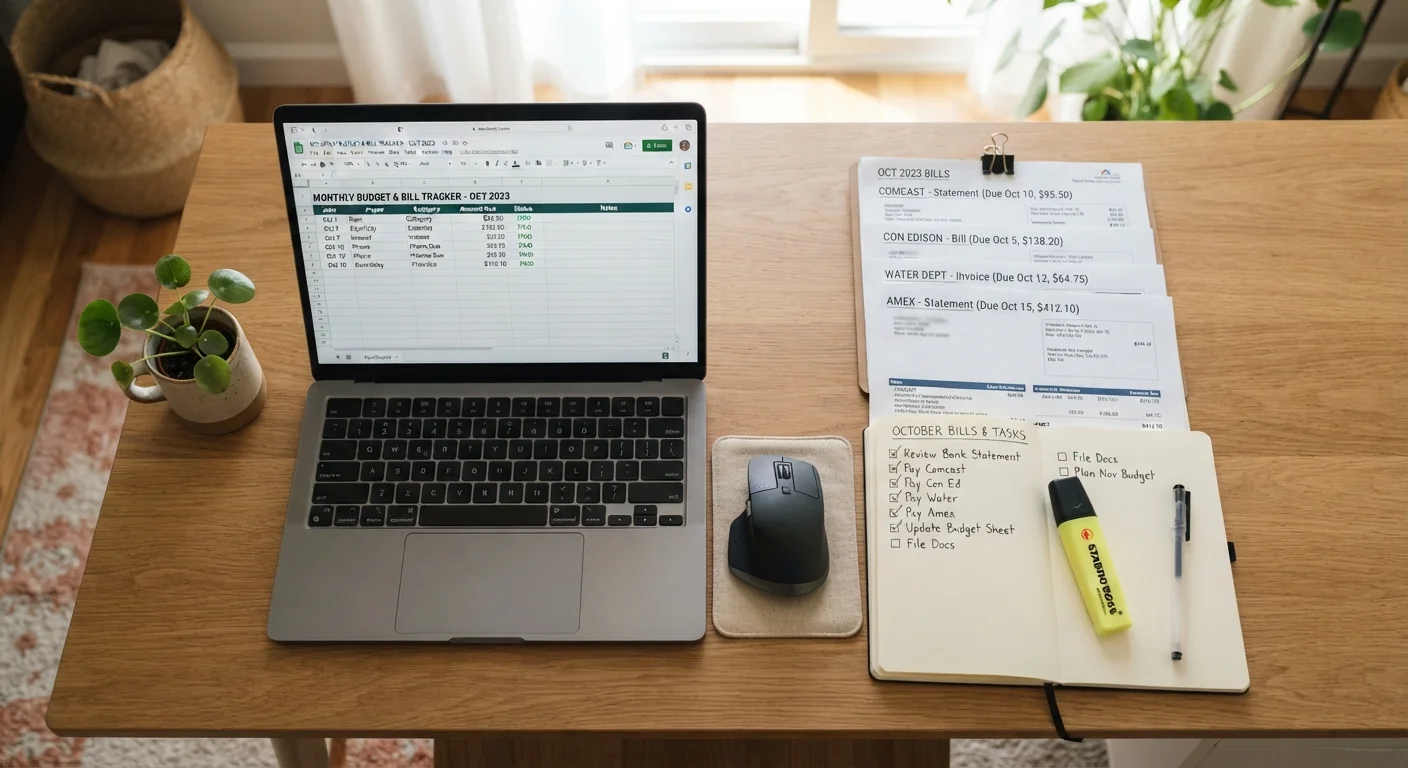
List every recurring obligation
Pull up two to three months of bank and credit card statements and write down every recurring charge you see. Include fixed bills (rent, mortgage, insurance premiums, loan payments) and variable bills (utilities, credit card minimum payments). Also note annual charges - domain renewals, software subscriptions, insurance policies - that may not appear monthly but still need to be budgeted.
Record the biller name, typical amount, and due date for each item. This master list becomes the foundation of your entire system.
Map due dates to your pay schedule
Mark your paycheck dates on a calendar, then plot each bill's due date alongside them. The goal is to confirm that enough money lands in your account before each bill is due. If several large bills cluster on dates that fall before a paycheck, contact those billers to request a due date change - most utility providers and lenders accommodate this with a simple request.
Grouping bills into two rough buckets - one set paid shortly after your first paycheck of the month, the second after your second paycheck - is a workable approach for biweekly earners.
Set up autopay for fixed-amount bills
Log into each biller's online portal and enroll fixed bills in autopay using a checking account (bank draft) rather than a credit card where possible, to avoid accumulating revolving debt on essential expenses. Confirm each autopay is active and note the first scheduled payment date in your master list.
Handle variable bills manually - with a reminder
For bills that change each month - electricity, water, gas, credit cards - set a calendar reminder three to five days before the due date to log in, review the statement, and pay manually. This brief check lets you catch billing errors or unusually high charges before payment clears.
Keep a small buffer in your bill-paying account
Aim to maintain a small cushion - commonly suggested as one to two weeks of fixed expenses - in the account used for bill payments. This buffer absorbs timing gaps between when a charge is drafted and when your paycheck posts, reducing the risk of overdraft fees disrupting an otherwise on-track system.
Schedule a monthly review
Once a month - ideally on the same date - spend ten to fifteen minutes reviewing your master list. Confirm all autopay amounts matched expectations, check for new subscriptions or price changes, and update your list for the coming month. This habit is what keeps the system accurate over time rather than letting it drift. For a structured way to do this, see our monthly bill audit checklist.
Don't Over-Automate Variable Bills
Autopay works well for fixed amounts like rent, loan payments, or subscriptions. For bills that fluctuate - such as utilities or credit cards - consider setting autopay for the minimum payment only, then manually paying the full balance. This prevents overdrafts caused by unexpectedly large charges pulling from your account.
Once your system is in place, the monthly review step is what sustains it. Bills change - providers raise prices, subscriptions renew, and new obligations appear. Treating your master list as a living document rather than a one-time setup is the difference between a system that holds and one that quietly becomes outdated. For readers who want to go further, understanding why budgets derail mid-month can help you spot the patterns that undermine even well-organized plans.
This article is for general informational purposes only and does not constitute personalized financial advice. For guidance specific to your situation, consult a qualified financial professional.