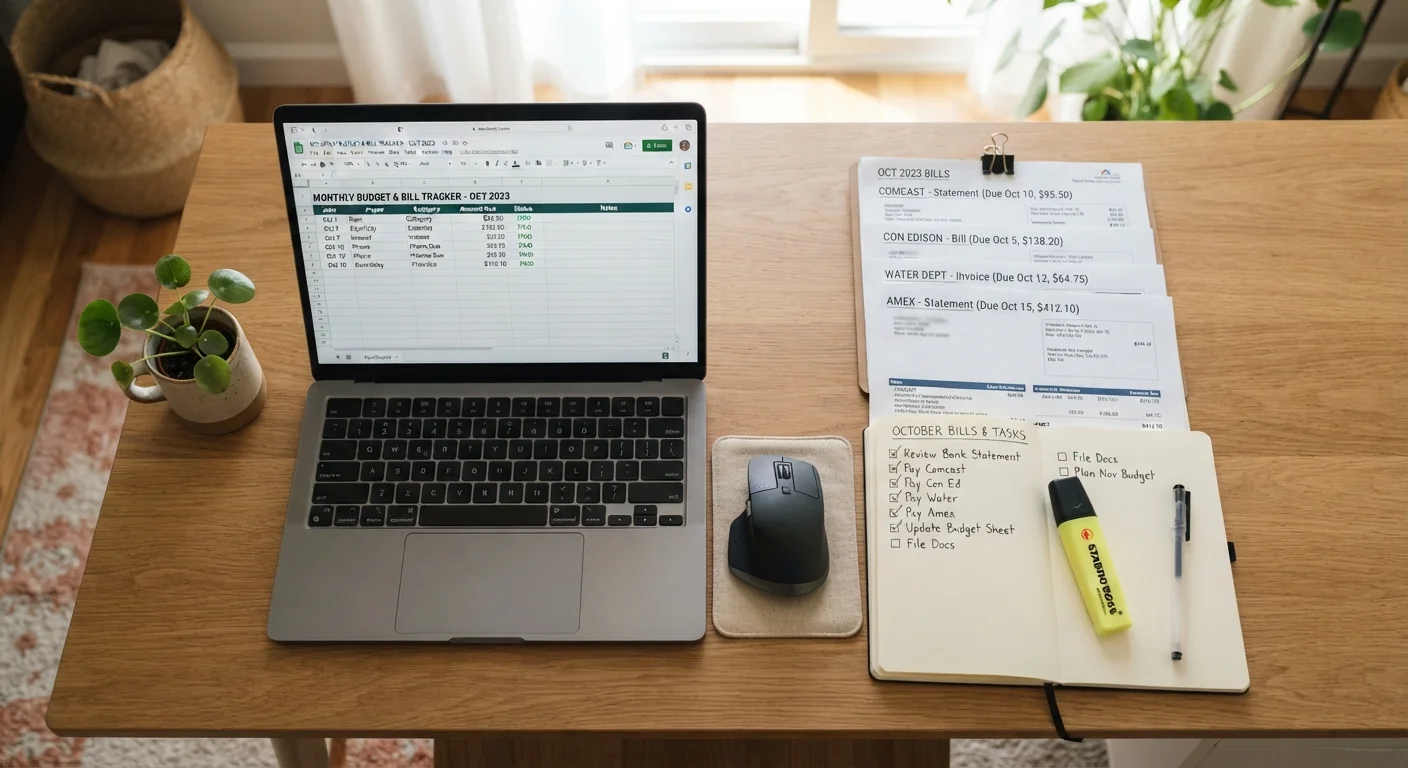

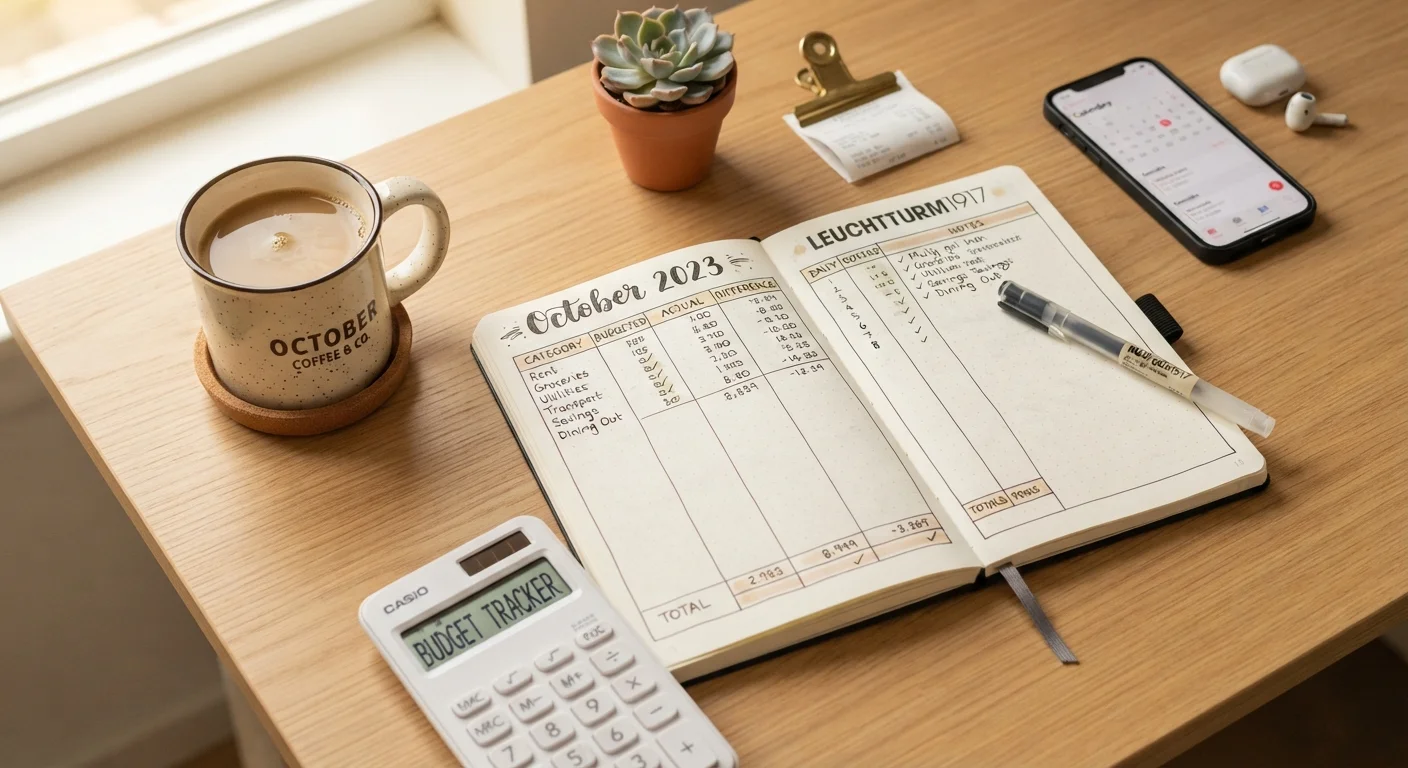
What You Need Before You Start
Budgeting doesn't require a finance degree or special software. Before you write a single number, gather these three things:
- Your take-home pay - what actually lands in your bank account after taxes and deductions, not your gross salary.
- Recent bank or card statements - the last one to three months gives you an honest picture of actual spending.
- A list of all recurring bills - rent, utilities, subscriptions, loan minimums, insurance premiums.
If you're not sure where your money has been going, start with our spending snapshot guide before building your first budget. It'll save you from guessing.
Take-home pay
The amount of money deposited into your account after taxes, Social Security, and any other payroll deductions. This is the figure you actually have available to spend and save.
Fixed expense
A recurring cost that stays the same each month, such as rent, a car loan payment, or an insurance premium. These are the easiest to plan for because the amount doesn't change.
Variable expense
A spending category where the amount changes month to month, such as groceries, gas, or dining out. Variable expenses require estimates and regular monitoring.
50/30/20 rule
A simple budgeting framework that divides take-home pay into three buckets: 50% for needs, 30% for wants, and 20% for savings or debt repayment. It's a starting point, not a strict rule.
Net income
Your earnings after all deductions have been taken out. When building a personal budget, always use net income rather than your gross (pre-tax) salary.
Step 1: Add Up Your Monthly Income
Write down every source of reliable take-home income you receive in a typical month. This includes wages, salary, freelance pay, side income, or any other regular deposit. Use net income (after taxes), not gross, since that's the money you actually control.
If your income varies - common for hourly workers or freelancers - use a conservative estimate, such as the average of your three lowest recent months. Budgeting against your worst-case income means a pleasant surprise on better months rather than a shortfall.
Write one number at the bottom of the page: Total monthly take-home income. Everything else you do this month must fit within it.
Step 2: List and Categorize Your Expenses
Pull up your bank and credit card statements and group every expense into two buckets:
- Fixed expenses - amounts that don't change month to month: rent or mortgage, car payment, insurance premiums, loan minimums, subscriptions.
- Variable expenses - amounts that fluctuate: groceries, gas, dining out, clothing, entertainment, personal care.
Don't forget irregular expenses - annual fees, car registration, holiday gifts - that only hit a few times a year. Divide those annual totals by 12 and add a monthly line item so they don't ambush you. Our monthly bill audit checklist can help you catch forgotten subscriptions and recurring charges you may have overlooked.
Round Up Variable Estimates Slightly
When estimating variable expenses like groceries or gas, add 10-15% above what you think you'll spend. Most people underestimate these categories in their first month. Building in a small buffer prevents your plan from falling apart the first time gas prices tick up or you make an unplanned grocery run.
Step 3: Assign Every Dollar a Job
Now subtract your expenses from your income. If the result is positive, you have money to deliberately allocate to savings or debt payoff. If it's negative, something has to be trimmed before the month begins.
A useful starting framework for beginners is 50/30/20:
- 50% of take-home pay toward needs (housing, groceries, utilities, minimum debt payments)
- 30% toward wants (dining out, streaming, hobbies)
- 20% toward savings and additional debt repayment
These percentages are guidelines, not rules. If you live in a high cost-of-living area, needs may take 60% or more. Adjust the ratios to fit your reality - the point is intentionality. For savings goals, even a small monthly contribution to an emergency fund is a meaningful step. See our emergency fund guide for realistic starting targets.
Don't Skip Savings as a Category
Many first-time budgeters plan to "save whatever's left over" at the end of the month. In practice, there's rarely anything left over. Treat savings as a fixed line item from the start - even a small, consistent amount each month builds the habit and the balance over time.
Step 4: Track Spending Throughout the Month
A budget written on day one means nothing if you ignore it until day 31. The single habit that determines whether a budget succeeds is regular check-ins. Set aside five to ten minutes every few days - or at minimum once a week - to log what you've spent and compare it to your plan.
You don't need a sophisticated system. Options include:
- A notes app on your phone where you record purchases as they happen
- A simple spreadsheet with one column per category
- A dedicated budgeting app that connects to your bank (review the app's privacy policy before connecting)
When a category runs low mid-month, you have time to course-correct - skip one restaurant meal, pause a discretionary purchase - rather than discovering the damage after the fact. If you also want to automate and organize your bill payments, setting up a structured bill-payment system can remove one major source of mid-month chaos.
Step 5: Review and Adjust at Month's End
On the last day of the month, sit down with your budget and your actual spending side by side. Ask three questions:
- Which categories ran over, and why? Was it a one-time event or a pattern?
- Which categories had money left over? Can you reallocate that to savings or debt next month?
- Did anything surprise me? Unexpected expenses reveal gaps in your plan that need a dedicated line item.
Adjust your category amounts for next month based on what you learned - not what you wished were true. Most first-time budgeters need two or three months before their numbers reflect actual spending patterns. That's normal. If you find your plan keeps breaking down partway through the month, our guide on why budgets fall apart mid-month covers the most common causes and fixes.
This article is for general informational purposes only and does not constitute personalized financial advice. For guidance specific to your situation, consider consulting a licensed financial professional.