
How Each Method Works
Before comparing the two frameworks, it helps to understand exactly what each one asks you to do. Before diving in, it is worth mapping out your current spending patterns - see where your money actually goes for a practical starting point.
Zero-Based Budgeting
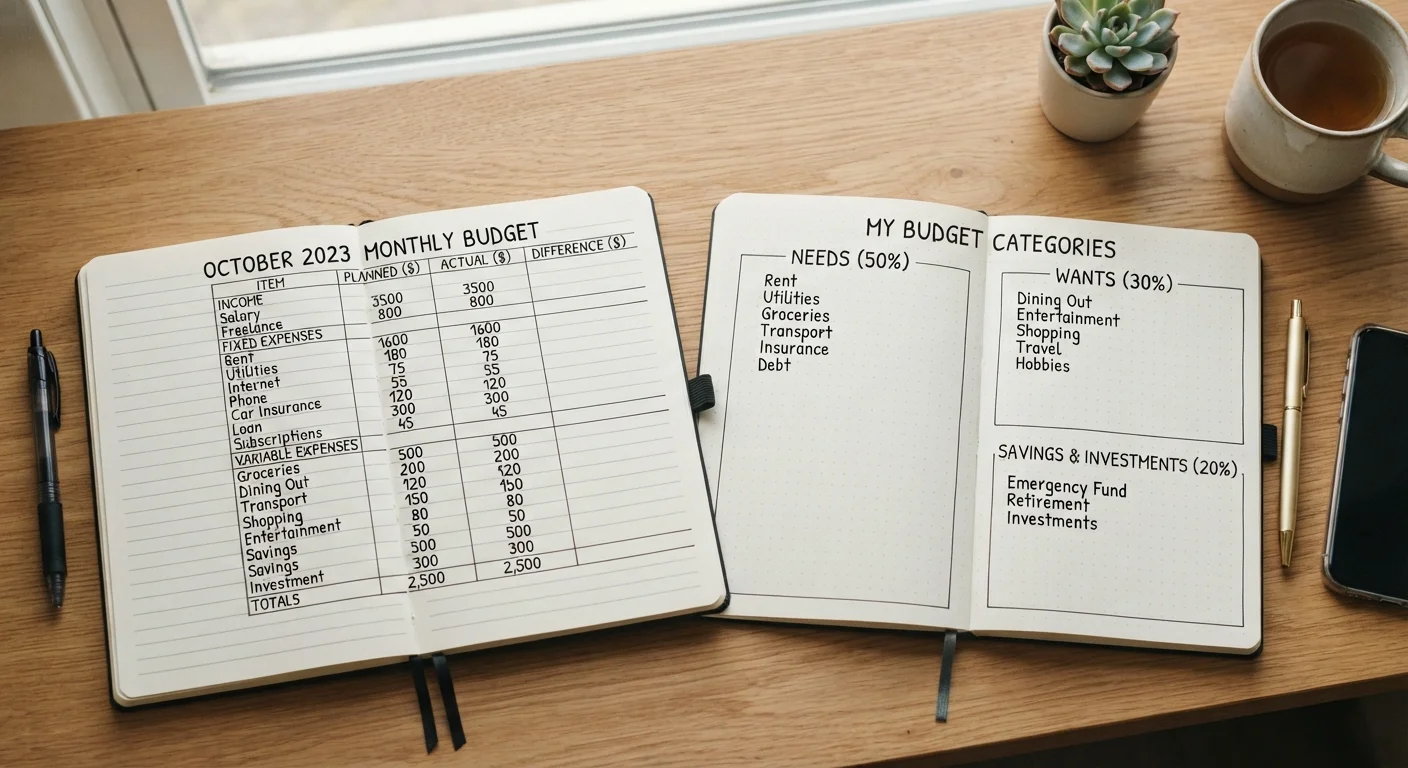
Zero-based budgeting (ZBB) starts with your total monthly income and requires you to allocate every dollar to a specific category - housing, groceries, transportation, entertainment, savings, and so on - until you reach zero. The goal is not to spend down to nothing; it means every dollar has been given a deliberate assignment before the month begins. Any money left unassigned gets directed toward a purpose, such as an emergency fund or debt payment.
The 50/30/20 Rule
The 50/30/20 rule divides your after-tax income into three broad categories: 50% toward needs (rent, utilities, groceries, minimum debt payments), 30% toward wants (dining out, subscriptions, hobbies), and 20% toward savings and debt repayment beyond minimums. You are not required to track every line item - just stay within the three percentage thresholds.
| Criterion | Zero-Based Budgeting | 50/30/20 Rule |
|---|---|---|
| Setup time | 30-60 min per month | Under 15 min per month |
| Tracking detail | Every individual expense | Three broad categories |
| Best income type | Variable or irregular | Stable, predictable paycheck |
| Flexibility | Requires manual reallocation | Adjusts naturally within buckets |
| Spending visibility | High - line-by-line detail | Moderate - category level only |
| Ideal for beginners | Steeper learning curve | Easy entry point |
| Goal-targeting precision | Strong - allocate to specific goals | Moderate - 20% bucket is flexible |
Key Differences That Actually Matter Day-to-Day
On paper, both methods guide you toward spending less than you earn. In practice, they ask very different things of you.
1 in 3
Americans with a detailed monthly budget
Surveys by the National Foundation for Credit Counseling have consistently found that fewer than one-third of U.S. adults maintain a detailed written or digital budget.
20%
Savings and debt repayment target under 50/30/20
The 50/30/20 framework, widely referenced in personal finance education, designates a fifth of after-tax income for savings and extra debt payments.
$0
Unassigned dollars at month's end in zero-based budgeting
Zero-based budgeting requires that income minus all planned allocations equals zero, meaning every dollar has been directed somewhere intentional.
Time and Effort
Zero-based budgeting typically requires 30 to 60 minutes of setup at the start of each month and ongoing tracking throughout. The 50/30/20 rule can be set up in under 15 minutes and checked periodically rather than daily.
Flexibility
The 50/30/20 rule is inherently flexible - if your grocery bill rises one month, it simply eats into a different need, as long as the 50% cap holds. Zero-based budgeting requires you to consciously shift money between categories when plans change, which keeps you informed but demands more active management.
Visibility
Zero-based budgeting surfaces spending patterns that broad buckets can hide. If you are overspending on takeout, ZBB shows it in a specific line; the 50/30/20 rule may bury it inside a category that still looks healthy overall. If you find your budget regularly falling apart partway through the month, common mid-month budget pitfalls are worth reviewing.
After-Tax Income Is the Starting Point
Both frameworks work from your take-home pay - the amount deposited after federal, state, and payroll taxes are withheld - not your gross salary. If your income fluctuates, use your lowest recent monthly take-home as a conservative baseline. Building your budget on a lower figure reduces the risk of over-committing funds that may not arrive.
Choosing the Right Framework - and Getting Started
Neither method is universally superior. The right choice depends on your income type, financial goals, and how much time you are willing to spend on money management each month.
Choose zero-based budgeting if:
- Your income varies month to month (freelance, gig work, commission).
- You are working toward a specific goal - paying off a credit card, building a three-month emergency fund - and need precise allocation to get there.
- You have struggled with overspending in specific categories and want accountability.
Choose the 50/30/20 rule if:
- You receive a consistent paycheck and your core expenses are stable.
- You are budgeting for the first time and want a low-friction entry point.
- You prefer a framework that requires minimal upkeep once established.
You can also combine elements of both: use the 50/30/20 rule as a starting structure, then apply zero-based thinking within your "wants" category when you want tighter control. Ready to put a method into practice? The step-by-step first-month budget walkthrough and the monthly budget setup checklist can help you execute whichever framework you choose.
This article is for general informational and educational purposes only. It does not constitute personalised financial advice. For guidance specific to your situation, consider consulting a qualified financial adviser.