

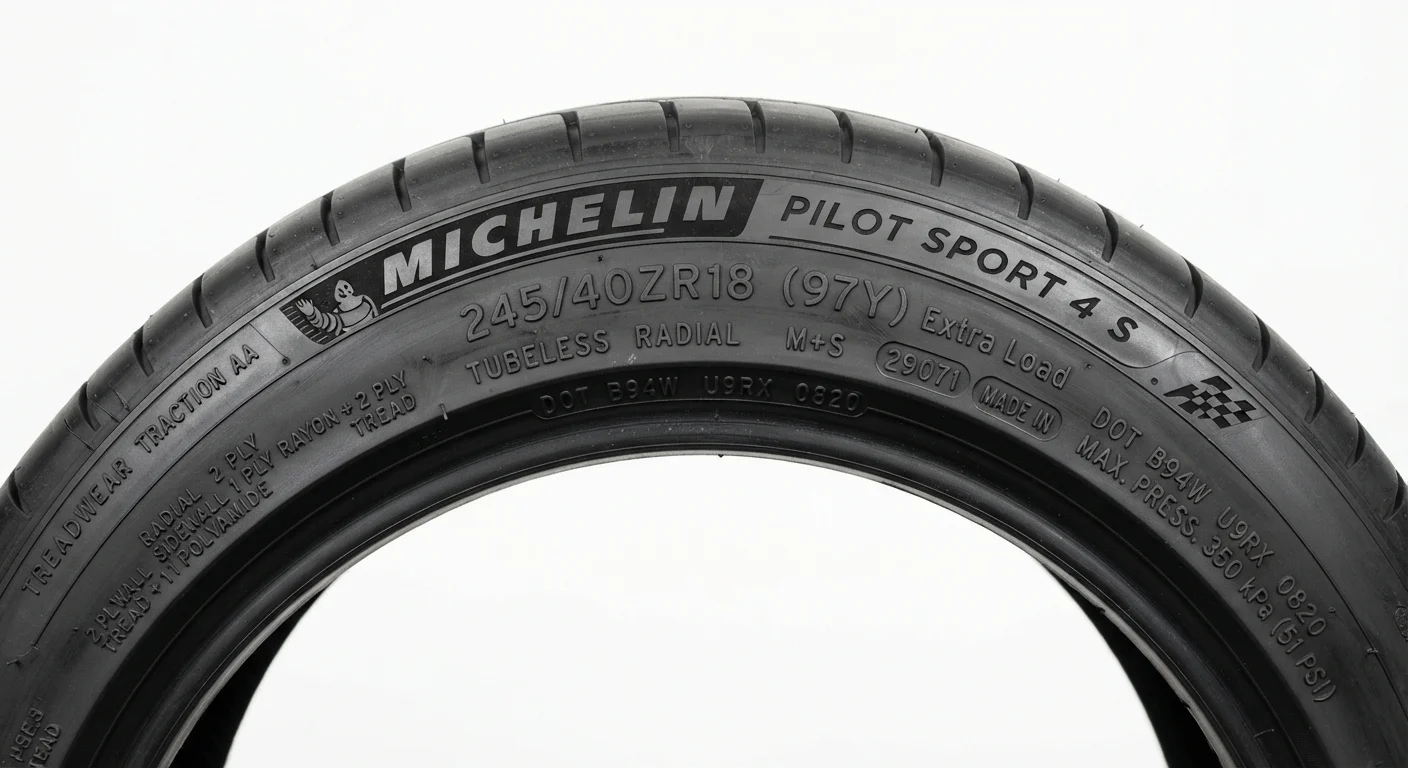
Breaking Down the Main Code
Take a tire stamped with P215/65R17 93H. Each segment means something specific:
- P - Tire class: passenger vehicle
- 215 - Section width in millimeters (measured at the widest point)
- 65 - Aspect ratio: the sidewall height is 65% of the section width
- R - Construction type: radial (the standard for modern passenger tires)
- 17 - Rim diameter in inches
- 93H - Load index (93) and speed rating (H)
Understanding this sequence lets you confirm that a replacement tire matches what your vehicle was engineered to use. Substituting a tire with a lower load index or smaller rim diameter than specified by the manufacturer can create a genuine safety hazard.
11,000+
Tire-related crashes per year in the US
The NHTSA estimates that tire-related factors contribute to more than 11,000 crashes annually on American roads.
6 years
Recommended tire inspection threshold by age
Most major tire manufacturers recommend that tires six years or older receive a professional inspection regardless of remaining tread depth.
~25%
Vehicles with at least one significantly underinflated tire
According to NHTSA data from a national roadside survey, roughly one in four passenger vehicles had at least one tire significantly underinflated - a condition that worsens load-rating and handling performance.
Load Index and Speed Rating Explained
The load index is a number between roughly 70 and 126 for passenger tires. It doesn't directly state a weight - it refers to a standardized chart. A load index of 93 corresponds to a maximum load of 1,433 lbs per tire. Multiply by four tires and you get the tire system's total capacity. Your vehicle's required load index is listed in the owner's manual and often on a placard inside the driver's door jamb.
The speed rating letter follows the load index. Common ratings include:
- S - up to 112 mph
- T - up to 118 mph
- H - up to 130 mph
- V - up to 149 mph
- W - up to 168 mph
These are maximum sustained speed thresholds under load, not everyday driving targets. Installing a tire with a lower speed rating than your vehicle's specification is generally not recommended. For context on how safety ratings work across the auto industry more broadly, see our guide to NHTSA and IIHS safety scores.
Check Your Door Jamb First
Your vehicle's recommended tire size, load index, and inflation pressure are printed on a placard inside the driver's door jamb. This placard - not the tire itself - is your authoritative reference for what specification to match when purchasing replacements. Always cross-reference it before buying.
Reading the DOT Code and Tire Age
Separate from the size code, every tire sold in the US carries a DOT (Department of Transportation) code. It begins with the letters DOT and ends with a four-digit date stamp. That final group is the one that matters most to safety-conscious drivers.
For example, a code ending in 1821 means the tire was manufactured in the 18th week of 2021. Rubber degrades over time regardless of mileage - heat, UV exposure, and oxidation all accelerate the process invisibly. Cracks may develop inside the tire structure before they're visible on the surface.
Tread Depth and Age Are Separate Issues
A tire can pass a visual tread-depth check and still be compromised by age-related rubber degradation. The DOT date code is the only reliable way to assess a tire's age. If you're buying used tires or inspecting a vehicle that's been in storage, always locate and decode the DOT stamp before making decisions about continued use.
Tread depth tells you about wear, but the DOT date code tells you about age-related degradation - and both matter independently. A tire with plenty of tread but a date code from 2015 may warrant professional inspection or replacement.
Why These Numbers Are a Safety Issue
The NHTSA has identified tire failure as a contributing factor in thousands of crashes annually on US roads. The most common risk factors include underinflation, overloading beyond the load index, and operating tires past their useful service life.
Checking your sidewall codes takes less than two minutes. Confirm that your tires match the specification on your door-jamb placard, note the DOT date, and factor age into your maintenance timeline - not just tread wear. If you're uncertain whether a tire is appropriate for your vehicle or conditions, a licensed tire professional is the right resource. This article provides general educational information and is not a substitute for professional inspection of your specific vehicle.