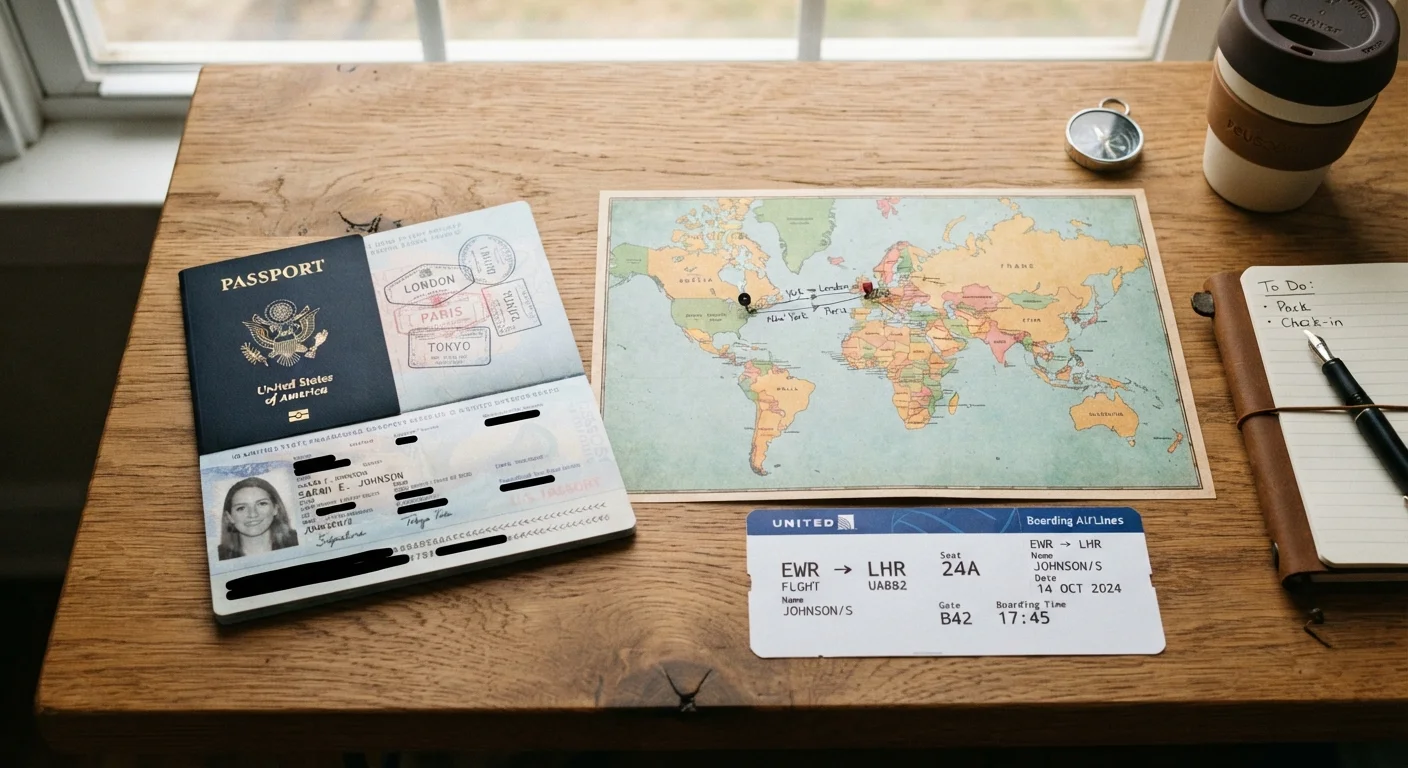

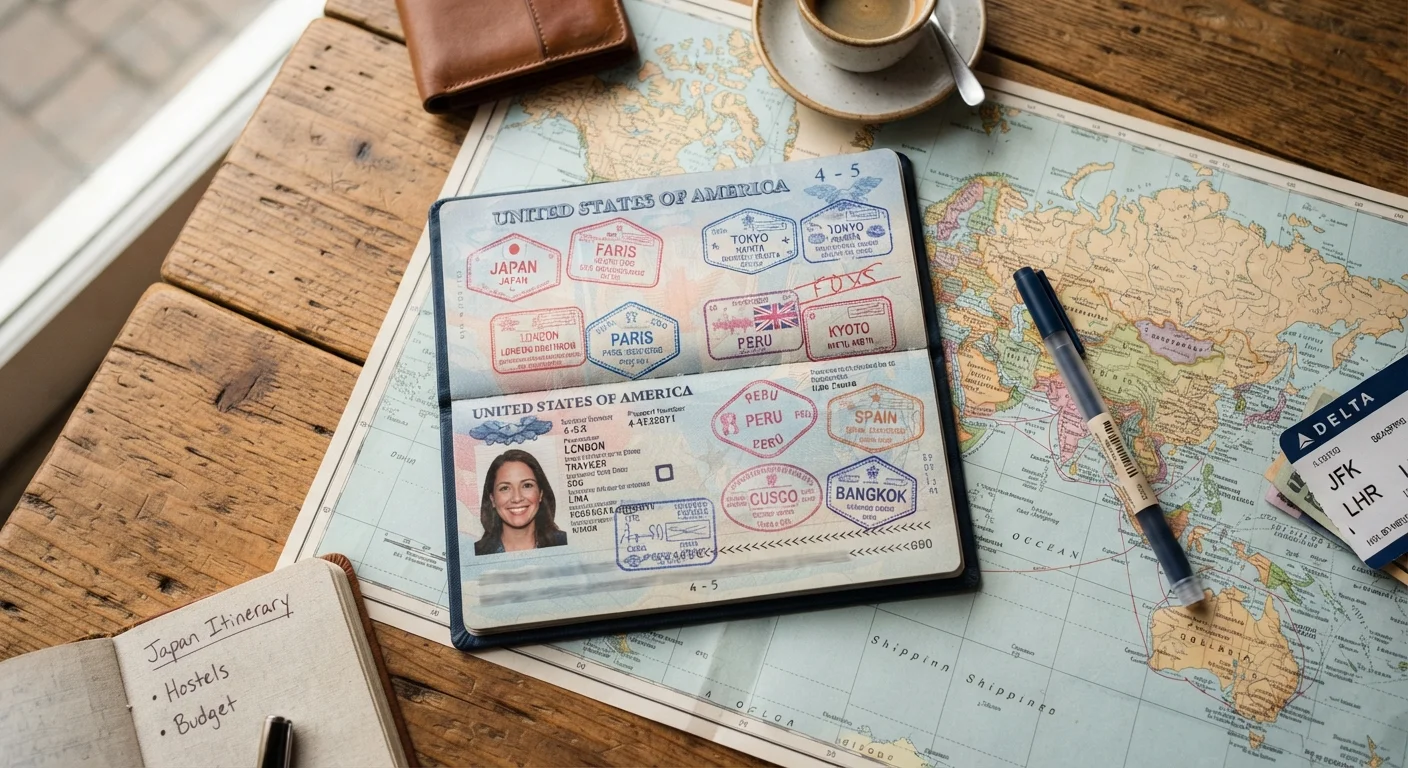
What Is a Travel Visa - and Do You Always Need One?
A travel visa is an official authorization - issued by a foreign government - that allows you to enter, transit through, or remain in a country for a specified period and purpose. Think of it as a country's formal permission slip: your US passport proves who you are, while a visa (when required) confirms you're cleared to cross that particular border.
Good news for US passport holders: Americans enjoy visa-free or visa-on-arrival access to a significant number of countries, largely due to bilateral agreements between the US and those nations. However, the list is not universal. Some destinations - including several in Africa, Asia, and the Middle East - require Americans to obtain a visa before arrival. And even in regions where no visa is required, you may still need an electronic travel authorization (ETA), a lightweight pre-entry registration that's not quite a visa but still mandatory.
Travel Visa
An official stamp or document from a foreign government that authorizes you to enter, stay in, or transit through that country for a specific purpose and length of time.
Electronic Travel Authorization (ETA)
A pre-travel online registration - lighter than a full visa - that some countries require before you board a flight. Approval is usually fast and linked digitally to your passport.
Visa-on-Arrival
A visa you obtain directly at the airport or border crossing when you land, rather than applying in advance. Not all countries offer this to US passport holders.
Port of Entry
The official location - an airport, seaport, or land border crossing - where immigration officers inspect your documents and decide whether to admit you to the country.
Passport Validity Requirement
Many countries require your US passport to remain valid for a set period - often six months - beyond your planned return date, even if your trip is short.
Visa Category
The type of visa tied to your purpose of travel, such as tourist, business, student, or transit. Each category comes with its own rules about what you're allowed to do in the country.
Before booking any international trip, consult the international trip planning checklist to make sure you've covered every pre-departure requirement.
Types of Visas Americans Commonly Encounter
Not all visas work the same way. Here are the four main categories you'll run into as an American traveler:
- Visa-free entry: No visa needed at all. You present your passport at the border, and admission is granted for a set number of days - commonly 30, 60, or 90 days for tourism.
- Electronic Travel Authorization (ETA): A pre-travel online registration required by some countries (such as Canada's eTA or Australia's ETA). You're approved before you fly, usually within minutes to a few days, and the authorization is linked to your passport digitally.
- Visa-on-arrival (VOA): You apply and pay at the airport or port of entry upon landing. While convenient, it's worth confirming the country still offers this option for US passport holders before you fly - rules change.
- E-visa: Applied for online before departure, through the destination country's official government portal. You receive an approval document to present at entry. Processing can take anywhere from a few hours to several weeks depending on the country.
- Embassy or consulate visa: The most involved process - you submit an application in person or by mail to the country's embassy or consulate in the US, often including photos, supporting documents, and a fee. Processing time varies widely, so early planning is essential.
Your purpose of travel also matters. A tourist visa has different conditions than a business visa, student visa, or transit visa. Entering on the wrong category can result in denial of entry or future visa complications.
How to Find Official Visa Requirements
The single most reliable source for US travelers is the US Department of State at travel.state.gov. Every country page includes a visa information section covering current requirements for Americans. Pair that with the official embassy or consulate website of your destination country - these are the two authoritative sources that should anchor your research.
Bookmark Official Sources Before You Search
Set travel.state.gov as your first stop for any international destination research. Then cross-reference with the official embassy or consulate website of the country you're visiting - accessible from the embassy's official domain, not a third-party result. Bookmarking both before you start searching prevents you from accidentally landing on unofficial sites that may charge unnecessary fees or provide outdated details.
Travel blogs, booking platforms, and social media posts can be useful for general inspiration, but they frequently lag behind policy changes. Governments can alter visa rules with little notice - sometimes in response to diplomatic shifts, health emergencies, or security events.
Also worth checking: health entry requirements, which are separate from visa rules. Some countries require proof of vaccination or specific health documentation. Our guide to international health prep and entry health rules explains how to verify those requirements from official sources.
The Application Process: What to Expect
For simple e-visas and ETAs, the process is usually straightforward: visit the official government portal, fill in your passport details, pay the fee, and wait for an email confirmation. Keep digital and printed copies of your approval document.
Embassy visas are more involved. A typical application may require:
- A completed application form (paper or online)
- A valid US passport with sufficient remaining validity
- Recent passport-style photographs meeting precise specifications
- Proof of travel plans (flight bookings, hotel reservations)
- Proof of financial means (bank statements, pay stubs)
- A visa fee (paid by money order, credit card, or cashier's check depending on the embassy)
- Potentially an in-person interview at the embassy or consulate
Processing times range from a few business days to several weeks. Always check the embassy's current estimates and add a buffer - don't cut it close. Speaking of documents, make sure your passport itself is in order: many countries require at least six months of validity beyond your return date. See our detailed breakdown of passport validity rules and renewal timelines if you're unsure whether yours qualifies.
Common Mistakes That Can Derail Your Entry
Even experienced travelers slip up on visa logistics. Here are the most avoidable pitfalls:
Visa Rules Can Change Without Much Warning
Countries can introduce, modify, or suspend visa-free agreements on short notice due to diplomatic changes, public health situations, or security concerns. A visa policy that was current when you started planning may be different by departure day. Always re-verify requirements within 30 to 60 days of your trip - and again shortly before you fly.
- Relying on outdated information: Visa policies change. A country that was visa-free last year may now require an ETA or full visa. Always verify within 30-60 days of your travel date.
- Applying through unofficial websites: Third-party visa-processing sites often charge hefty markups and occasionally cause delays. Use only official government portals.
- Overstaying a visa: Exceeding your permitted stay - even by a day - can result in fines, detention, deportation, and future bans. Know your entry date and track your permitted days carefully.
- Wrong visa category: A tourist visa typically prohibits paid work or long-term study. Entering under an incorrect category can create serious legal complications.
- Insufficient passport validity: Many travelers don't realize their passport is due to expire until they're at the check-in desk. Airlines may refuse to board you if you don't meet the destination's validity requirement.
Once your entry documents are sorted, it's smart to think about what happens if plans unravel. The travel insurance terms guide is a great next step for understanding your coverage options - and our overview of what international travel insurance coverage actually means goes even deeper.
This article is for general informational purposes only. Visa rules, entry requirements, and travel conditions change frequently. Always verify current requirements with official government sources - including the US Department of State and the destination country's embassy or consulate - before making any travel arrangements.